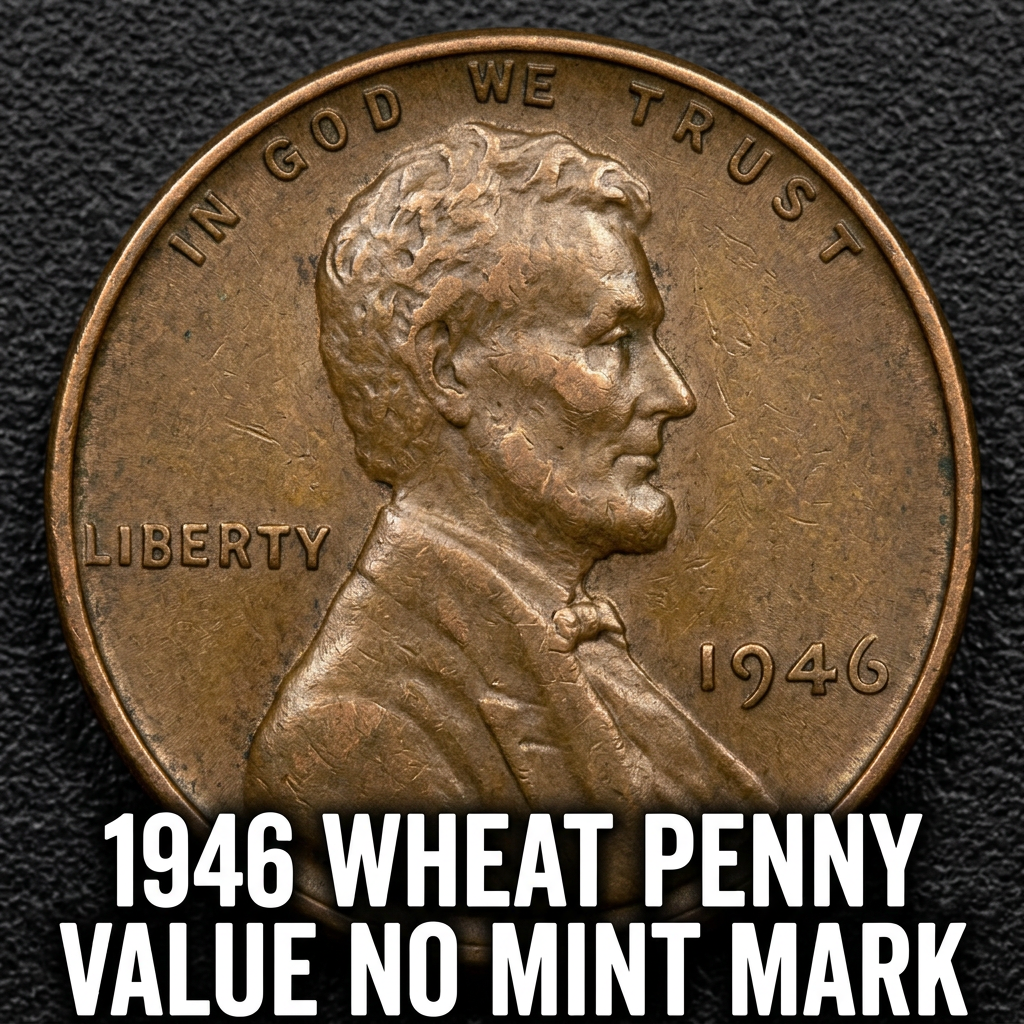
The 1946 Wheat Penny with no mint mark is worth anywhere from 10 cents in heavily worn condition to over $10 in well-preserved grades — and high-grade examples graded MS67 Red have sold for hundreds of dollars at auction. If you recently found one of these old Lincoln cents in a jar, a drawer, or an inherited coin collection, you’ve come to the right place.
What Is the 1946 No Mint Mark Wheat Penny?
The 1946 Wheat Penny with no mint mark was struck at the Philadelphia Mint, which traditionally did not place a mint mark on its coins. That year, Philadelphia produced over 991 million Lincoln cents — making this one of the more common Wheat Pennies in existence. The coin features Victor David Brenner’s classic Lincoln portrait on the obverse and two stalks of wheat flanking the words “ONE CENT” on the reverse. It’s composed of 95% copper and 5% tin and zinc, measuring 19 millimeters in diameter.
Even though this coin was made in massive quantities, condition plays an enormous role in its value. A coin that sat in circulation for decades will show obvious wear, while an uncirculated example pulled straight from a mint bag can still dazzle collectors with original red luster. If you want a quick way to identify your coin and get an estimated grade, using the best coin identifier app on your phone can save you a lot of time and guesswork. Apps like CoinHix are especially handy for beginners who aren’t sure what they’re looking at.
1946 Wheat Penny Value by Grade
The value of a 1946 no mint mark Wheat Penny depends almost entirely on its grade and color designation. Here’s a general breakdown of what you can expect:
| Grade | Condition | Estimated Value |
|---|---|---|
| G-4 (Good) | Heavy wear, flat details | $0.10 – $0.25 |
| VF-20 (Very Fine) | Moderate wear, some detail | $0.25 – $0.50 |
| EF-40 (Extremely Fine) | Light wear, sharp detail | $0.50 – $1.50 |
| MS-63 (Uncirculated) | No wear, some marks | $3 – $6 |
| MS-65 Red (Gem) | Brilliant luster, minimal marks | $10 – $20 |
| MS-67 Red (Superb Gem) | Nearly perfect | $200 – $500+ |
For a detailed look at current 1946 Wheat Penny auction prices and certified grade sales data, it’s worth checking a dedicated numismatic price database where real transactions are tracked. Prices can shift depending on market demand and coin population reports.
What Makes Some 1946 Pennies Worth More
Not all 1946 Philadelphia cents are created equal. A few factors can push the value significantly higher. First, color designation matters a great deal. Coins rated “Red” (RD) retain at least 95% of their original copper luster and are worth far more than “Brown” (BN) examples of the same grade. Second, look for any doubling on the lettering or date, as doubled die varieties from 1946 are known and can attract a premium from variety collectors.
Strike quality is another factor. Some coins from this year show weak strikes due to worn dies or high-volume production demands. A sharply struck example with full luster will always outperform a soft-struck one. CoinHix lets you scan your coin and compare it against certified examples, which makes spotting these differences much easier even if you’re not an experienced collector.
How to Tell If Your 1946 Penny Is Worth Getting Graded
If your 1946 no mint mark Wheat Penny looks bright, coppery, and shows no signs of wear on Lincoln’s cheekbones or hair details, it may be worth submitting to a third-party grading service like PCGS or NGC. The cost of grading typically starts around $20–$30 per coin, so it only makes sense for coins you believe grade MS-65 or higher.
You can get a solid second opinion before spending money on grading by checking a comprehensive breakdown of 1946 penny values across all grades and mint marks, which gives you a realistic picture of what your coin might be worth before you commit to anything. This is especially helpful if you inherited a collection and aren’t sure which coins deserve the most attention.
Frequently Asked Questions
Q: Is a 1946 Wheat Penny with no mint mark rare?
A: No, the 1946 Philadelphia Wheat Penny is one of the most common Wheat cents. Nearly one billion were minted. Most circulated examples are worth only a few cents to a dollar. The real value comes from uncirculated, high-grade Red specimens.
Q: How can I tell what grade my 1946 penny is?
A: Start by examining the high points of the coin under good lighting — Lincoln’s cheek, jaw, and hair above the ear. If those areas show smoothing or flatness, the coin is circulated. For a more precise assessment, use CoinHix to scan your coin and compare it with graded examples in its database.
Q: Where can I sell a 1946 Wheat Penny if it’s in great shape?
A: If your coin is uncirculated and looks exceptional, consider submitting it to PCGS or NGC first, then listing it on eBay, Heritage Auctions, or Great Collections. Certified coins in attractive holders almost always sell for more than raw (ungraded) coins of the same quality.