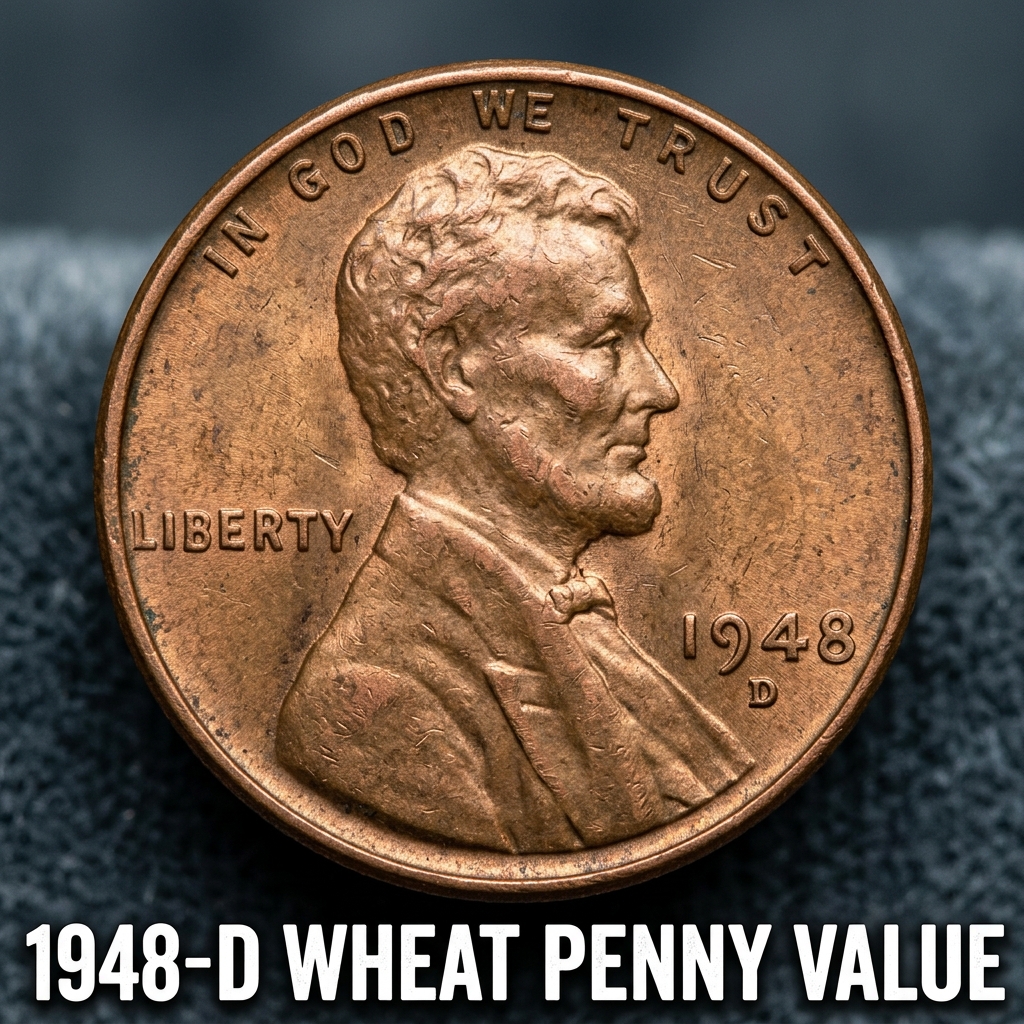
The 1948-D Wheat Penny is worth anywhere from $0.10 in heavily worn condition to over $8 or more in uncirculated grades, with top-tier examples grading MS-67 Red selling for hundreds of dollars at auction. If you dug one of these out of an old coin jar or inherited a collection, you’re in the right place to find out exactly what it’s worth.
What Makes the 1948-D Wheat Penny Special
The 1948-D Wheat Penny was struck at the Denver Mint, which is why you’ll see that small “D” mintmark sitting just below the date on the obverse. In 1948, the Denver Mint produced 172,637,500 Lincoln Wheat cents — a massive number, which is part of why most circulated examples aren’t worth a fortune. But that doesn’t mean your coin is worthless. Condition is everything in the coin collecting world, and even a common date like the 1948-D can carry real value if it was never spent or handled much.
This coin is part of the Lincoln Wheat Penny series, which ran from 1909 to 1958. Collectors love the series for its history and affordability, making it one of the most popular sets to complete in American numismatics. If you want a quick and easy way to identify your coin and estimate its grade, using the best coin identifier app on your phone can save you a lot of time and guesswork.
1948-D Wheat Penny Value by Grade
The value of your 1948-D Wheat Penny depends almost entirely on its condition. Coin graders use a scale from 1 to 70, and the higher the number, the better — and more valuable — the coin. Here’s a general breakdown of what you can expect:
| Grade | Condition Description | Estimated Value |
|---|---|---|
| Good (G-4) | Heavy wear, design visible | $0.10 – $0.25 |
| Fine (F-12) | Moderate wear, details clear | $0.25 – $0.50 |
| Extremely Fine (EF-40) | Light wear on high points | $0.75 – $1.50 |
| Uncirculated (MS-63) | No wear, some bag marks | $3 – $5 |
| Gem Uncirculated (MS-65 RD) | Sharp strike, original red luster | $8 – $20+ |
| Superb Gem (MS-67 RD) | Near-perfect, full red | $100 – $500+ |
For the most current and detailed 1948-D Wheat Penny price data across all mint state grades, it’s worth checking a trusted numismatic price database before buying or selling.
How to Tell If Your 1948-D Is Worth More
Color designation plays a huge role in wheat penny values, especially for uncirculated coins. Grading services like PCGS and NGC assign one of three color labels: Red (RD), Red-Brown (RB), or Brown (BN). A coin that retains 95% or more of its original copper-red luster earns the Red designation — and that’s where the real premiums kick in.
Beyond color, look for sharp strike quality. Coins where Lincoln’s hair and beard details are crisp and the wheat stalks on the reverse are fully defined tend to command higher prices. Error coins — such as doubled dies or off-center strikes — can also multiply value significantly. Examine your coin under a loupe or magnifying glass in good lighting. If something looks unusual about the lettering or design, it’s worth having a specialist take a look.
CoinHix is a great tool to use at this stage. The CoinHix app lets you scan your coin and get instant information about its grade range, color designation, and estimated market value — all from your smartphone. No need to drive to a coin shop just to get a ballpark figure.
Where to Sell Your 1948-D Wheat Penny
If you’ve determined your coin has real value, the next step is finding the right place to sell. Options include eBay, local coin dealers, coin shows, and online auction platforms like Heritage Auctions or Stack’s Bowers. For common circulated examples, eBay is usually your best bet for a quick sale. For higher-grade coins, a professional auction house can often get you closer to true market value.
Before listing, make sure you understand the full 1948 penny value picture including Philadelphia and San Francisco issues so you know how the Denver version compares to its siblings. This context helps you set realistic expectations and price your coin competitively.
If you’re unsure about grade or authenticity, consider submitting your coin to PCGS or NGC for third-party grading. A slabbed coin — one that’s been professionally graded and encapsulated — generally sells for more and is easier to market to serious buyers. CoinHix can also help you decide whether the cost of professional grading is worth it based on your coin’s estimated grade.
—
Frequently Asked Questions
Q: How do I know if my penny is the 1948-D and not the Philadelphia or San Francisco issue?
A: Look directly below the date on the front of the coin. A “D” mintmark means it was made in Denver. No mintmark means Philadelphia, and an “S” means San Francisco. The Denver issue is generally slightly more valuable than the Philadelphia coin in most grades.
Q: Can a circulated 1948-D Wheat Penny be worth real money?
A: Most circulated examples are only worth a few cents to a dollar or two. However, if your coin is in Extremely Fine condition or better — meaning the design details are still sharp and there’s minimal wear — it can be worth $1 to $5. Error coins in any circulated grade can also be worth significantly more.
Q: Is it worth getting my 1948-D Wheat Penny professionally graded?
A: For most circulated examples, professional grading isn’t cost-effective since the grading fees would exceed the coin’s value. However, if you believe you have an uncirculated coin — especially one with strong red color — grading can add significant resale value and credibility. Use an app like CoinHix to estimate the grade first before spending money on submission fees.