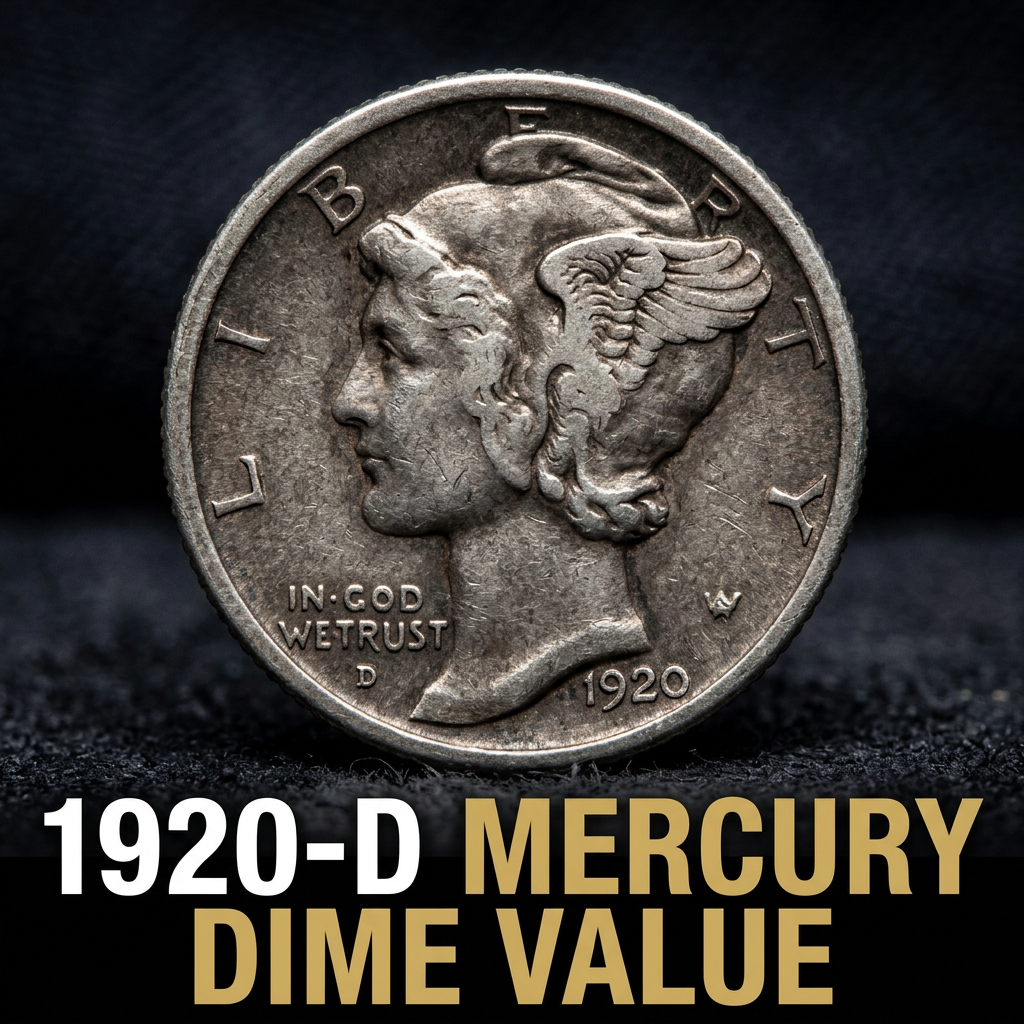
The 1920-D Mercury Dime is worth anywhere from about $4 in heavily worn condition to well over $200 in uncirculated grades — and if you’re lucky enough to have a Full Bands example, values can climb into the thousands. Whether you found one in a coin jar or inherited it from a relative, this little silver dime has real collector appeal.
What Makes the 1920-D Mercury Dime Special
The 1920-D Mercury Dime was struck at the Denver Mint and is part of the beloved Mercury Dime series, officially called the Winged Liberty Head Dime. Designed by Adolph A. Weinman, this coin features Lady Liberty wearing a winged cap — often mistaken for the Roman god Mercury, which is how the nickname stuck. The reverse displays a fasces bundled with an olive branch, symbolizing unity and peace.
If you’re trying to figure out exactly what you have, using the best coin identifier app can help you quickly identify the mint mark, date, and grade of your coin without needing specialized knowledge. The “D” mint mark on the 1920-D is found on the reverse, just to the right of the “E” in “ONE.” Denver produced a decent mintage for this year, but quality coins are still harder to find than you might expect. That’s what keeps demand strong among collectors today.
How Much Is the 1920-D Mercury Dime Worth by Grade
Coin value is almost entirely tied to condition, which collectors call “grade.” A heavily circulated coin that’s been in pockets for decades will show smooth, flat details and is worth the least. The closer a coin is to its original mint state, the more it’s worth. The 1920-D Mercury Dime holds strong value across most grades because of its age and silver content alone.
Here’s a general value guide based on typical market prices:
| Grade | Description | Estimated Value |
|---|---|---|
| G-4 (Good) | Heavy wear, date visible | $4 – $6 |
| VG-8 (Very Good) | Moderate wear, some detail | $6 – $10 |
| F-12 (Fine) | Moderate wear, clearer design | $10 – $16 |
| VF-20 (Very Fine) | Light to moderate wear | $18 – $28 |
| EF-40 (Extremely Fine) | Light wear on high points | $35 – $55 |
| MS-63 (Uncirculated) | No wear, some marks | $90 – $150 |
| MS-65 FB (Full Bands) | Gem condition, full strike | $500 – $2,500+ |
For a more detailed breakdown of certified auction prices, you can check out the 1920-D Mercury Dime price data across mint state grades to see what real coins have sold for at auction.
The Full Bands Designation and Why It Matters
If you’ve done any research on Mercury Dimes, you’ve probably come across the term “Full Bands” or “FB.” This refers to the horizontal bands on the fasces on the reverse of the coin. When a coin is struck with full detail and the bands are clearly separated and well-defined, it receives the Full Bands designation from grading services like PCGS or NGC.
This matters a lot for the 1920-D Mercury Dime. Most surviving examples — even uncirculated ones — do not show fully struck bands because Denver Mint coins from this era frequently came off the press with weak central detail. That’s why a certified MS-65 FB coin commands such a dramatic premium over a standard MS-65. It’s genuinely rare. If your coin looks sharp in the center and the bands are clearly visible, it could be worth having it professionally graded.
Silver Value and the 1920-D Mercury Dime’s Melt Worth
Even if your coin is too worn to interest a collector, it still contains real silver. Mercury Dimes are composed of 90% silver and 10% copper, with each coin containing approximately 0.07234 troy ounces of silver. At current silver prices hovering around $28–$32 per troy ounce, that puts the melt value of any Mercury Dime at roughly $2 to $2.30 or more.
So even in the worst condition — what collectors call “junk silver” — your 1920-D dime is worth something. Coin dealers will typically pay at or slightly above melt for circulated examples. For a quick and easy way to check current values on your phone, CoinHix is a fantastic tool that gives you live pricing and grade comparisons for coins just like this one.
How to Get the Best Price for Your 1920-D Mercury Dime
If you’re thinking about selling, your options include coin dealers, coin shows, online marketplaces like eBay, and auction houses. For common circulated examples, a local dealer is fast and convenient. For better-condition coins — anything grading EF or above — it pays to shop around. You can also look at the complete 1920 dime value information for all mint marks and grades before making any decisions.
Cleaning your coin is the single biggest mistake new collectors make. A cleaned coin loses significant value even if it looks shiny. If you think your 1920-D Mercury Dime might be in top condition, consider submitting it to PCGS or NGC for professional grading — the certification can unlock dramatically higher sale prices. CoinHix also lets you track and document your collection digitally so you’re always informed when it’s time to buy or sell.
Frequently Asked Questions
Q: How do I know if my 1920-D Mercury Dime has Full Bands?
A: Look at the reverse of the coin under good lighting and a magnifier. The bands crossing the center of the fasces should be fully separated with no blurring or merging. If they look crisp and complete, you may have a Full Bands coin — it’s worth submitting to a grading service to find out for sure.
Q: Is the 1920-D Mercury Dime rare?
A: It’s not considered a key date, but it’s not common in high grades either. The Denver Mint struck just over 19 million 1920-D dimes, which sounds like a lot, but most circulated heavily. Nice uncirculated examples — especially Full Bands — are genuinely scarce and sought after by collectors.
Q: Where can I find current prices for the 1920-D Mercury Dime?
A: The best sources are recent auction results from PCGS CoinFacts or NGC’s price guide. You can also use CoinHix to track real-time market prices by grade. Always compare at least two or three sources before deciding what your coin is worth or what you’d accept for it.