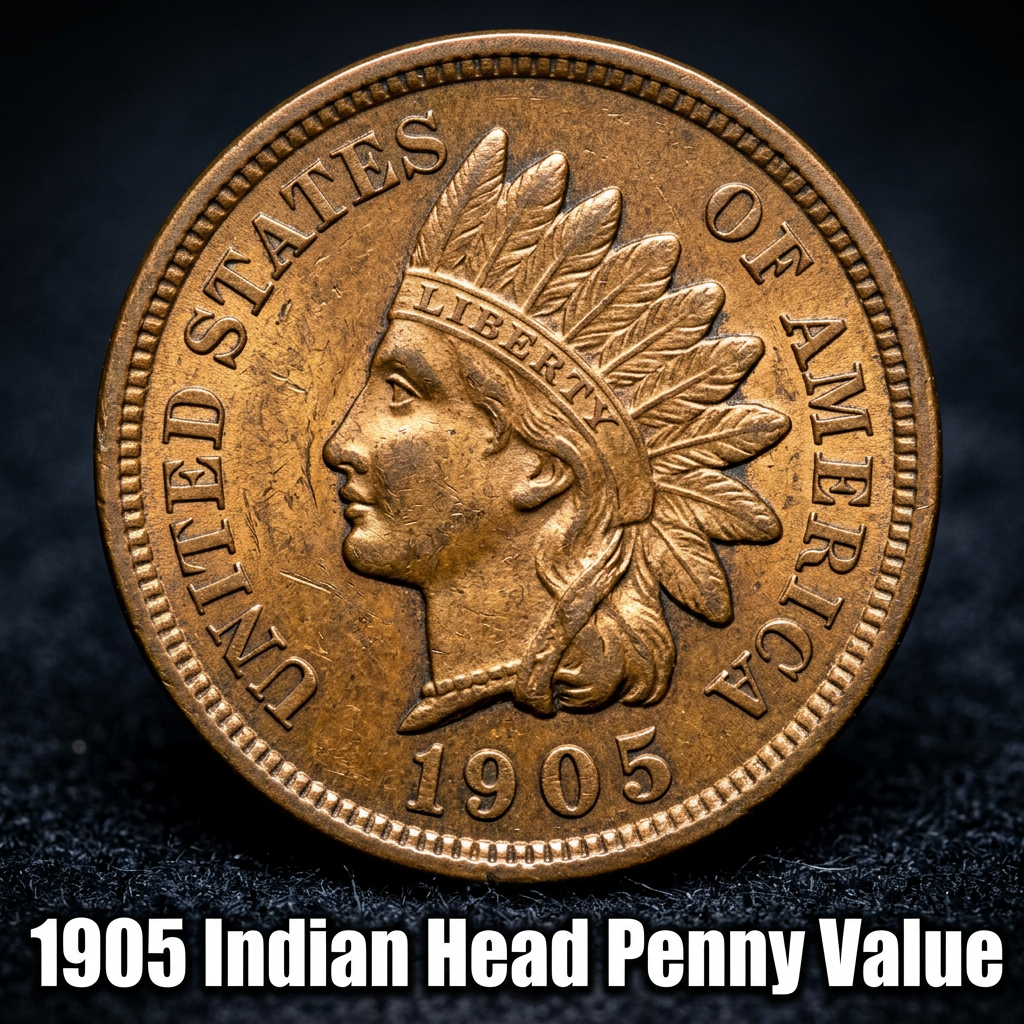
The 1905 Indian Head Penny is worth anywhere from $2 in heavily worn condition to over $100 or more in mint state, with some high-grade examples fetching even higher prices at auction. Whether you found one in an old jar or inherited it from a relative, you might be sitting on a coin worth more than a penny.
What Makes the 1905 Indian Head Penny Special
The 1905 Indian Head Penny was struck at the Philadelphia Mint, and no mint mark appears on these coins — that was standard for Philadelphia issues at the time. With a mintage of over 80 million coins, the 1905 cent is not considered rare in circulated grades. However, condition is everything in coin collecting. A well-worn example showing heavy flatness on the feathers and cheek of Lady Liberty may only bring a couple of dollars, while a coin with sharp details, original luster, and minimal marks can command serious money.
If you’re not sure what you’re looking at, using the best coin identifier app can help you quickly identify the coin, confirm the date and design details, and get a baseline value estimate before you take it to a dealer. Technology has made coin identification much easier for everyday collectors and curious finders alike.
1905 Indian Head Penny Value by Grade
Coin values depend heavily on their grade, which is a standardized measure of condition on a scale from 1 to 70. Here’s a general breakdown of what the 1905 Indian Head Penny is worth across different grades:
| Grade | Description | Estimated Value |
|---|---|---|
| Good (G-4) | Heavy wear, outline visible | $2 – $4 |
| Very Good (VG-8) | Moderate wear, some detail | $4 – $7 |
| Fine (F-12) | Even wear, clear lettering | $8 – $12 |
| Very Fine (VF-20) | Light wear on high points | $15 – $25 |
| Extremely Fine (EF-40) | Slight wear, strong details | $30 – $50 |
| Mint State (MS-63) | Uncirculated, minor marks | $75 – $120 |
| Mint State (MS-65+) | Gem uncirculated, full luster | $200+ |
For the most accurate and up-to-date pricing, you can check the 1905 Indian Head Penny price data in mint red condition directly on CoinHix, which tracks real market values across grades and surface designations.
How to Assess Your Coin’s Condition at Home
Before you run to a coin shop, take a close look at your 1905 Indian Head Penny under good lighting. Focus on the feathers in the headdress — these are the first details to wear down. If you can count individual feather lines clearly, your coin is likely in Fine or better condition. Next, check the diamond-shaped beads on the ribbon and the word LIBERTY on the headband. In lower grades, LIBERTY may be faint or partially missing.
Also look for any cleaning. Cleaned coins — even ones that look shiny — are worth significantly less to collectors because the original surface has been altered. A coin that has been polished may appear bright but will lack the natural luster of a genuine uncirculated piece. Avoid rubbing or cleaning your coin before having it assessed.
CoinHix is a great tool to scan your coin and get an instant grade estimate based on photos, which takes the guesswork out of the process. Many everyday people have used CoinHix to quickly sort valuable coins from common ones without needing expert knowledge.
Red, Red-Brown, or Brown — Why Color Matters for Mint State Coins
If your 1905 Indian Head Penny appears to be uncirculated, there’s one more factor that can significantly affect its value: the color designation. Copper coins in mint state are graded not just by sharpness but also by how much of their original reddish surface remains.
– Red (RD): At least 95% original red color — the most valuable designation
– Red-Brown (RB): A mix of red and brown toning — mid-range value
– Brown (BN): Mostly brown toning, original red has faded — lowest value among uncirculated coins
A gem mint state example graded MS-65 Red can be worth two to three times as much as the same grade in Brown. This makes color an important consideration when evaluating higher-grade examples of the 1905 cent.
For a full breakdown of how color affects the complete 1905 Indian Head Penny value across all grades and surface types, that resource provides an easy-to-follow overview for beginners and experienced collectors alike.
Where to Sell Your 1905 Indian Head Penny
If you’ve determined your coin has some value, there are several ways to sell it. Online platforms like eBay allow you to reach thousands of coin buyers directly. Heritage Auctions and Stack’s Bowers are premier auction houses that handle higher-value coins. Local coin dealers are a convenient option, though they typically offer wholesale prices since they need to resell at a profit.
Getting your coin graded and certified by PCGS or NGC before selling is highly recommended for any example you believe is in Extremely Fine or better condition. A certified grade adds credibility and often results in a higher final sale price. You can also use CoinHix to compare recent sale prices before deciding where and how to sell.
—
FAQ
Q: Is the 1905 Indian Head Penny rare?
A: Not particularly. With over 80 million minted, it is one of the more common dates in the Indian Head Penny series. However, finding one in high mint state grades is genuinely difficult, and those examples can be quite valuable.
Q: What does the “no mint mark” mean on my 1905 penny?
A: It means the coin was struck at the Philadelphia Mint. Philadelphia did not place a mint mark on most coins during this era, so the absence of a mint mark is completely normal and expected for the 1905 Indian Head Penny.
Q: Should I clean my 1905 Indian Head Penny before selling it?
A: Absolutely not. Cleaning a coin — even lightly — can reduce its value by 50% or more. Collectors and dealers strongly prefer original, uncleaned surfaces, even if they appear dull or dark. Leave the coin exactly as you found it.