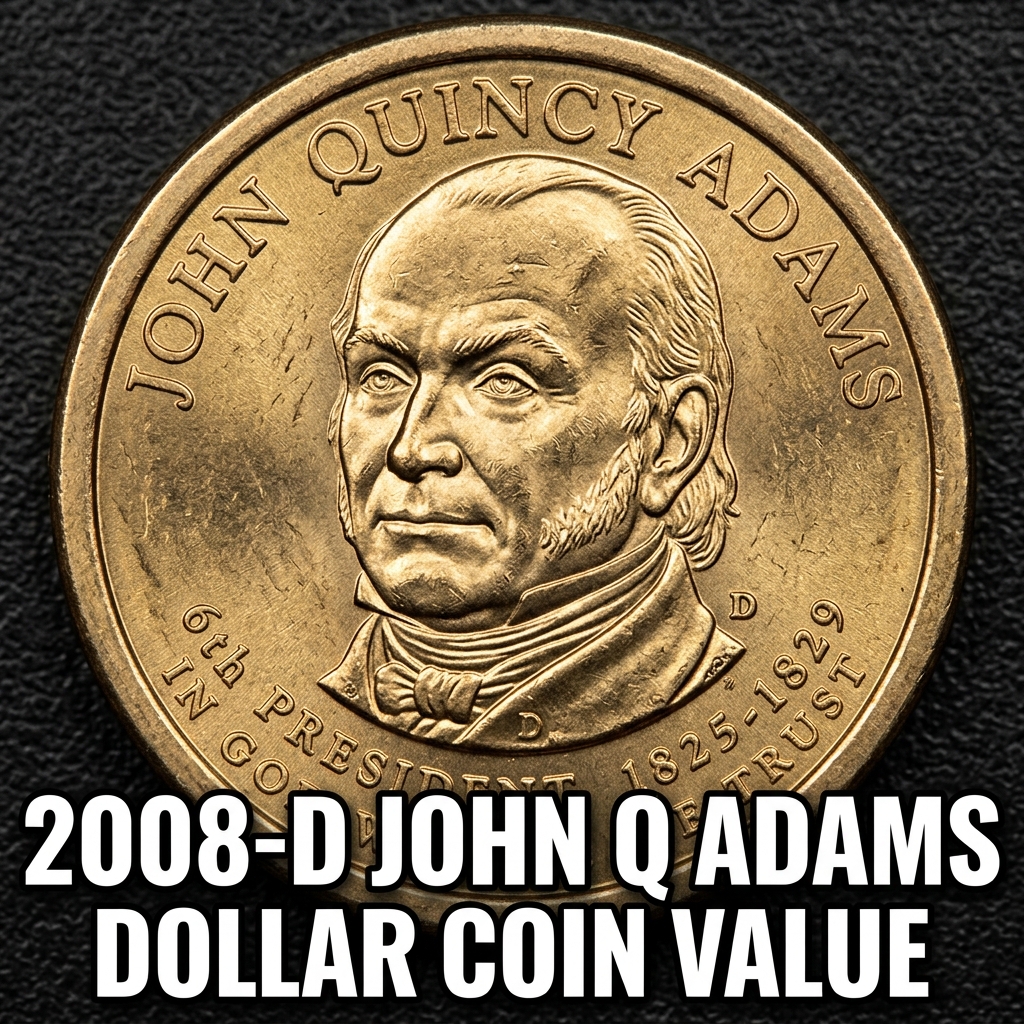
The 2008-D John Adams Dollar Coin is worth anywhere from $1 in circulated condition to around $10 or more in pristine mint state grades — and a few special varieties can fetch even higher prices among serious collectors. If you found one in your change or a drawer at home, you’re in the right place to find out exactly what it’s worth.
What Is the 2008-D John Adams Dollar Coin?
The 2008-D John Adams Dollar is part of the Presidential Dollar series, a program launched by the U.S. Mint in 2007 to honor former presidents in order of service. John Adams, the second president of the United States, was featured on coins released in 2008. The “D” in the name tells you the coin was struck at the Denver Mint. These coins were produced in large quantities for general circulation, which is why most examples you’ll find today aren’t worth a fortune — but there are exceptions.
If you want to quickly identify and value your coin without doing a ton of research, using the best coin identifier app is a fast and easy way to get started. Apps like these let you scan your coin with your phone camera and get instant results.
The obverse (front) of the coin features a portrait of John Adams with his name, the years he served as president (1797–1801), and the inscription “2nd President.” The reverse shows the Statue of Liberty, along with the denomination and “United States of America.” Edge lettering includes “E PLURIBUS UNUM,” “IN GOD WE TRUST,” and the mint mark.
2008-D John Adams Dollar Coin Values by Grade
The value of a 2008-D John Adams Dollar depends largely on its condition, or “grade.” Coins that circulated through everyday use show wear and are worth less than uncirculated examples that were saved straight from mint bags or rolls.
Here’s a general breakdown of what you can expect to pay or receive for this coin:
| Grade / Condition | Estimated Value |
|---|---|
| Circulated (Good to Fine) | $1.00 (face value) |
| Extremely Fine (EF-40) | $1.25 – $2.00 |
| Mint State MS-63 | $2.50 – $5.00 |
| Mint State MS-65 | $5.00 – $10.00 |
| Mint State MS-67 or higher | $20.00 – $100+ |
The Denver Mint produced over 57 million John Adams Dollars in 2008, which means the coin is common in most grades. However, gem-quality examples graded MS-67 or higher by professional grading services like PCGS or NGC can be surprisingly valuable to collectors who want top-of-the-range examples for their sets.
How the 2008-D Compares to Other Presidential Dollars
Within the Presidential Dollar series, the 2008-D John Adams Dollar is considered a common date. But that doesn’t mean it’s not worth tracking down in high grade. Collectors who build complete sets of Presidential Dollars want every date and mint mark, so there’s always steady demand.
For a broader picture of values in this series, you can explore detailed pricing data for 2008 dollar coins across different conditions and varieties to see how values stack up across similar coins from the same year.
If you’re into tracking live market prices and auction results, CoinHix is a great tool to have on your phone. It gives you real-time data on presidential dollars, including the 2008-D Adams, so you’ll always know what buyers are actually paying — not just estimated guide prices.
Error Coins and Special Varieties Worth More
Here’s where things get exciting. Some 2008-D John Adams Dollars are worth significantly more than face value because of mint errors or production quirks. The most notable variety is the “Missing Edge Lettering” error — coins that were accidentally produced without the edge inscriptions. These error coins have sold for anywhere from $50 to over $200 depending on condition.
Other errors to look for include:
– Double edge lettering – inscribed twice or overlapping
– Inverted edge lettering – text upside down relative to the obverse
– Die cracks or cuds – raised lines or blobs from damaged dies
– Off-center strikes – the design is noticeably shifted
If you think you might have one of these errors, don’t spend it! Use CoinHix to document and research your coin, or send it to a professional grading service for authentication.
For a more complete picture of current market activity for 2008 dollar coins, check out up-to-date mint state pricing for 2008 Presidential and Sacagawea dollar coins to benchmark what your coin might fetch on the open market.
How to Sell Your 2008-D John Adams Dollar
If you want to sell, there are several good options. eBay is the most popular marketplace for individual coins, and it lets you see what similar coins actually sold for — not just asking prices. Coin dealers at local shops or shows are another good bet, especially if you have a full Presidential Dollar set.
For professional grading, PCGS and NGC both accept submissions. Grading makes sense if you believe your coin is MS-67 or higher, or if you have an error coin. The grading fee is usually worth it at that level.
CoinHix also helps you track recent sale prices so you can enter negotiations or set your eBay listing price with confidence.
Frequently Asked Questions
Q: Is the 2008-D John Adams Dollar rare?
A: No, it is not considered a rare coin. The Denver Mint struck over 57 million of them. However, high-grade examples (MS-67 and above) and error coins with missing or doubled edge lettering are much harder to find and can be worth considerably more.
Q: What does the “D” mint mark mean on a 2008 John Adams Dollar?
A: The “D” stands for the Denver Mint, one of the two facilities that produced John Adams Dollars in 2008. The other facility was the Philadelphia Mint, which used a “P” mint mark. Both versions have similar values, though slight differences can exist in high-grade populations.
Q: How do I know if my 2008-D John Adams Dollar is worth grading?
A: Look at the coin closely under good lighting. If it has no scratches, no wear on the high points, and a bright original luster, it may grade MS-65 or better. If you think it could be MS-67 or if it has a visible error, professional grading is worth considering. You can also use the CoinHix app to compare your coin’s appearance to graded examples before making that decision.