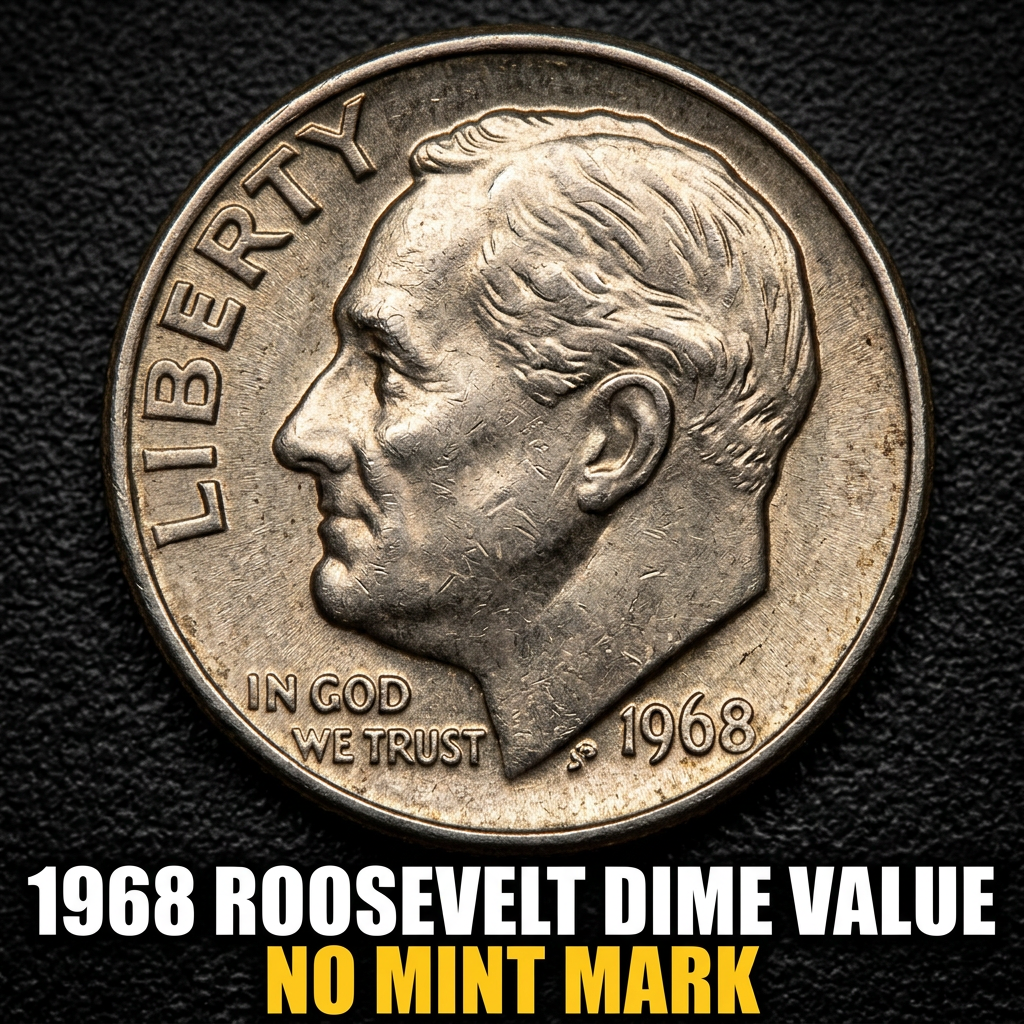
The 1968 Roosevelt Dime with no mint mark is worth anywhere from 10 cents in heavily circulated condition to around $15 or more in pristine mint state — and certain well-preserved examples have sold for significantly higher at auction. If you’ve found one of these dimes sitting in a jar or an old coin collection, you’re in the right place to find out exactly what it’s worth.
What the No Mint Mark Means on a 1968 Dime
If your 1968 Roosevelt dime has no mint mark, that means it was struck at the Philadelphia Mint. During this era, Philadelphia didn’t place a mint mark on its coins — a tradition that continued until 1980. So don’t worry if you can’t find a small letter on your coin; it simply means Philadelphia made it. In 1968, the Philadelphia Mint produced over 424 million Roosevelt dimes, which is why these coins are relatively common in circulated grades. However, common doesn’t always mean worthless, especially when you find one in exceptional condition. To quickly identify your coin and check its grade, many collectors today use a best coin identifier app right from their phone — it saves a lot of time and guesswork.
1968 Roosevelt Dime Value by Grade
The condition of your coin matters more than almost anything else when it comes to value. A well-worn 1968 dime with flat details and heavy scratches is worth face value — just 10 cents. But as condition improves, so does the price. Here’s a quick breakdown of typical values for the 1968 no mint mark Roosevelt dime:
| Grade | Condition Description | Estimated Value |
|---|---|---|
| Good (G-4) | Heavy wear, flat details | $0.10 – $0.25 |
| Fine (F-12) | Moderate wear, some detail visible | $0.25 – $0.50 |
| Extremely Fine (EF-40) | Light wear on high points | $0.75 – $1.50 |
| Mint State (MS-63) | Uncirculated, some bag marks | $2 – $5 |
| Mint State (MS-65) | Gem uncirculated, sharp luster | $8 – $15+ |
| MS-67 and above | Superb gem, rarely found | $50 – $200+ |
For a deeper look at certified sale prices across different grades, you can browse up-to-date 1968 Roosevelt Dime MS price data that tracks real auction results.
Are Any 1968 No Mint Mark Dimes Worth a Lot of Money
Most 1968 Philadelphia dimes you find in change or old rolls aren’t going to make you rich overnight. But that doesn’t mean every coin is ordinary. The real excitement comes from high-grade mint state examples — especially those graded MS-67 or higher by professional grading services like PCGS or NGC. These superb gems are genuinely rare because most coins from this era were thrown into circulation or stored carelessly. A certified MS-67 Full Bands (FB) example — meaning the horizontal bands on the torch on the reverse are fully struck — can bring $100 to $200 or more at auction. Full Bands designation indicates a sharply struck coin, which collectors prize heavily. CoinHix is a great tool to track these high-grade auction records and see what similar coins have actually sold for recently.
How to Check Your 1968 Dime at Home
You don’t need to be an expert to get a rough idea of what your coin is worth. Start by examining it under good lighting — natural light or a simple desk lamp works fine. Look at Roosevelt’s hair above the ear and the torch on the reverse side. If the details are sharp and you can see clear separation in the torch’s bands, you might have a better-than-average example. Check for any cleaning (a dull, washed-out look is a giveaway) since cleaned coins lose most of their collector value. For a quick scan, CoinHix lets you photograph your coin and compare it to graded examples in seconds. You can also find detailed 1968 dime value information by grade and mint mark to cross-reference your findings before deciding whether professional grading is worth the cost.
Should You Get Your 1968 Roosevelt Dime Graded
Professional grading by PCGS or NGC costs money — typically $20 to $50 per coin at minimum tiers — so it only makes financial sense if your coin looks genuinely exceptional. If your 1968 no mint mark dime has brilliant luster, no visible marks under magnification, and sharp strike details, submitting it for grading could pay off. A coin that grades MS-66 or MS-67 could return ten to twenty times its raw value. For anything below MS-65, grading fees will likely outweigh the payoff. Use CoinHix to compare your coin visually to certified examples and get a realistic sense of whether submission is worth it before spending the money.
FAQ
Q: Is a 1968 Roosevelt dime with no mint mark rare?
A: No, the 1968 Philadelphia dime is not rare — over 424 million were minted. However, high-grade uncirculated examples, especially those graded MS-67 or above with Full Bands designation, are genuinely scarce and can be quite valuable.
Q: How can I tell if my 1968 dime is uncirculated?
A: An uncirculated coin will show no wear on the high points — check Roosevelt’s cheekbone, hair above the ear, and the torch on the reverse. The coin should have original mint luster, which appears as a cartwheel-like shine when you tilt it under light. Any flat or dull areas suggest the coin was circulated.
Q: What does Full Bands mean on a 1968 Roosevelt dime?
A: Full Bands (FB) refers to the horizontal bands that cross the torch on the reverse of the dime. On a fully struck coin, these bands are sharply separated and clearly defined. Coins with Full Bands are more desirable to collectors because they indicate an above-average strike, and they typically sell for a premium over standard examples at the same grade level.