The 1995-D Washington Quarter is worth between $0.25 and $10 in typical circulated condition, but well-preserved mint state examples can fetch $20 or more depending on grade and eye appeal. If you found one in your pocket change or an old coin jar, you’re in the right place to find out exactly what it’s worth.
What Is the 1995-D Washington Quarter
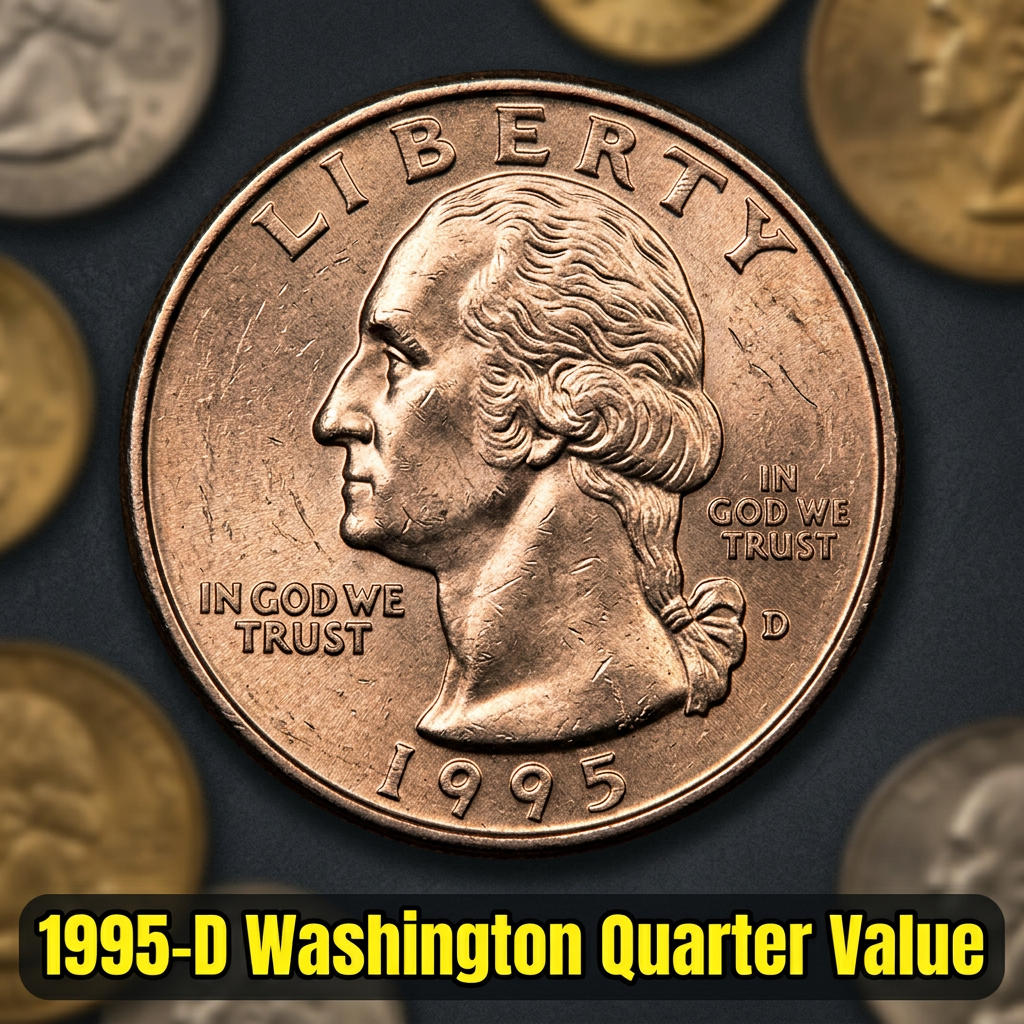
The 1995-D Washington Quarter was struck at the Denver Mint, which is indicated by the small “D” mintmark found on the obverse of the coin, just to the right of Washington’s portrait. Denver produced over 1.1 billion of these quarters in 1995, making this a high-mintage coin that’s still very common in circulation today. Despite its abundance, collectors still seek out pristine, uncirculated examples with sharp details and original luster. If you’re new to coin collecting and want a quick way to identify and value coins from your collection, using the best coin identifier app is a great starting point before doing deeper research.
The Washington Quarter series itself began in 1932 and has become one of the most collected U.S. coin series in history. The obverse features a left-facing portrait of George Washington designed by sculptor John Flanagan, while the reverse displays an eagle with outstretched wings. The design on the 1995-D is the classic pre-State Quarter reverse, which was used until 1998. Coins in this condition represent the everyday workhorse of American commerce during the mid-1990s, and many still turn up in change rolls, coin jars, and old piggy banks.
How Much Is the 1995-D Washington Quarter Worth
For most people who find a 1995-D quarter in average circulated condition, the coin is worth face value — just 25 cents. However, the story changes significantly when you start looking at higher grade specimens. Dealers and collectors actively seek examples graded MS-65 or above, and those coins can sell for real money at auction. You can browse current Washington Quarter price data and recent auction records to get a clearer sense of where the market stands right now.
Here’s a breakdown of approximate values across different grades:
| Grade | Condition | Estimated Value |
|---|---|---|
| G-4 (Good) | Heavily worn | $0.25 |
| VF-20 (Very Fine) | Moderate wear | $0.25 – $0.50 |
| MS-63 (Mint State) | Uncirculated, some marks | $3 – $6 |
| MS-65 (Gem) | Bright luster, minimal marks | $10 – $20 |
| MS-67 (Superb Gem) | Near perfect | $50 – $150+ |
Keep in mind that values fluctuate with the market, so it’s always smart to check recent sales before buying or selling.
Key Factors That Affect the 1995-D Quarter Value
Several important factors determine how much your 1995-D Washington Quarter is actually worth. The most critical is grade — the physical condition of the coin. A coin with no wear, original mint luster, and sharp strike details is worth far more than one that’s been rattling around in pockets for decades. Beyond grade, eye appeal matters too. Coins with attractive, clean surfaces and no heavy contact marks command premiums even within the same technical grade.
Strike quality is another factor worth noting. Some 1995-D quarters show weakness in certain design elements, particularly on Washington’s hair above the ear. A strongly struck example will always be more desirable. Collectors using CoinHix frequently filter for strike quality when searching recent sales, making it a powerful tool for understanding exactly what the market is paying for high-quality examples. CoinHix provides access to real-time auction data that helps collectors make smarter buying and selling decisions without guesswork.
Error Coins and Special Varieties of the 1995-D Quarter
While the 1995-D quarter is not known for any major, widely catalogued varieties, error coins do occasionally surface in this year and mintmark combination. Die cracks, off-center strikes, and doubled die errors have been reported on various Washington Quarters from this era, and when confirmed, these errors can add meaningful premiums to an otherwise common coin. An off-center strike showing 10–20% misalignment might bring $20 to $50 or more depending on the severity and collector demand. A dramatic 50% off-center example could easily exceed $100.
If you suspect your 1995-D quarter has an error, examine it carefully under good lighting with a magnifying loupe. Look for doubling on the date, lettering, or portrait details. You can also reference detailed 1995 quarter value information including error premiums and variety pricing to compare what you’re seeing. When in doubt, submitting the coin to a professional grading service like PCGS or NGC will give you a certified answer and a grade that buyers can trust.
Should You Hold or Sell Your 1995-D Washington Quarter
For most circulated examples, the honest answer is that the 1995-D quarter is a face-value coin. But if you’re sitting on a roll of uncirculated 1995-D quarters you’ve saved since new, it might be worth sorting through them. Coins grading MS-66 or better are genuinely scarce in certified form and can attract serious collector interest. CoinHix makes it easy to track recent sales at those top grades so you can time a sale strategically when demand is high.
If you’re just getting started in coin collecting or want to organize a larger collection, building good habits early pays off. Keep coins in protective holders, avoid cleaning them — which destroys value — and always research before selling. A little patience and the right tools can turn a casual find into a rewarding hobby or even a smart financial decision.
—
FAQ
Q: Is the 1995-D Washington Quarter rare?
A: No, the 1995-D quarter is not rare. The Denver Mint produced over 1.1 billion of them, making it one of the most common quarters in circulation. However, high-grade uncirculated examples certified MS-67 or above are genuinely scarce and do carry collector premiums.
Q: What does the “D” mintmark mean on a 1995 quarter?
A: The “D” mintmark indicates the coin was struck at the Denver Mint in Colorado. You’ll find it on the obverse of the coin, just to the right of Washington’s portrait near the base of his neck. The Philadelphia Mint also produced quarters in 1995, marked with a “P.”
Q: How can I tell if my 1995-D quarter is uncirculated?
A: An uncirculated quarter will show original mint luster — a soft, cartwheel-like sheen that flows across the coin’s surface when you tilt it under light. There should be no flat, dull areas caused by wear on the high points of Washington’s cheek and hair. Any signs of rubbing or dullness on those spots indicate the coin has been circulated.