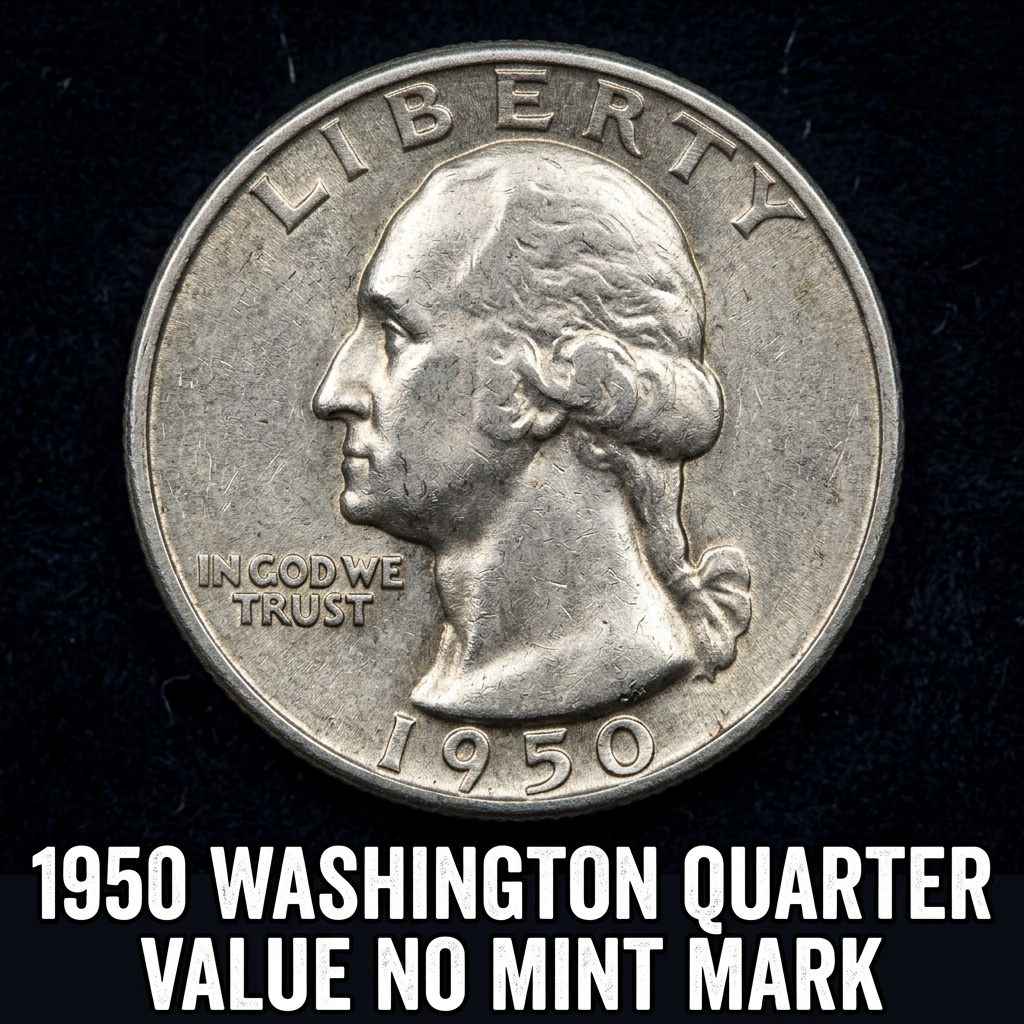
The 1950 Washington Quarter with no mint mark is worth anywhere from $6 in heavily worn condition to over $400 or more in high-grade mint state — making it a coin that’s definitely worth a closer look if you’ve found one in an old collection or coin jar.
If you’re trying to figure out exactly what you’ve got, using the best coin identifier app on your phone can save you a lot of time and guesswork before you head to a dealer or auction site.
What Is the 1950 Washington Quarter No Mint Mark?
The 1950 Washington Quarter with no mint mark was struck at the Philadelphia Mint, which was the standard practice at the time — Philadelphia didn’t add a mint mark to its coins until 1980. That means if your 1950 quarter has no “D” or “S” on the reverse, it came from Philly. The mintage for this issue was 24,920,126 coins, which is a reasonably large number, but that doesn’t mean every example is common in nice condition. After seven decades of circulation, most of these quarters show significant wear on Washington’s cheek and hair, as well as on the eagle’s breast feathers on the reverse. Collectors are always hunting for well-struck, lightly circulated or uncirculated survivors. The coin is composed of 90% silver and 10% copper, so even a well-worn example carries some intrinsic silver melt value, which currently hovers around $4 to $5 depending on the spot price of silver.
How to Grade Your 1950 Quarter and Why It Matters
Grading is everything when it comes to coin values. The difference between a circulated 1950 Philadelphia quarter worth $6 and an uncirculated one worth several hundred dollars often comes down to tiny details in the coin’s surfaces. Here’s a quick breakdown of what to look for:
– Good (G-4): Heavy wear, design visible but flat, major details worn smooth
– Fine (F-12): Moderate wear, some detail remains in hair and feathers
– Extremely Fine (XF-45): Light wear on high points only, most detail sharp
– About Uncirculated (AU-58): Slight friction, nearly full luster
– Mint State (MS-60 to MS-67): No wear at all, varies by surface quality and luster
| Grade | Estimated Value |
|---|---|
| Good (G-4) | $6 – $8 |
| Fine (F-12) | $8 – $12 |
| Extremely Fine (XF-45) | $12 – $20 |
| About Uncirculated (AU-58) | $22 – $35 |
| Mint State (MS-63) | $50 – $90 |
| Mint State (MS-65) | $150 – $250 |
| Mint State (MS-67) | $400+ |
For a more detailed look at certified sale prices and current auction records, the 1950 Washington Quarter mint state price data on CoinHix is one of the best free resources out there. You can also scan your coin directly with CoinHix to get an instant grade estimate right from your smartphone.
What Makes a 1950 Quarter More Valuable?
Not all 1950 Philadelphia quarters are equal. A few factors can push the value significantly higher:
Full Head Strike: Washington quarters are sometimes evaluated for the sharpness of the strike on Washington’s hair, particularly the area above the ear. A coin with crisp, well-defined hair lines commands a premium.
Original Luster: Uncirculated coins with bright, original mint luster are more desirable than dull or cleaned examples. Cleaning a coin actually destroys value, so resist the urge to polish that old quarter.
Eye Appeal: Professional graders at PCGS and NGC also factor in overall eye appeal. Coins with attractive, original surfaces, no spots, and strong strikes earn higher numeric grades — and higher prices.
Certified vs. Raw: A coin graded MS-65 by PCGS or NGC is worth considerably more than an ungraded coin claimed to be the same grade. Certification matters when selling.
You can explore detailed 1950 quarter value information by grade and condition to see how these factors affect real-world prices before deciding whether professional grading is worth the cost for your coin.
Should You Get Your 1950 Quarter Appraised or Certified?
For circulated examples in lower grades, professional certification probably isn’t worth the fee. If your coin grades out around G through XF, it’s worth $6 to $20, and sending it to PCGS or NGC would cost more than the coin itself. However, if your 1950 quarter looks like it was never used — bright, lustrous, with sharp details — certification could genuinely multiply its value. An MS-65 example in a PCGS or NGC holder regularly sells for $150 to $250 at major coin auctions, and top-tier MS-67 coins have crossed $400 or more at Heritage Auctions.
Not sure where your coin falls? CoinHix offers a quick visual grading tool that helps you compare your coin against certified examples side by side. It’s a great first step before you decide to pay for professional authentication.
—
Frequently Asked Questions
Q: Is a 1950 quarter with no mint mark rare?
A: Not particularly rare in circulated grades — nearly 25 million were minted in Philadelphia. However, high-grade uncirculated examples (MS-65 and above) are genuinely scarce and command strong premiums from collectors.
Q: How much silver is in a 1950 Washington Quarter?
A: The 1950 quarter is 90% silver and contains approximately 0.1808 troy ounces of pure silver. At current silver prices, the melt value is roughly $4 to $5, so it’s always worth at least that much regardless of condition.
Q: Where is the mint mark on a 1950 Washington Quarter?
A: On Washington quarters from this era, the mint mark appears on the reverse side, just above the “R” in QUARTER. If you see no letter there, the coin was made at the Philadelphia Mint — which is perfectly normal for this date.