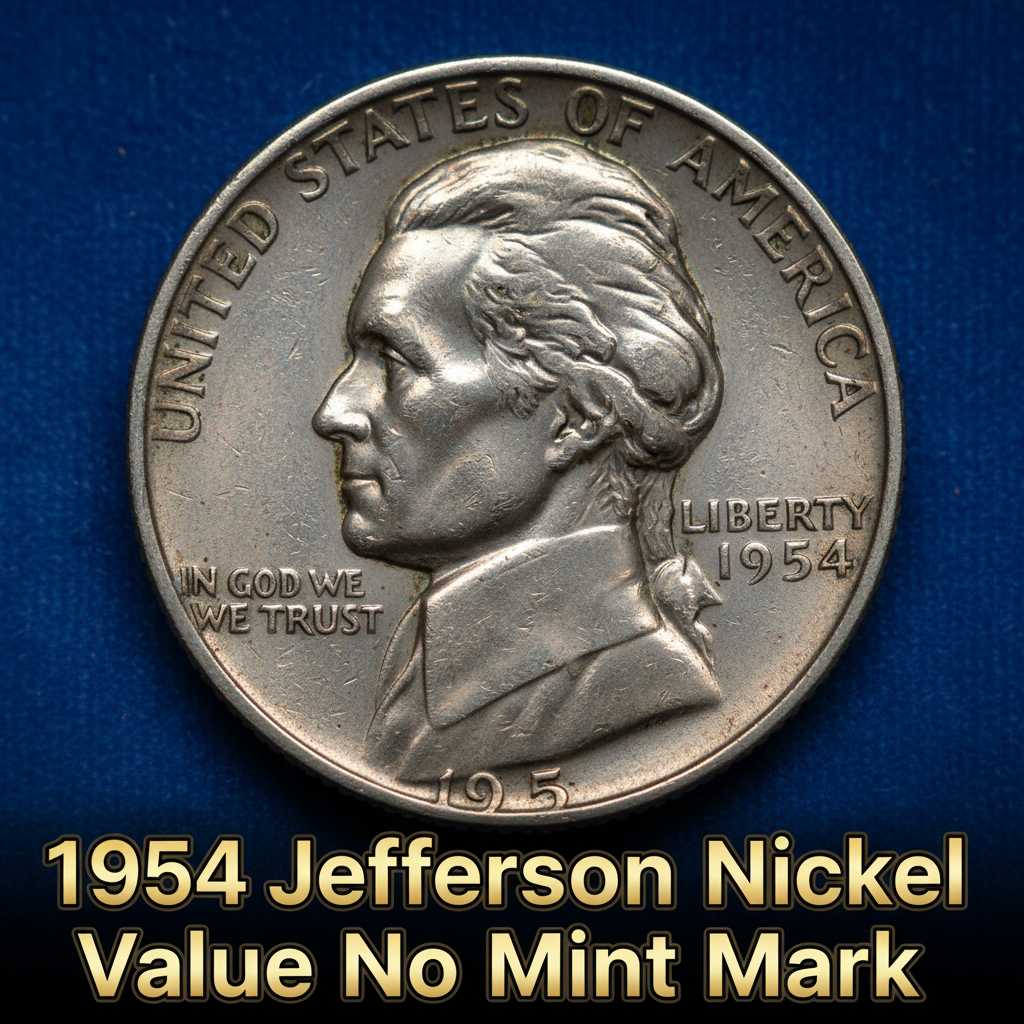
The 1954 Jefferson Nickel with no mint mark is worth anywhere from 10 cents in heavily circulated condition to over $30 or more in uncirculated grades — and a handful of top-tier examples have sold for hundreds of dollars at auction. If you found one of these nickels in an old coin jar or inherited collection, you’re in the right place to find out exactly what you’ve got.
What Does “No Mint Mark” Mean on a 1954 Nickel?
When a coin has no mint mark, it means it was made at the Philadelphia Mint. In 1954, Philadelphia was the main production facility for Jefferson Nickels, and coins struck there carried no mint mark at all — that was simply the convention of the era. The 1954 Jefferson Nickel no mint mark is the most common variety from that year, with Philadelphia producing over 47 million pieces. That high mintage is one reason most circulated examples aren’t worth a fortune. But don’t toss it aside just yet — condition is everything in coin collecting. If you’re not sure what you’re looking at, using the best coin identifier app can help you quickly identify your coin’s mint mark, grade estimate, and variety before you start making decisions about its value.
How Much Is a 1954 Jefferson Nickel No Mint Mark Worth?
The value of a 1954 Jefferson Nickel with no mint mark depends almost entirely on its condition, which collectors refer to as “grade.” A well-worn coin that’s been through decades of pocket change will only be worth face value or a small premium. But as the grade improves, so does the price — sometimes dramatically.
Here’s a general value breakdown:
| Grade / Condition | Estimated Value |
|---|---|
| Good (G-4) | $0.10 – $0.25 |
| Fine (F-12) | $0.25 – $0.50 |
| Extremely Fine (EF-40) | $0.75 – $2.00 |
| About Uncirculated (AU-55) | $2.00 – $5.00 |
| MS-63 (Uncirculated) | $8 – $15 |
| MS-65 (Gem Uncirculated) | $20 – $35 |
| MS-66 and above | $50 – $200+ |
You can check up-to-date 1954 Jefferson Nickel mint state price data to see how recent auction results and certified coin sales compare to these estimates.
What Makes a 1954 No Mint Mark Nickel More Valuable?
Most people assume that age alone makes a coin valuable, but collectors care much more about eye appeal and preservation. A 1954 Jefferson Nickel no mint mark in MS-65 or higher will show sharp details on Monticello (the building on the reverse), fully separated steps on the building’s front staircase, and no visible bag marks or contact scratches. Coins that show what’s known as “Full Steps” — where all five or six steps of Monticello are fully struck and clear — command a significant premium over standard uncirculated examples. A Full Steps designation from a third-party grading service like PCGS or NGC can push values into the hundreds of dollars for top-grade specimens. The luster of the coin also matters. Original, untouched mint luster that flows naturally across the surface is a strong sign that a coin hasn’t been cleaned or tampered with — and that alone can make a big difference in what a dealer or collector will pay.
Other 1954 Jefferson Nickel Varieties Worth Knowing
While the Philadelphia no-mint-mark coin is the most common, 1954 also saw production at two other mints. The 1954-S (San Francisco) had a mintage of about 29.4 million, while the 1954-D (Denver) had a massive mintage of over 117 million — making the Denver coins the most common of the three. In very high grades, all three varieties can be desirable, but Philadelphia and San Francisco issues are generally favored by type collectors. For a broader look at complete 1954 nickel value information including all mint marks, it’s worth comparing all three side by side before deciding if yours is worth getting certified.
If you want to quickly identify which variety you have, CoinHix is a great tool that can help you sort out mint marks, estimate grades, and even compare recent sale prices — all from your phone.
Should You Get Your 1954 Jefferson Nickel Graded?
For most circulated examples, professional grading isn’t worth the cost. Grading fees from PCGS or NGC typically start around $20–$30 per coin, so unless you’re confident your coin grades MS-65 or higher — especially with Full Steps — you might spend more than the coin is worth. However, if your 1954 Jefferson Nickel no mint mark looks pristine, has strong luster, and you can count all the steps on Monticello clearly, it’s worth having a professional take a look. Use CoinHix to do a quick preliminary check at home before committing to certification costs. The app can give you a solid ballpark on whether your coin is worth pursuing further.
Frequently Asked Questions
Q: Is a 1954 Jefferson Nickel with no mint mark rare?
A: No, the 1954 Philadelphia (no mint mark) Jefferson Nickel is not rare. With over 47 million minted, it’s one of the more common coins of the series. However, high-grade uncirculated examples — especially those with Full Steps — are genuinely scarce and can be worth significant premiums.
Q: How do I know if my 1954 nickel is in good enough condition to be worth selling?
A: Look at the design details under good lighting or a magnifying glass. If Jefferson’s hair lines above his ear are sharp, and you can count the steps on Monticello clearly, you likely have a coin in Extremely Fine or better condition. For a more accurate assessment, scan it with CoinHix or take it to a local coin dealer for a free opinion.
Q: Where is the mint mark on a 1954 Jefferson Nickel?
A: On Jefferson Nickels from this era, the mint mark appears on the reverse (back) of the coin, to the right of Monticello. If there’s no letter in that spot, the coin was made in Philadelphia and carries no mint mark — which is completely normal for this issue.