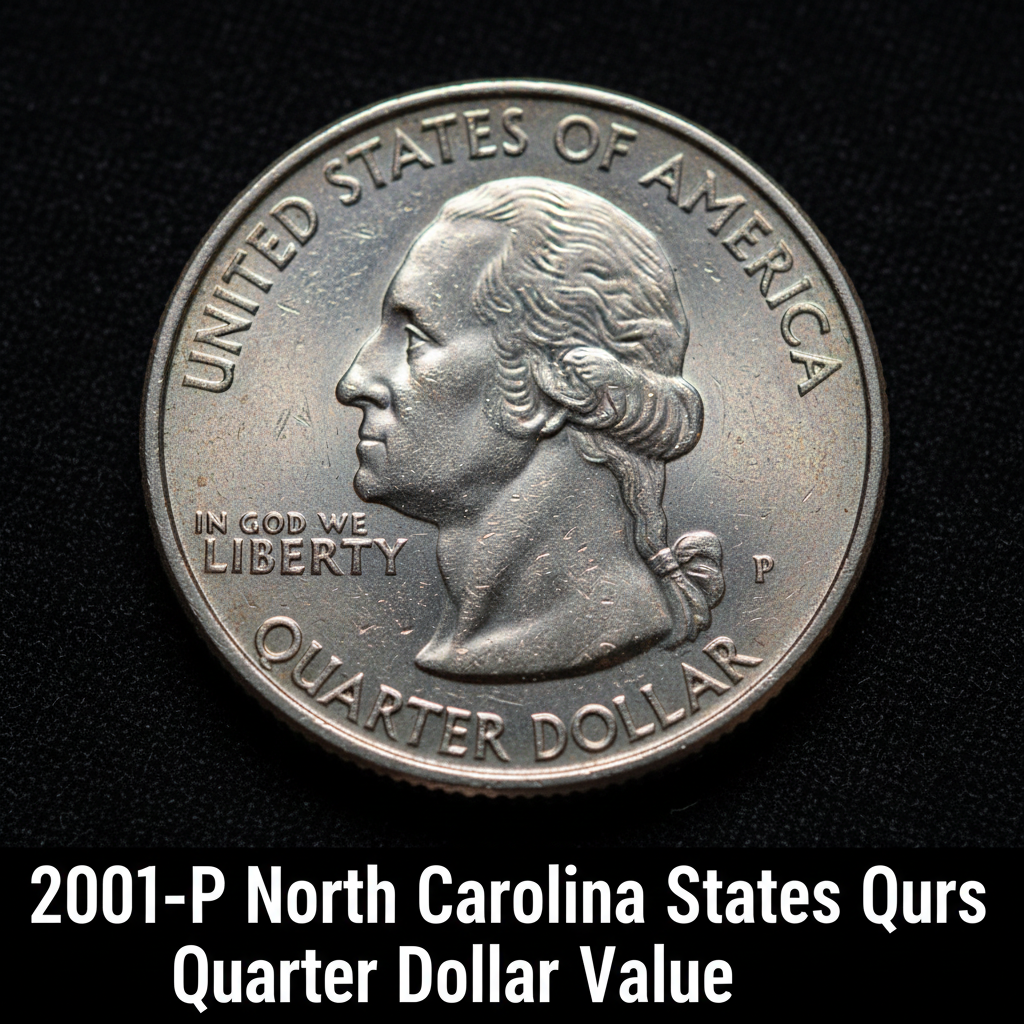
If you’ve come across a 2001-P North Carolina State Quarter, you’re looking at a coin worth anywhere from 25 cents in circulated condition to $10 or more in pristine mint state — and sometimes even higher for top-grade certified examples. Whether you found it in a coin jar or a family collection, this guide will help you figure out exactly what it’s worth.
What Is the 2001-P North Carolina State Quarter?
The 2001-P North Carolina State Quarter is part of the United States Mint’s 50 State Quarters Program, which ran from 1999 to 2008. Each state got its own unique reverse design, and North Carolina’s features the Wright Brothers’ famous first flight at Kitty Hawk, with the inscription “First in Flight.” The “P” mint mark tells you this coin was struck at the Philadelphia Mint.
These quarters were made for everyday circulation, so billions were produced. In fact, the Philadelphia Mint struck over 1.1 billion of these coins in 2001 alone. That’s a huge number, which is why most circulated examples aren’t worth much more than face value. But that doesn’t mean every single one is common in high grade — and condition is everything when it comes to coin values.
If you’re not sure what you’ve got, using the best coin identifier app can help you identify the coin quickly and point you toward reliable pricing data without needing to visit a dealer in person.
How Much Is the 2001-P North Carolina Quarter Worth?
For most people who find a 2001-P North Carolina State Quarter in pocket change or at the bottom of a drawer, the coin is worth face value — 25 cents — if it shows wear. However, uncirculated examples, especially those graded by a professional service like PCGS or NGC, can be worth significantly more.
Here’s a general value breakdown based on condition:
| Condition | Grade | Estimated Value |
|---|---|---|
| Circulated (worn) | G–VF | Face value ($0.25) |
| Uncirculated | MS-63 | $1–$3 |
| Choice Uncirculated | MS-65 | $5–$8 |
| Gem Uncirculated | MS-67 | $10–$25+ |
| Superb Gem (top pop) | MS-68+ | $100–$300+ |
For the most current and detailed 2001-P State Quarter price data across all mint state grades, it’s worth checking live market databases where recent auction results are tracked in real time.
Error Coins and Special Varieties Worth More
Here’s where things get interesting. Some 2001-P North Carolina quarters were struck with mint errors, and those can be worth a whole lot more than a standard example. Common error types to look for include:
– Off-center strikes – The design is noticeably shifted from the center of the coin. Depending on how dramatic the shift is, these can sell for $20 to $100 or more.
– Die cracks and cuds – Small raised lines or blobs caused by a cracked die. Minor ones add little value, but major die breaks can fetch $10–$50+.
– Doubled die errors – Look closely at the lettering or design elements under magnification. A true doubled die can push values into the hundreds.
– Clipped planchets – The coin blank was cut incorrectly, leaving a curved or straight clip on the edge.
If you suspect you have an error coin, CoinHix is an excellent tool for getting a quick estimate before you invest in professional grading. The app lets you scan your coin and compare it against known varieties — saving you time and guesswork.
How to Check If Your Coin Is Worth Grading
Professional coin grading from PCGS or NGC costs money — usually $20 to $50 per coin at minimum. So it only makes sense to submit a coin if there’s a realistic chance the value will cover that cost and then some.
A good rule of thumb: only submit your 2001-P North Carolina State Quarter for grading if it appears completely uncirculated with no visible marks under good lighting, or if it shows a clear mint error. Coins in average condition simply won’t benefit from the process.
For a quick check before spending money on grading, you can look up 2001 quarter values by condition and mint mark to see where your coin might fall before making any decisions. It’s a smart first step.
You can also use CoinHix to photograph your coin and get a realistic market value estimate in seconds — it’s one of the most convenient ways to do your homework before calling a dealer.
Is the 2001-P North Carolina Quarter Rare?
In typical circulated grades, no — this coin is not rare at all. With over a billion minted, finding one in loose change is completely expected. However, finding one in true gem uncirculated condition (MS-67 or higher) is a different story. High-grade examples represent a tiny fraction of the mintage, and certified MS-68 coins can bring serious money at auction.
The bottom line: don’t throw this coin away assuming it’s worthless. Take two minutes to check its condition under good light. If it looks pristine with sharp details and no wear on the Wright Flyer’s wings or lettering, you might have something worth hanging onto. And if you spot any irregularities in the strike or design, that’s your cue to dig deeper.
CoinHix makes this process fast and fun — snap a photo, get an instant coin value estimate, and decide your next move with confidence.
Frequently Asked Questions
Q: How do I know if my 2001-P North Carolina quarter is uncirculated?
A: An uncirculated coin will show no wear on the highest points of the design — specifically the surface of the airplane wing and the letters. Under a light source held at an angle, the surfaces should show original mint luster with a slight cartwheel shine. Any flat or dull spots indicate the coin has been in circulation.
Q: What does the “P” mint mark mean on my North Carolina quarter?
A: The “P” stands for the Philadelphia Mint, one of two facilities that struck the 2001 North Carolina State Quarter. The other mint that produced this coin was Denver (marked with a “D”). Philadelphia-minted examples are slightly more common than Denver issues, though both are widely available.
Q: Where is the best place to sell a valuable 2001-P North Carolina quarter?
A: For common circulated examples, it’s not worth the effort to sell — just spend them. For uncirculated or error coins, your best options are eBay (check completed sales for realistic pricing), major coin shows, or reputable online coin dealers. If your coin is certified by PCGS or NGC, Heritage Auctions and Stack’s Bowers are excellent platforms for getting top dollar.