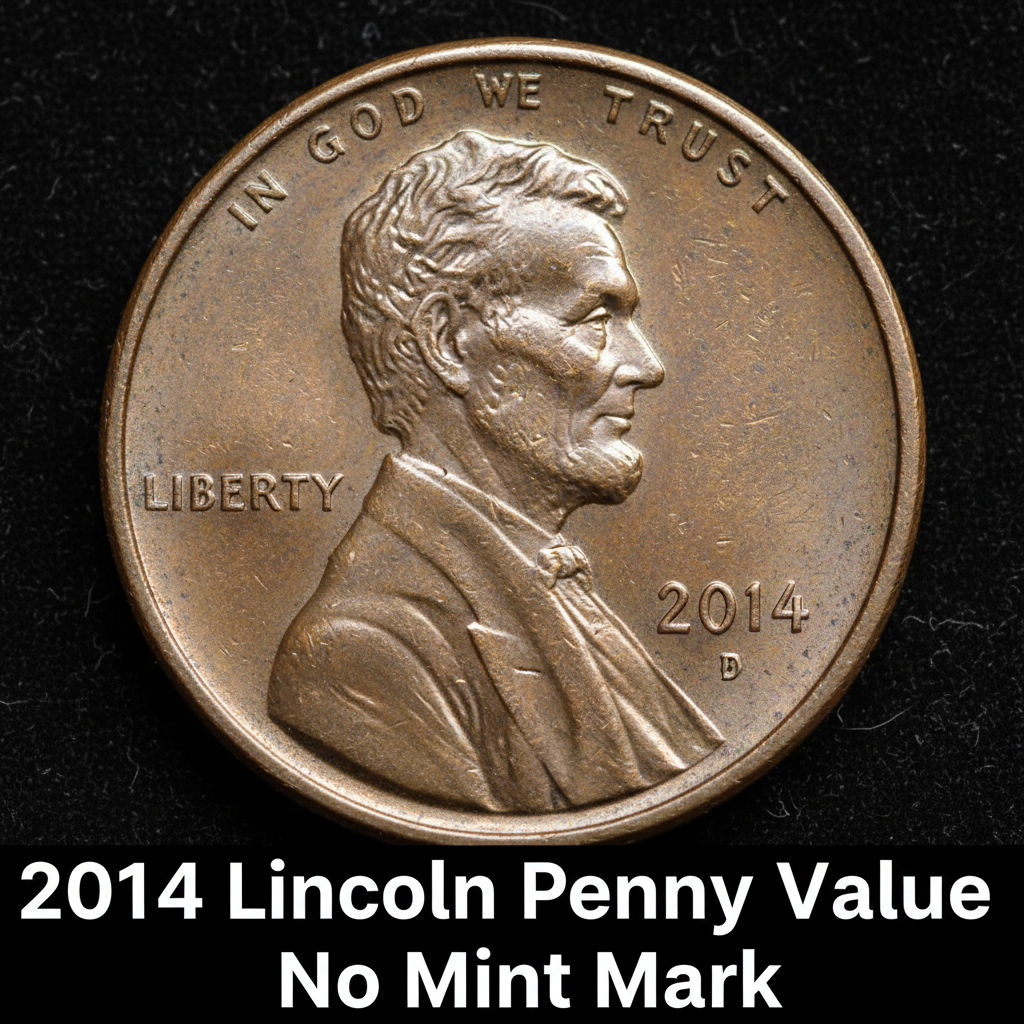
The 2014 Lincoln penny with no mint mark is worth anywhere from 1 cent in circulated condition to around $5 or more in pristine uncirculated grades, with top-condition examples occasionally reaching higher at auction. If you found one in your pocket change, you’re holding a common but collectible piece of American history.
What the No Mint Mark Means on a 2014 Lincoln Penny
When you look at a 2014 Lincoln penny and don’t see a small letter stamped beneath the date, that absence tells you something important. Coins with no mint mark were struck at the Philadelphia Mint, the oldest mint facility in the United States. Philadelphia has a long tradition of not placing a mint mark on its cents, though this practice has changed at various points in history.
For the 2014 Lincoln penny specifically, Philadelphia produced hundreds of millions of these coins for general circulation. That massive mintage is the main reason why circulated examples are worth only face value or just a small premium. Rarity drives coin value, and with so many of these coins available, even well-preserved examples don’t command big prices.
That said, collectors still seek out high-grade uncirculated specimens, especially those with brilliant red luster. If you’re just getting started identifying your coins, using the best coin identifier app can help you quickly determine what you have and whether it’s worth pursuing further.
2014 Lincoln Penny Value Chart by Condition
Coin condition, officially called “grade,” has the biggest impact on value. Here’s a simple breakdown of what a 2014 Lincoln penny with no mint mark is typically worth based on its grade:
| Grade / Condition | Description | Estimated Value |
|---|---|---|
| Good (G-4) | Heavy wear, design visible | Face value ($0.01) |
| Fine (F-12) | Moderate wear | $0.01 – $0.05 |
| Extremely Fine (EF-40) | Light wear on high points | $0.05 – $0.25 |
| Mint State (MS-63) | Uncirculated, some marks | $0.50 – $1.50 |
| Mint State (MS-65 RD) | Gem uncirculated, full red | $2.00 – $5.00+ |
| MS-67 RD or Higher | Superb gem, exceptional luster | $10.00 – $50.00+ |
For the most up-to-date market data, you can check current 2014 Lincoln Shield penny MS-RD price trends to see what certified examples are selling for right now.
Understanding the Lincoln Shield Cent Design
The 2014 Lincoln penny belongs to the Lincoln Shield cent series, which debuted in 2010. The obverse still features Victor David Brenner’s iconic portrait of Abraham Lincoln, a design that has graced the penny since 1909. The reverse, however, replaced the Lincoln Memorial design with a Union shield — a symbol meant to represent Lincoln’s preservation of the United States during the Civil War.
The shield design features 13 vertical stripes representing the original colonies, topped by a horizontal bar reading “E PLURIBUS UNUM.” This modern reverse has drawn mixed reactions from collectors, with some appreciating its historical symbolism and others preferring earlier designs.
For a 2014 no-mint-mark penny to be worth real money, it generally needs to be in uncirculated condition with full original red color. Coins that have turned brown or spotted from oxidation are worth less, even if they were never technically spent in commerce.
Error Coins and Special Varieties That Can Be Worth More
Most 2014 Lincoln pennies are straightforward, but error coins do occasionally turn up and can be worth significantly more than face value. Here are a few things to look for:
Doubled Die Errors — Look closely at the date, lettering, or Lincoln’s portrait under magnification. A doubled die error creates a slight doubling effect on the design, which collectors prize.
Off-Center Strikes — If Lincoln’s image or the date appears dramatically shifted from the center of the coin, this is an off-center error. Depending on how far off-center the strike is, these can sell for $10 to $50 or more.
Die Cracks and Cuds — Small raised lines or blobs of metal caused by a cracked die can also attract collector interest.
If you want help spotting these varieties without squinting at your coins for hours, CoinHix has a scanning feature that flags potential errors right from your smartphone camera. Many everyday Americans have found hidden gems using CoinHix that they would have otherwise dropped back into a jar.
You can also explore detailed 2014 penny value information including error varieties and what affects price to make sure you’re not overlooking something special.
How to Get the Best Price for Your 2014 Lincoln Penny
If you believe you have a high-grade or error example, getting it professionally graded by PCGS or NGC is worth considering. A certified MS-67 RD example, for instance, can sell for many times the value of a raw, ungraded coin because buyers trust the certification.
For common circulated examples, the honest truth is that they’re only worth face value. Don’t let anyone talk you into paying a premium for a perfectly ordinary 2014 cent — or selling it for less than it’s worth if it turns out to be exceptional.
Using a tool like CoinHix makes the process easier. Simply scan your coin, and the app gives you grade estimates, known varieties, and current market values in seconds. It’s a great starting point before you decide whether professional grading makes financial sense.
Frequently Asked Questions
Q: Is a 2014 penny with no mint mark rare?
A: No, the 2014 Lincoln penny with no mint mark is not rare. Philadelphia struck hundreds of millions of them for everyday circulation. Its high mintage makes it a common coin, though high-grade uncirculated examples in MS-65 or above are harder to find and worth more to collectors.
Q: What makes a 2014 penny valuable?
A: Condition is the biggest factor. Coins in gem uncirculated grades, especially those with full original red color (designated RD), carry the most value. Error coins — such as doubled dies or off-center strikes — can also be worth considerably more than a normal example.
Q: Should I clean my 2014 penny to make it look nicer?
A: Never clean a coin you think might be valuable. Cleaning removes the original surface and drastically lowers a coin’s value to collectors and grading services. A naturally toned or even slightly dirty coin is almost always worth more than one that has been polished or wiped down.