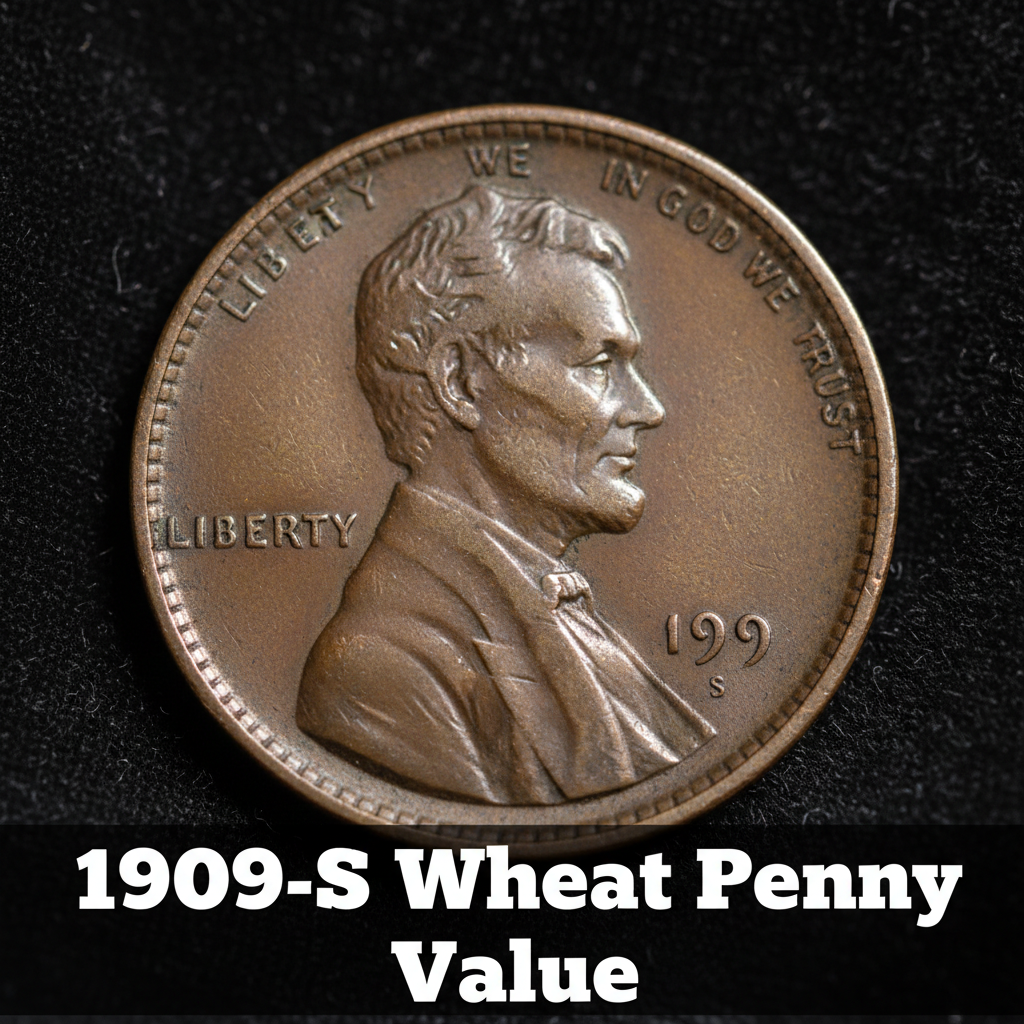
The 1909-S Lincoln Wheat Penny is worth anywhere from $100 in heavily worn condition to over $1,000 or more in mint state — making it one of the most valuable common-date wheat pennies a collector or curious coin finder can stumble upon.
If you recently found an old penny with wheat stalks on the back and a small “S” mintmark below the date, you may be holding something genuinely special. The 1909-S Wheat Penny is no ordinary cent. It was struck at the San Francisco Mint in the very first year of Lincoln penny production, and relatively few were made compared to its Philadelphia counterpart. Whether you’re a first-time coin hunter or just cleaning out grandma’s change jar, it pays to know exactly what you’re looking at. Using the best coin identifier app on your phone is a great first step to confirm what you have before heading to a dealer.
The History Behind the 1909-S Wheat Penny
The Lincoln cent was introduced in 1909 to commemorate the 100th birthday of Abraham Lincoln, replacing the Indian Head cent that had been in circulation since 1859. The Philadelphia Mint produced over 27 million of these new pennies, but the San Francisco Mint — which struck the 1909-S — produced only about 1.825 million pieces. That relatively low mintage is the core reason the 1909-S Wheat Penny carries such strong value today. From the very beginning, collectors noticed that the “S” mint version was harder to find, and it quickly became a key date in the Lincoln cent series. Today, over a century later, that scarcity still drives demand and keeps prices high even for well-worn examples. If you’re curious about how the coin’s history stacks up against other early Lincoln cents, checking out the value information for its 1909 Indian Head predecessor can give you great context on what coins from that transitional era are worth.
How to Find the Mintmark on Your 1909-S Wheat Penny
Before you get excited, you need to confirm your penny actually has an “S” mintmark. Flip the coin over and look at the obverse — the side with Lincoln’s portrait. Just below the date “1909,” you should see a small letter. If it’s an “S,” you’ve got the San Francisco issue. If there’s no mintmark at all, that’s the Philadelphia version, which is far more common and worth considerably less. The mintmark is small but visible to the naked eye under decent lighting. A magnifying glass helps. Be careful — some fakes exist where mintmarks have been added to common Philadelphia coins. A reputable coin dealer or a grading service like PCGS or NGC can verify authenticity. CoinHix is another excellent resource; the CoinHix app lets you scan your coin and get an instant preliminary identification before investing in professional grading.
1909-S Wheat Penny Value by Grade
The value of a 1909-S Wheat Penny depends heavily on its condition, or grade. Here’s a general breakdown of what you can expect:
| Grade | Description | Estimated Value |
|---|---|---|
| Good (G-4) | Heavily worn, outline visible | $100 – $130 |
| Fine (F-12) | Moderate wear, details readable | $150 – $200 |
| Extremely Fine (EF-40) | Light wear, sharp details | $275 – $375 |
| Mint State (MS-63) | Uncirculated, minor marks | $700 – $900 |
| Mint State (MS-65 Red) | Gem uncirculated, full red luster | $1,500 – $2,500+ |
For the most up-to-date pricing across all grades, you can browse detailed 1909-S Wheat Penny price data across mint state grades to see how recent auction results and retail prices compare.
What Makes a 1909-S Wheat Penny Worth More or Less
Beyond grade, several factors influence the final price. Color is a big one for uncirculated coins — Red (RD) coins that have retained their original copper luster command the highest premiums, while Brown (BN) examples sell for noticeably less. Strike quality matters too; well-struck coins with sharp wheat stalks and crisp lettering are more desirable. Eye appeal — overall attractiveness of the coin’s surfaces — can push a borderline coin higher at auction. Certification from PCGS or NGC adds a layer of trust and typically increases resale value. If you’re not sure where to start, CoinHix offers a streamlined way to track your coin’s estimated value over time once you’ve had it identified.
Should You Sell or Keep Your 1909-S Wheat Penny
That depends on your situation. If you need cash and the coin grades in the Fine to Extremely Fine range, selling to a reputable coin dealer or listing on eBay with good photos could net you a fair return. If the coin appears uncirculated, strongly consider getting it professionally graded first — a certified MS-65 Red example could be worth many times what an ungraded coin fetches. Coin shows, online auctions, and established dealers are all solid venues. Do your research, compare recent sales, and never clean the coin — cleaning destroys value almost instantly.
FAQ
Q: How do I know if my 1909 penny is the valuable S mint version?
A: Look just below the date on the obverse side of the coin. A small “S” mintmark indicates it was struck at the San Francisco Mint. No mintmark means it’s from Philadelphia and worth significantly less.
Q: Is a 1909-S Wheat Penny worth getting professionally graded?
A: Yes, especially if the coin shows little to no wear. Professional grading by PCGS or NGC can dramatically increase buyer confidence and resale value, particularly for coins that might grade MS-63 or higher.
Q: Where is the best place to sell a 1909-S Wheat Penny?
A: Reputable options include established coin dealers, major online auction platforms like eBay or Heritage Auctions, and local coin shows. Always get multiple offers and compare recent sold prices before committing to a sale.