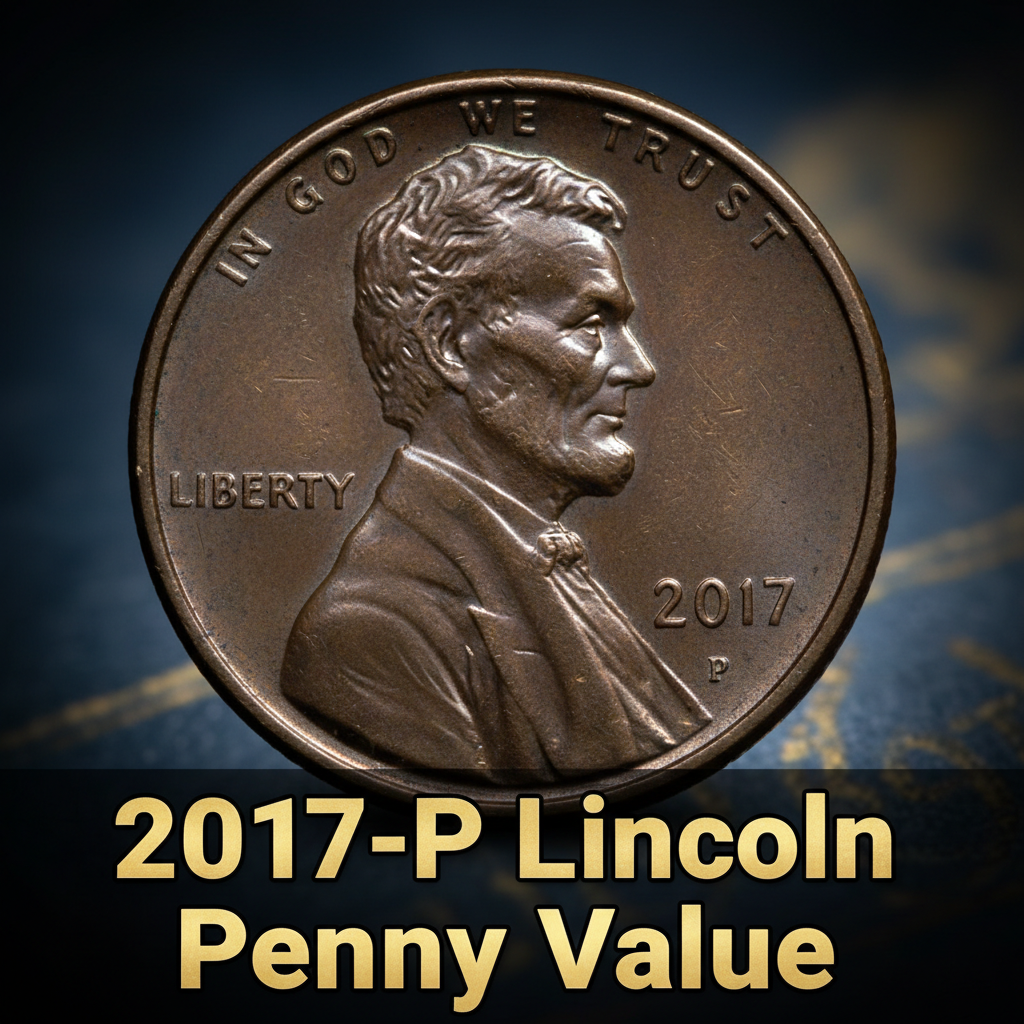
If you’ve got a 2017-P Lincoln penny sitting in your change jar, you’re probably wondering if it’s worth anything more than a cent. The 2017-P Lincoln Shield Penny is worth face value in circulated condition, but can be worth anywhere from $0.01 to over $5 or more in pristine uncirculated grades — and rare errors can push the value even higher.
What Is the 2017-P Lincoln Penny?
The 2017-P Lincoln penny was struck at the Philadelphia Mint, which is what the small “P” mintmark on the obverse tells you. This coin is part of the Lincoln Shield series, which the U.S. Mint introduced in 2010. The obverse features Lincoln’s portrait, originally designed by Victor D. Brenner back in 1909, while the reverse shows a Union Shield — a design that represents the preservation of the Union during the Civil War era.
Millions of these coins were produced in 2017, making them extremely common in everyday circulation. If you’re just getting started identifying coins from pocket change, using the best coin identifier app can save you a lot of time and guesswork. It’s especially handy when you’re sorting through a large collection and need quick results.
Because the Philadelphia Mint struck over 4.4 billion pennies in 2017, the 2017-P Lincoln penny isn’t considered rare in most grades. But that doesn’t mean every single one is worthless — condition is everything in coin collecting.
2017-P Lincoln Penny Value by Grade
Just like any coin, the value of a 2017-P Lincoln penny depends heavily on its condition, or “grade.” Coin grading runs on the Sheldon scale from 1 (Poor) to 70 (Perfect Uncirculated). Here’s a simple breakdown of what you can expect:
| Grade / Condition | Description | Estimated Value |
|---|---|---|
| Circulated (G–VF) | Worn from use, details visible | $0.01 (face value) |
| AU (About Uncirculated) | Light wear on high points | $0.05 – $0.25 |
| MS-63 (Uncirculated) | No wear, some bag marks | $0.50 – $1.00 |
| MS-65 (Gem Uncirculated) | Strong luster, minor imperfections | $1.50 – $3.00 |
| MS-67 or Higher | Near perfect, exceptional strike | $5.00 – $20.00+ |
For a deeper look at up-to-date market pricing, you can check out the 2017-P Lincoln Shield penny price data across multiple MS grades to see how recently certified examples have sold at auction.
Are There Any Valuable 2017-P Penny Errors?
Here’s where things get interesting. While a regular 2017-P penny won’t make you rich, error coins from this year can be worth considerably more. Some errors to watch for include:
Doubled Die Obverse (DDO): Look for doubling in Lincoln’s eye, the date, or the lettering. A strong doubled die error on a 2017-P penny can fetch $20 to $100 or more depending on the severity and grade.
Off-Center Strikes: When the die doesn’t align properly with the blank planchet, you get an off-center coin. A 10–20% off-center 2017-P penny with the date visible can sell for $15 to $50.
Die Caps and Brockages: These are rarer errors where a coin sticks to a die. These can be worth hundreds of dollars to advanced collectors.
Wrong Planchet Errors: If a 2017 penny was accidentally struck on a dime planchet, for example, it could easily be worth several hundred dollars.
Always examine your coins carefully under good lighting and a magnifying glass. If you spot something unusual, CoinHix is a great tool to help you research and identify potential error coins before you take them to a dealer.
How to Tell If Your 2017-P Penny Is Worth Grading
Not every old penny deserves to be sent off to a professional grading service like PCGS or NGC — the fees can outweigh the coin’s value. Generally speaking, you should only consider getting a 2017-P Lincoln penny professionally graded if it appears to be in near-perfect, fully uncirculated condition with blazing original red luster, or if it clearly shows a significant error.
For most collectors who found a 2017-P penny in change, the honest answer is that it’s worth one cent unless it’s pristine or an error. But don’t let that discourage you — building a collection of Lincoln Shield pennies in the best condition you can find is a rewarding hobby that costs almost nothing to start.
If you want a convenient way to track your coin values over time, this detailed 2017 penny value guide breaks down what factors affect pricing and gives you a solid reference for all mint marks from that year.
You can also use CoinHix to scan and catalog your collection digitally, keeping all your coin values organized in one place — super helpful once your collection starts to grow.
Should You Keep or Spend Your 2017-P Penny?
If your 2017-P Lincoln penny looks like it just rolled off the mint floor — bright copper red, no scratches, no spots — set it aside in a protective coin flip or hard plastic holder. Over time, top-grade modern coins can appreciate as the supply of high-grade examples gets absorbed into permanent collections.
If it’s a regular circulated coin, feel free to spend it guilt-free. The 2017-P Lincoln penny is one of the most common modern coins in circulation, and unless you’ve stumbled across an error variety, you’re not sitting on hidden treasure. That said, coin collecting is as much about the journey as the value, so every penny is worth a second look.
And remember — CoinHix makes it fast and easy to check the current market value of any coin in your collection, so you’ll always know exactly what you have.
FAQ
Q: How much is a 2017-P Lincoln penny worth in circulated condition?
A: A circulated 2017-P penny is worth its face value of one cent. There were billions minted, making it very common. Only coins in uncirculated or error condition carry a premium above face value.
Q: What does the “P” mintmark mean on a 2017 penny?
A: The “P” mintmark indicates the coin was struck at the Philadelphia Mint. The Philadelphia Mint added the “P” mintmark to pennies starting in 2017, making it a small but historically notable change for Lincoln penny collectors.
Q: How can I tell if my 2017-P penny is an error coin?
A: Examine the coin under magnification and good lighting. Look for doubling in the lettering or date, off-center designs, unusual thickness, or strange planchet compositions. If something looks off, consult a coin dealer or use a resource like CoinHix to research your specific find before drawing conclusions.