The 1943-D Mercury Dime is worth anywhere from $3 in heavily worn condition to over $100 or more in high mint state grades, with rare Full Bands examples fetching even greater premiums. If you’ve found one of these silver coins tucked away in an old collection, you’re in luck — this is a coin worth knowing about.
Whether you’re a first-time finder or a curious collector, using the best coin identifier app can help you quickly identify and assess your coin before diving deeper into research.
What Is the 1943-D Mercury Dime?
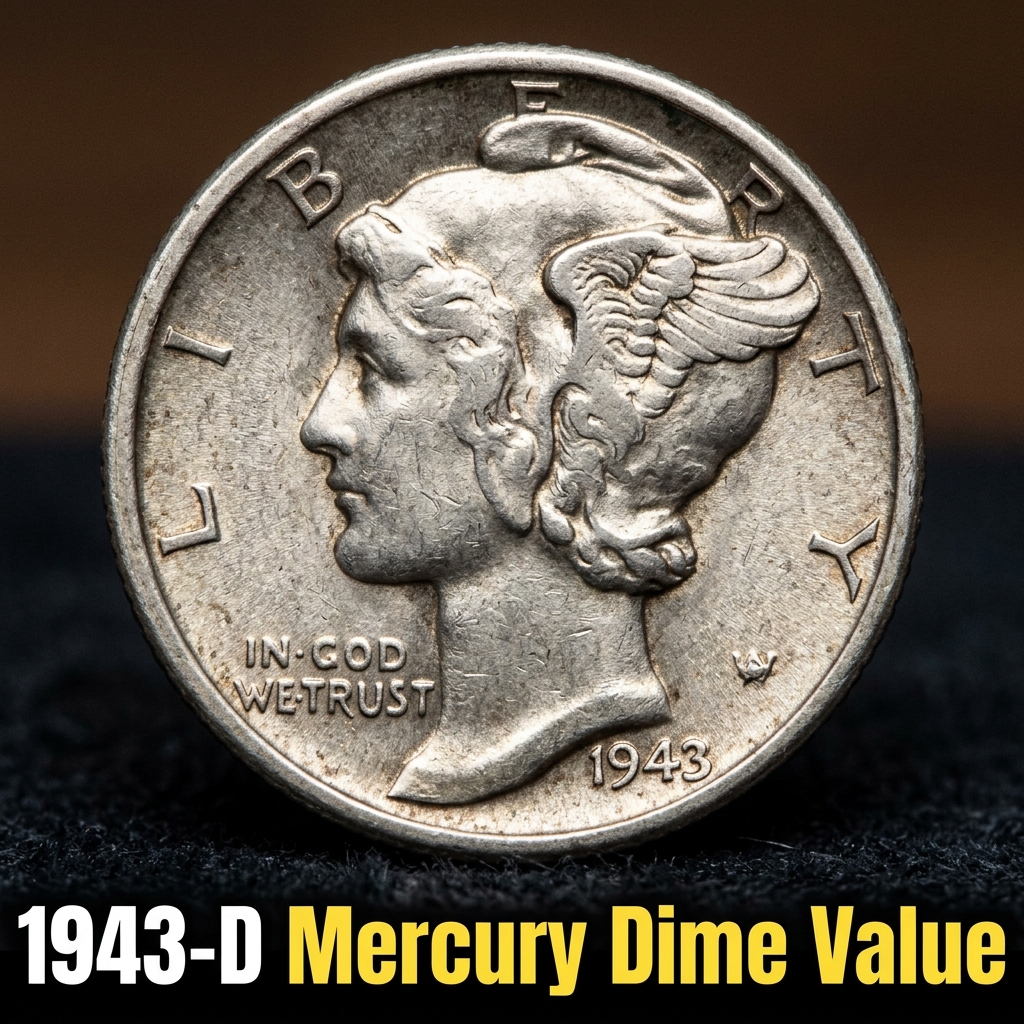
The 1943-D Mercury Dime was struck at the Denver Mint during World War II. The “D” mintmark appears on the reverse side of the coin, just to the left of the “E” in “ONE DIME.” These coins were produced in large numbers — over 71 million were minted that year — making them relatively common in circulated grades. However, condition is everything in the world of coin collecting, and the difference between a worn 1943-D and a crisp, uncirculated example can mean a dramatic jump in value.
The coin features the iconic design by Adolph A. Weinman, showing Liberty wearing a winged cap (often mistaken for the Roman god Mercury, hence the nickname). The reverse displays a fasces and an olive branch — symbols of strength and peace. Made of 90% silver, every 1943-D Mercury Dime contains approximately 0.07234 troy ounces of silver, which gives it a base bullion value even when heavily worn.
1943-D Mercury Dime Value by Grade
The value of your 1943-D Mercury Dime depends heavily on its grade. Circulated coins showing significant wear are worth a modest amount above silver melt value, while lightly circulated and uncirculated examples command real collector premiums. The most sought-after designation is “Full Bands” (FB), which refers to fully separated horizontal bands on the fasces on the reverse — a sign of a sharply struck coin.
Here’s a general value breakdown:
| Grade | Estimated Value |
|---|---|
| Good (G-4) | $3 – $4 |
| Fine (F-12) | $4 – $6 |
| Extremely Fine (EF-40) | $6 – $10 |
| About Uncirculated (AU-50) | $10 – $18 |
| Mint State (MS-63) | $20 – $40 |
| Mint State Full Bands (MS-65 FB) | $75 – $150+ |
For the most up-to-date pricing data, you can check the 1943-D Mercury Dime price history and auction records by grade on CoinHix — it’s an excellent resource updated with real market data. You can also browse detailed 1943 dime values across all mint marks and conditions to compare how the Denver coin stacks up against Philadelphia and San Francisco issues.
What Makes the Full Bands Designation So Important
If you’ve been researching Mercury Dimes for any length of time, you’ve probably come across the term “Full Bands.” It’s one of the most important factors that can dramatically increase the 1943-D Mercury Dime value. The fasces on the reverse contains a bundle of rods with horizontal bands tied around them. On weakly struck or worn coins, these bands appear merged or flat. On well-struck coins, the bands are fully separated and clearly defined.
A coin graded MS-65 without Full Bands might sell for around $30–$40, while the same coin with Full Bands certification could bring $100 or more. The strike quality of Denver Mint Mercury Dimes from this era was generally decent but not always consistent, which makes a strong Full Bands example genuinely special. If you think your coin might have sharp, fully separated bands, it’s worth getting it professionally graded by PCGS or NGC before selling.
CoinHix makes it easy to track these kinds of premium designations in real time, letting you see recent auction results filtered by grade and variety.
How to Check Your Coin’s Condition at Home
You don’t need to be an expert to get a rough idea of your 1943-D Mercury Dime’s condition. Start by looking at the high points of the design under good lighting. On the obverse, check Liberty’s cheek and the hair detail above her ear. On the reverse, look at the diagonal bands crossing the fasces. If those details are sharp and visible, your coin likely grades AU or better.
Avoid cleaning the coin — even gentle polishing can permanently reduce its value. Collectors and dealers can easily spot a cleaned coin, and it will sell for significantly less than an original, uncleaned example even in the same technical grade.
For a fast identification, CoinHix and similar grading tools can help you compare your coin’s details against certified examples. It’s a smart first step before visiting a local coin dealer.
Is the 1943-D Mercury Dime a Good Find?
Absolutely. While it’s not a rare coin by production numbers, the 1943-D Mercury Dime is a beloved piece of American history struck during one of the most turbulent years of the 20th century. Its 90% silver content alone ensures it always carries real intrinsic worth, and quality examples — especially with Full Bands — are genuinely collectible. Whether you plan to sell it or hold onto it as part of a collection, knowing your coin’s grade and value puts you in a much better position.
—
Frequently Asked Questions
Q: How much silver is in a 1943-D Mercury Dime?
A: Each 1943-D Mercury Dime contains approximately 0.07234 troy ounces of pure silver. At current silver prices, this gives even a heavily worn coin a base melt value, which acts as a floor for what the coin is worth regardless of collector demand.
Q: Where is the mintmark on the 1943-D Mercury Dime?
A: The “D” mintmark is located on the reverse of the coin, to the left of the fasces base, near the bottom of the design. It’s small but clearly visible with a magnifying glass.
Q: Is a 1943-D Mercury Dime worth getting professionally graded?
A: If your coin appears to be in uncirculated condition — especially if it might qualify for Full Bands — professional grading from PCGS or NGC can significantly increase both its credibility and resale value. For circulated coins in average condition, grading fees may outweigh the benefits. Use CoinHix to check current auction prices before deciding.