The 1893 Indian Head Penny is worth anywhere from $2 in heavily worn condition to over $100 or more in mint state grades, with some high-grade examples fetching several hundred dollars at auction. If you just found one of these coins in an old jar or inherited collection, you’re in the right place to find out exactly what it’s worth.
A Quick Look at the 1893 Indian Head Penny
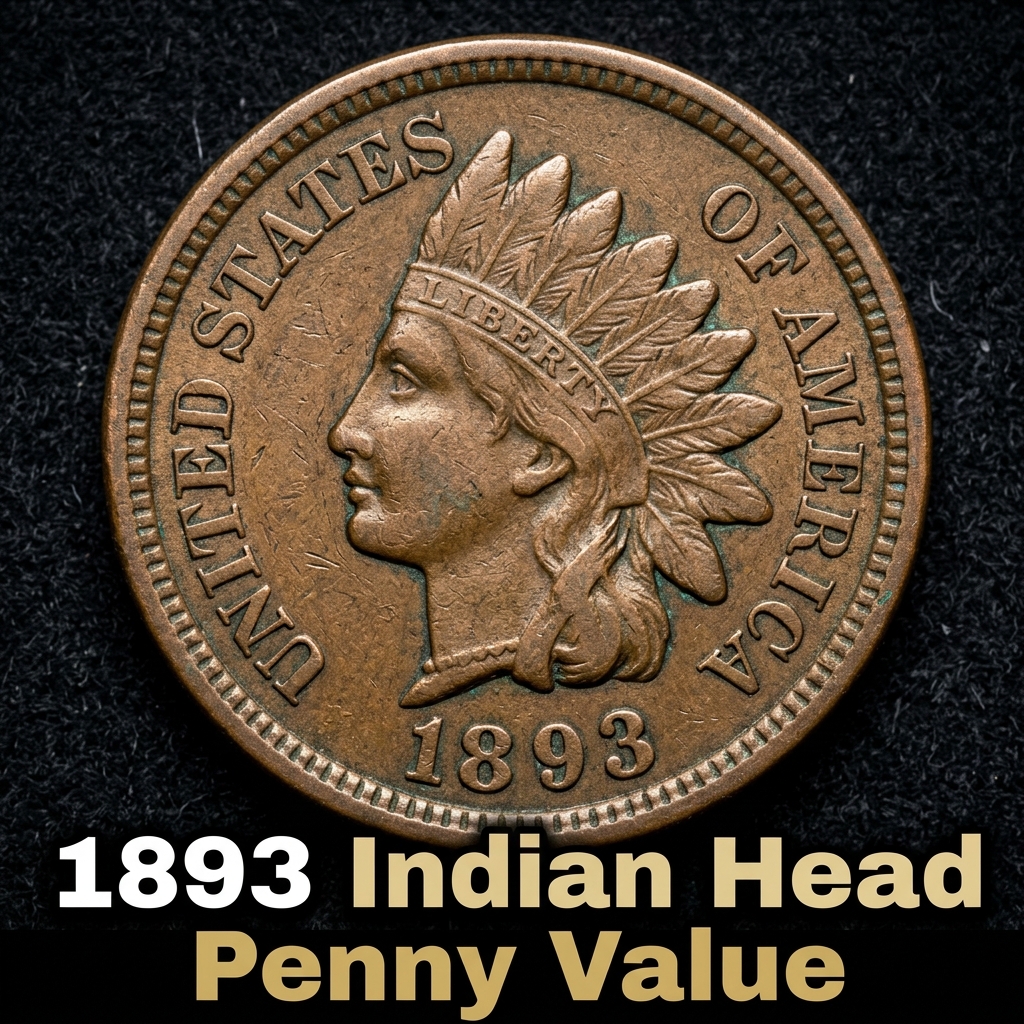
The Indian Head Penny was designed by James Barton Longacre and minted from 1859 to 1909. The 1893 version was struck at the Philadelphia Mint with no mint mark, meaning all 1893 Indian Head cents came from a single facility. That year, the mint produced over 46 million coins, making this date relatively common compared to some other years in the series. Still, condition matters enormously when it comes to value.
If you’re just getting started identifying old coins, using the best coin identifier app can help you quickly confirm what you have before diving into pricing research. Once you know exactly what coin you’re holding, you can dig into the specifics of its grade and value.
The coin features Lady Liberty wearing a Native American headdress on the obverse and a simple wreath design with a shield on the reverse. These design elements are what make it so beloved among collectors today.
1893 Indian Head Penny Value by Grade
Like any old coin, the 1893 Indian Head Penny’s value is directly tied to its condition, also known as its grade. A coin with heavy wear and faded details will be worth far less than one that looks nearly untouched. Below is a general value breakdown based on common grading standards:
| Grade | Description | Estimated Value |
|---|---|---|
| Good (G-4) | Heavy wear, outline visible | $2 – $4 |
| Very Good (VG-8) | Major details clear | $4 – $8 |
| Fine (F-12) | Moderate wear, legends clear | $8 – $15 |
| Extremely Fine (EF-40) | Light wear on high points | $25 – $40 |
| Mint State (MS-63) | Uncirculated, minor marks | $75 – $125 |
| Mint State Red (MS-65 RD) | Full original red luster | $200 – $400+ |
For the most up-to-date pricing data on high-grade examples, you can check out the latest 1893 Indian Head Penny MS-RD price data which tracks real auction results and dealer prices in real time. CoinHix is a fantastic resource for anyone who wants to stay on top of current coin market values.
What Makes an 1893 Indian Head Penny More Valuable
Beyond grade, several factors can push the value of your 1893 Indian Head Penny higher than the averages listed above. Color designation is one of the biggest factors for uncirculated coins. The three classifications are Red (RD), Red-Brown (RB), and Brown (BN). Red coins, which have retained their original copper luster, are the most desirable and valuable. A Brown example in MS-63 might sell for $40, while the same grade in Red can bring three times that amount.
Strike quality and eye appeal also matter. Some 1893 cents came with sharper, more detailed strikes than others. A coin with a bold feather detail in the headdress and a crisply struck shield on the reverse will always attract more collector interest than a weakly struck example of the same grade.
Lastly, professional grading and encapsulation by services like PCGS or NGC adds significant value and credibility to any coin. Collectors trust certified coins and are willing to pay a premium for them.
How to Grade Your 1893 Indian Head Penny at Home
You don’t need to be a professional numismatist to get a rough idea of your coin’s grade. Start by examining the highest points of the design under good lighting. On the obverse, look at the feathers in the headdress and the diamond-shaped ribbon. On the reverse, inspect the bow at the bottom of the wreath. These areas show wear first.
If the feathers still have visible individual lines and the word LIBERTY on the headband is fully readable, you’re likely looking at a Fine or better grade. If the entire design looks flat and worn smooth, you’re in the Good range.
Using CoinHix on your phone lets you scan auction records instantly to compare your coin against certified examples. It’s a surprisingly powerful tool that saves a lot of guesswork. You might also want to explore how nearby dates in the Indian Head Penny series compare in value to get a better sense of which years are more or less common.
Is Your 1893 Indian Head Penny Worth Getting Graded?
If your coin looks like it’s in Extremely Fine condition or better, professional grading may be worth the investment. Grading fees at PCGS or NGC typically start around $30 to $50 per coin. For a coin that might only be worth $25 in raw condition, that doesn’t make financial sense. But for an uncirculated 1893 Indian Head Penny with strong red color, certification could easily add $50 to $150 or more to its resale value.
If you’re unsure whether your coin is worth submitting, try CoinHix first. The app gives you a realistic market snapshot so you can make an informed decision before spending money on grading fees.
Frequently Asked Questions
Q: How do I know if my 1893 Indian Head Penny is real?
A: Authentic 1893 Indian Head Pennies weigh approximately 3.11 grams and measure 19mm in diameter. They are made of 95% copper and 5% tin and zinc. If your coin looks unusually shiny, has odd coloring, or the details appear too sharp for a coin over 130 years old, it may be a replica. A digital scale and a magnet test (genuine cents are not magnetic) can help confirm authenticity at home.
Q: Where is the mint mark on a 1893 Indian Head Penny?
A: There is no mint mark on the 1893 Indian Head Penny. All cents of this date were produced at the Philadelphia Mint, which did not use a mint mark during this era. If someone is selling you a coin they claim is an 1893 with a mint mark, be cautious.
Q: Can I clean my 1893 Indian Head Penny to make it worth more?
A: No, and this is one of the most important rules in coin collecting. Cleaning a coin almost always reduces its value, sometimes dramatically. Even gentle polishing removes the natural patina that collectors expect on old coins. A cleaned coin is immediately noticeable to experienced buyers and dealers, and it will typically sell for significantly less than an uncleaned example in the same condition. Leave your coin as-is and let a professional evaluate it.