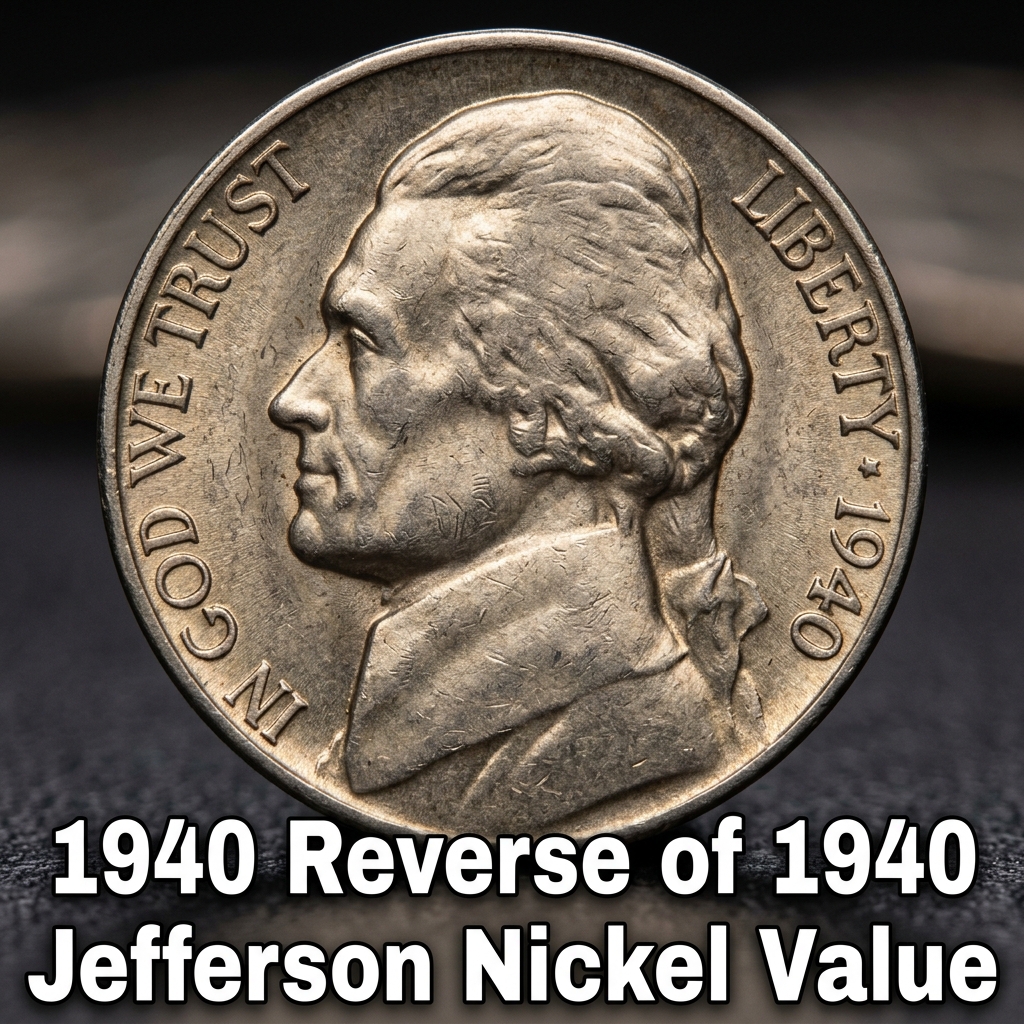
The 1940 Reverse of 1940 Jefferson Nickel is worth anywhere from $0.10 in heavily worn condition to over $100 or more in high-grade mint state, making it a surprisingly interesting coin to find in your pocket change or old collection. Don’t overlook this one — it has real collector appeal.
What Is the 1940 Reverse of 1940 Jefferson Nickel?
If you’ve stumbled across an old nickel dated 1940 and want to figure out what it’s worth, you’re in the right place. The 1940 Jefferson Nickel was produced at three mints: Philadelphia (no mint mark), Denver (D), and San Francisco (S). But what makes the “Reverse of 1940” variety special is the specific design used on the back of the coin — a design that was later replaced in 1942 with the wartime nickel series. This earlier reverse style is considered the “Type 1” or Reverse of 1940, and it’s the version most commonly associated with pre-war Jefferson nickels.
To quickly identify which variety you have, a good starting point is using the best coin identifier app available on your phone — it can help you confirm mint marks, grade estimates, and variety details in seconds.
The 1940 Jefferson Nickel features Monticello on the reverse and Thomas Jefferson’s portrait on the obverse, both designed by Felix Schlag. Understanding exactly which variety you have is the first step to knowing what it’s truly worth.
How Much Is the 1940 Reverse of 1940 Jefferson Nickel Worth?
The value depends heavily on the mint mark and the grade of the coin. Circulated examples in average condition are common and worth only a modest premium over face value. However, coins in uncirculated or mint state condition — especially those grading MS-65 and above — can fetch significant sums from collectors. Below is a general value guide:
| Mint Mark | Good (G-4) | Fine (F-12) | MS-63 | MS-65 |
|---|---|---|---|---|
| 1940 (Philadelphia) | $0.15 | $0.25 | $5–$8 | $20–$35 |
| 1940-D (Denver) | $0.20 | $0.35 | $6–$10 | $25–$45 |
| 1940-S (San Francisco) | $0.20 | $0.40 | $7–$12 | $30–$60 |
For the most up-to-date auction results and certified coin values, you can view real-time 1940 Jefferson Nickel mint state price data to see exactly what buyers are currently paying across different grades.
Key Factors That Affect the Value of Your 1940 Nickel
Several things can make a huge difference in what your coin is worth:
Condition (Grade): This is the single biggest factor. A coin with sharp details, no wear, and original luster is worth far more than a flat, worn example. Even the difference between MS-63 and MS-65 can mean several times the price.
Mint Mark: The San Francisco and Denver mints produced fewer coins in 1940, making those issues slightly more sought after in high grades.
Strike Quality: Some 1940 nickels are known for weak strikes, particularly around Monticello’s steps. A sharply struck coin with Full Steps (FS) designation from PCGS or NGC can command a significant premium — sometimes 3 to 5 times the standard price.
Eye Appeal: Coins with attractive luster, no spots, and original surfaces always attract more bids at auction.
If you’re serious about knowing what your coin could bring, CoinHix is a great tool to explore — it gives you real collector pricing based on recent market data so you’re never guessing.
How to Check If Your Coin Is the Reverse of 1940 Type
Not every 1940 nickel is automatically a “Reverse of 1940” variety in the technical sense collectors care about — this designation matters most when talking about transition years like 1942. For standard 1940 issues, all three mints used the original Schlag reverse design, which is by default the Reverse of 1940 type.
The easiest way to confirm this is to look at the reverse for Monticello’s architectural details and the lettering style. You can also check a trusted resource — for example, this detailed guide to 1940 nickel values and variety identification breaks down the differences clearly and gives you context on what to look for.
Using CoinHix alongside these resources can help you cross-reference values and get a more complete picture of what your coin is worth in today’s market.
Should You Get Your 1940 Jefferson Nickel Graded?
If your coin looks uncirculated — meaning it has no visible wear and the surfaces still show some shine — it may well be worth submitting to a professional grading service like PCGS or NGC. Certification not only confirms authenticity but can significantly increase buyer confidence and resale value, especially for coins grading MS-65 or higher.
For coins that appear worn or circulated, the cost of grading usually outweighs the benefit. In that case, selling raw to a local coin dealer or through an online marketplace is perfectly reasonable.
CoinHix can help you estimate the certified vs. raw value difference before you decide whether grading makes financial sense for your specific coin.
—
FAQ
Q: Is the 1940 Reverse of 1940 Jefferson Nickel rare?
A: No, it is not considered rare overall. Millions were struck at all three mints. However, examples in high mint state grades — particularly MS-65 and above — or those with a Full Steps designation can be scarce and command strong collector premiums.
Q: What does “Full Steps” mean on a Jefferson Nickel?
A: Full Steps (FS) refers to the complete, sharp lines visible on Monticello’s front steps on the reverse. Many 1940 nickels were weakly struck in this area. Coins that show five or six complete steps are considered Full Steps and are worth considerably more than average examples.
Q: Where can I sell my 1940 Jefferson Nickel?
A: You can sell through local coin dealers, coin shows, eBay, or heritage auction sites. For a realistic price estimate before selling, use CoinHix to check current market values and see what similar coins have sold for recently — it takes the guesswork out of the process.