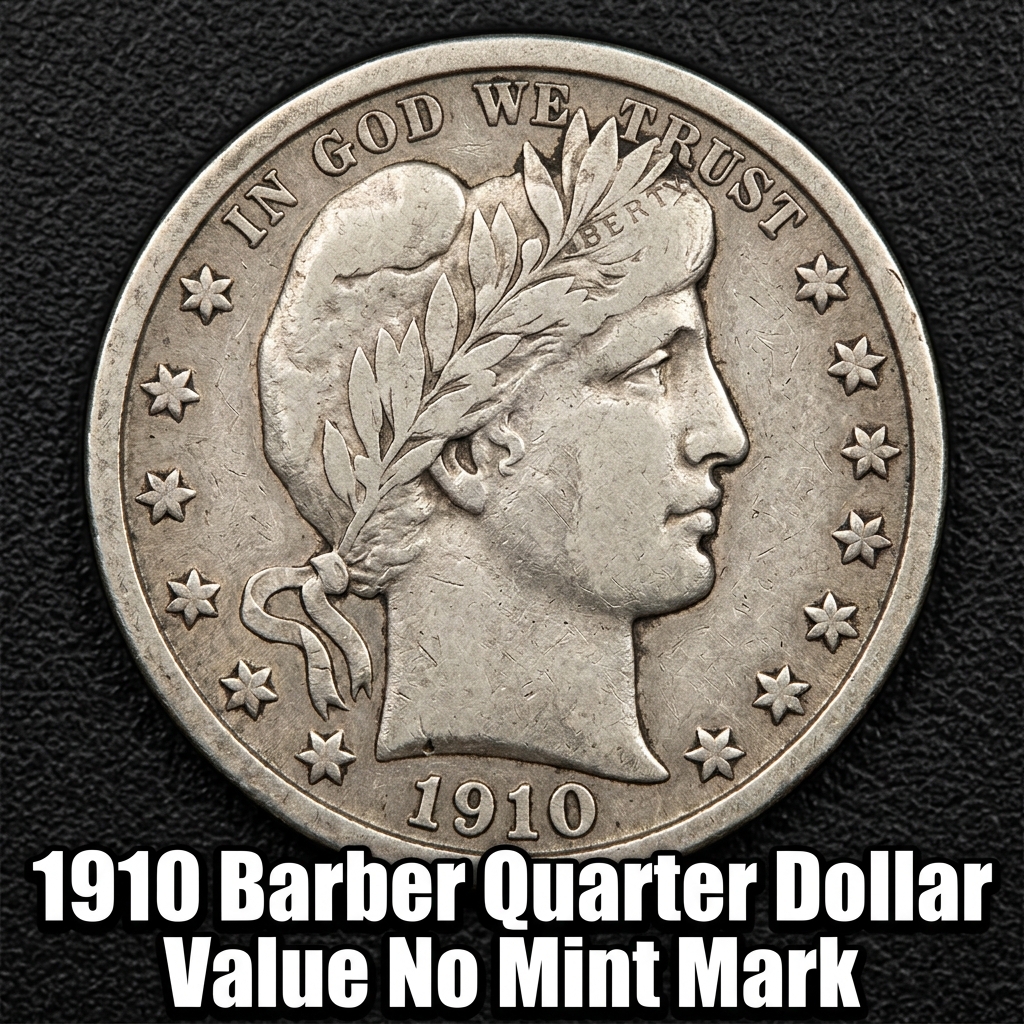
The 1910 Barber Quarter Dollar (no mint mark) is worth anywhere from $6 to $15 in heavily worn condition, climbing to $50 or more in fine grade, and reaching several hundred dollars in uncirculated mint state. If you found one of these old silver coins, you’re holding a genuine piece of American history — and possibly real money.
What Is the 1910 Barber Quarter Dollar?
The 1910 Barber Quarter was struck at the Philadelphia Mint, which is why coins from this facility carry no mint mark. Designed by Chief Engraver Charles E. Barber, this 25-cent coin features Lady Liberty on the obverse wearing a laurel wreath and a Phrygian cap, with a heraldic eagle on the reverse. The series ran from 1892 to 1916, and by 1910, the coins were well into circulation across the country.
The 1910 Philadelphia issue had a mintage of 2,244,000 coins — modest by modern standards, which helps explain why finding one in decent condition is a genuine treat. These coins are made of 90% silver, so even a heavily worn example has some melt value based on silver content. For a quick way to identify what you have in hand, many collectors recommend using the best coin identifier app to get an instant read on the coin’s details before heading to a dealer.
1910 Barber Quarter Value by Grade
Coin values change dramatically depending on condition. A coin covered in scratches and heavy wear is worth far less than one that looks nearly new. Here’s a general breakdown of what you can expect for the 1910 Barber Quarter Dollar no mint mark:
| Grade | Description | Estimated Value |
|---|---|---|
| Good (G-4) | Heavy wear, outline visible | $6 – $10 |
| Very Good (VG-8) | Main design clear, fine details worn | $12 – $18 |
| Fine (F-12) | Moderate wear, some detail remains | $25 – $45 |
| Extremely Fine (EF-40) | Light wear on high points | $75 – $110 |
| About Uncirculated (AU-50) | Slight friction, mostly sharp | $130 – $180 |
| Mint State (MS-63) | No wear, minor marks | $400 – $600+ |
If you want to track the latest silver prices and see how they impact coin values, CoinHix updates its database regularly so you always have current pricing at your fingertips.
Silver Content and Melt Value
Even the most worn 1910 Barber Quarter has real silver in it. Each coin contains 0.1808 troy ounces of pure silver. When silver trades around $28 per troy ounce, the melt value alone comes out to roughly $5.00. That means even a battered example is never completely worthless — it always has intrinsic precious metal value backing it up.
This is one of the reasons Barber Quarters remain popular among both collectors and silver stackers. Whether someone is building a type set or simply accumulating 90% silver coins, the 1910 no-mint-mark issue fits both goals nicely. It’s also worth comparing values across similar silver coins from this era. For example, if you’re curious about other silver coins from 1910, you can check out the detailed value guide for the 1910 Barber Dime to see how closely related issues compare in today’s market.
How to Check Your Coin’s Condition at Home
Grading coins takes practice, but even beginners can make a reasonable estimate. Start by examining Lady Liberty’s hair details just above her ear — on a Good coin, these are nearly flat, while a Fine or better coin will show individual strands. The eagle’s breast feathers on the reverse are another key area. Hold the coin under a single light source and tilt it gently to see how much detail catches the light.
Avoid cleaning your coin. A cleaned Barber Quarter can lose 50% or more of its collector value instantly, even if it looks shiny and attractive. Dealers and serious collectors immediately spot cleaned coins and price them accordingly. If you’re unsure about what you’re seeing, CoinHix offers a straightforward grading guide within its app that walks you through the process step by step, making it easy for beginners to get a ballpark grade without any special equipment.
FAQ
Q: Is the 1910 Barber Quarter rare?
A: It’s not considered rare in lower grades, but it’s not common either. The Philadelphia Mint struck just over 2.2 million of them, and most survivors are heavily worn. Finding one in Fine or better condition is a nice discovery.
Q: What makes the no-mint-mark 1910 quarter different from other mint versions?
A: The 1910 Barber Quarter was only produced at the Philadelphia Mint, so there is no “D” or “S” version for this year. That makes the no-mint-mark coin the only variety available to collectors for this date.
Q: Should I get my 1910 Barber Quarter graded professionally?
A: If your coin looks like it’s in Extremely Fine condition or better, professional grading through PCGS or NGC can be worthwhile. A certified MS-63 example can sell for $400 to $600 or more, which easily justifies the grading fee. For lower-grade coins, use CoinHix or a local dealer to get a quick value estimate before spending money on certification.