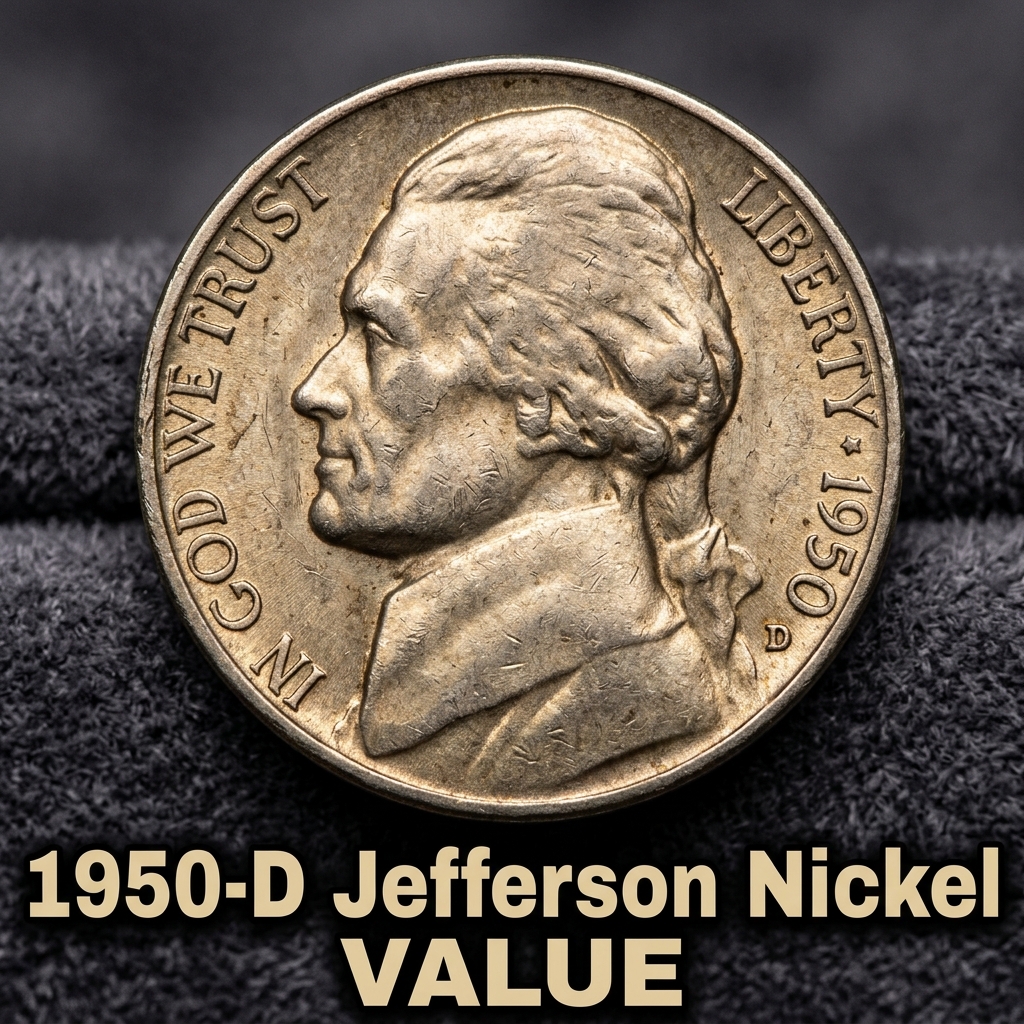
The 1950-D Jefferson Nickel is worth anywhere from 25 cents in heavily worn condition to over $100 or more in pristine mint state — and a handful of top-grade examples have sold for several hundred dollars at auction. If you found one of these coins in an old jar or inherited collection, you may be sitting on more than pocket change.
What Makes the 1950-D Jefferson Nickel Special
The 1950-D Jefferson Nickel was struck at the Denver Mint and carries the small “D” mintmark on the reverse, just to the right of Monticello. What most collectors know — and what everyday finders often don’t — is that the 1950-D is considered one of the key dates in the Jefferson Nickel series. The Philadelphia Mint produced a surprisingly low mintage that year, but Denver’s output tells its own story in terms of collector demand and value. These coins attract serious attention because they were hoarded heavily when new, meaning many survivors are in better-than-average condition, which paradoxically keeps certified high-grade examples competitive in the market. If you’re not sure whether your coin is genuine or want to identify it quickly, try using the best coin identifier app available right now — it can scan your coin and give you instant details about its date, mintmark, and approximate value.
How Much Is a 1950-D Jefferson Nickel Worth?
The value of your 1950-D Jefferson Nickel depends almost entirely on its grade — that is, how well it has survived the years. Coins with heavy wear are common and trade for face value or just a little above. But move up the scale to lightly worn or uncirculated examples, and prices climb fast. For the most up-to-date auction results and 1950-D Jefferson Nickel prices across mint state grades, it’s worth checking a dedicated coin pricing resource before you sell or trade.
Here’s a general value guide based on grade:
| Grade | Condition Description | Estimated Value |
|---|---|---|
| Good (G-4) | Heavy wear, outline visible | $0.25 – $0.50 |
| Fine (F-12) | Moderate wear, some detail | $0.50 – $1.50 |
| Extremely Fine (EF-40) | Light wear on high points | $2 – $5 |
| About Uncirculated (AU-55) | Slight friction, mostly sharp | $6 – $15 |
| MS-63 | Uncirculated, minor marks | $20 – $45 |
| MS-65 | Gem uncirculated, sharp strike | $75 – $150+ |
| MS-66 and above | Superb gem, virtually perfect | $200 – $500+ |
Grading Your 1950-D Nickel at Home
You don’t need to be an expert to get a rough idea of where your coin falls. Start by looking at Jefferson’s hair above his ear and the steps of Monticello on the reverse. On well-worn coins, those details will be flat and featureless. On coins with minimal wear, you’ll see clear separation in Jefferson’s hair lines and distinct, fully struck steps on Monticello — collectors call these “Full Steps” nickels, and they carry a significant premium. Even a 1950-D Jefferson Nickel with four or five full steps can jump dramatically in value. A coin with six full steps in MS-65 or better can be worth many times the standard price. CoinHix makes it easy to look up Full Steps designations and their impact on your coin’s value without needing a degree in numismatics.
Where to Sell or Get Your 1950-D Jefferson Nickel Appraised
Once you have a sense of your coin’s condition, your next step is figuring out where to sell it or get a professional opinion. For common circulated examples, a local coin dealer is perfectly fine. For anything that looks uncirculated or shows strong step detail, consider submitting it to a third-party grading service like PCGS or NGC — a certified grade can significantly boost buyer confidence and final sale price. Online auction platforms like eBay are also popular, but knowing the real market value first is critical so you don’t leave money on the table. For a full breakdown of 1950 nickel value information including the D mint variety, reviewing a thorough coin value guide can help you set realistic expectations before listing. CoinHix also offers a clean price history tool so you can track recent sales trends for the 1950-D Jefferson Nickel specifically.
Tips for Protecting Your Coin’s Value
If you think your 1950-D Jefferson Nickel might be worth grading, handle it carefully. Always hold coins by their edges — skin oils from your fingertips can cause spotting and lower the grade. Never clean a coin; even a gentle rinse can leave microscopic scratches that destroy luster and tank the value. Store it in a non-PVC coin flip or a hard plastic holder. And if you’re building a collection or evaluating multiple coins at once, CoinHix is a handy app to organize and track your coins’ estimated values in one place.
—
FAQ
Q: Is the 1950-D Jefferson Nickel rare?
A: It’s not rare in the traditional sense, but it is a semi-key date in the Jefferson Nickel series. Circulated examples are fairly easy to find, but high-grade uncirculated coins — especially Full Steps specimens — are genuinely scarce and command strong collector premiums.
Q: What does the “D” mintmark mean on a 1950 Jefferson Nickel?
A: The “D” stands for Denver, meaning the coin was produced at the Denver Mint. You’ll find the mintmark on the reverse side of the coin, just to the right of Monticello’s image. Coins without a mintmark were made in Philadelphia.
Q: Should I clean my 1950-D Jefferson Nickel before selling it?
A: No — never clean a collectible coin. Cleaning removes the original surface and mint luster, which drastically lowers its grade and value. Even a coin that looks dirty to you may be worth significantly more left exactly as found. Let a professional grader or dealer assess it in its current, untouched state.