The 1981-D Washington Quarter is worth anywhere from 25 cents in heavily circulated condition to around $5–$15 in uncirculated grades, with top-tier mint state examples occasionally reaching $30 or more. If you found one in your change jar or a old coin collection, you’re in the right place — let’s break down exactly what it’s worth.
What Makes the 1981-D Washington Quarter Special
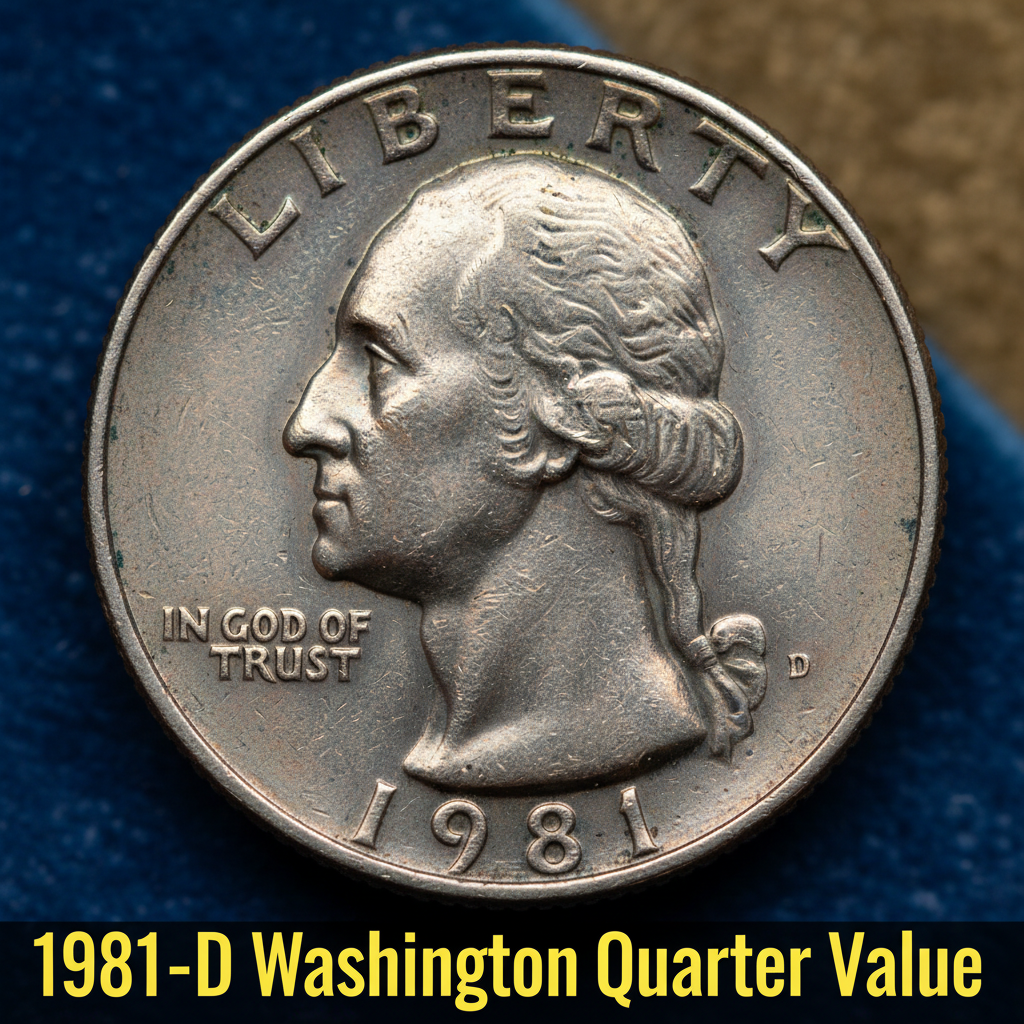
The 1981-D Washington Quarter was struck at the Denver Mint and carries the small “D” mintmark on the obverse, just to the right of Washington’s ribbon. That year, Denver produced a massive quantity of quarters — over 518 million coins — which is one reason why these are so common in everyday circulation. High mintage generally keeps values modest for circulated examples, but that doesn’t mean every coin is worth the same.
If you want a quick and reliable way to identify and value your coin, using the best coin identifier app can save you a lot of guesswork. These tools use image recognition to help you match your coin’s condition to known grades, which is especially useful if you’re new to coin collecting. Even a Washington Quarter in average condition deserves a second look before you spend it.
The 1981-D quarter is made of a copper-nickel clad composition — no silver. The U.S. Mint stopped putting silver in circulating quarters back in 1965, so unless you’re looking at a proof or special issue, the metal content here adds no extra premium.
1981-D Washington Quarter Value by Grade
Coin value depends heavily on condition, also called “grade” in the hobby. A coin that’s been rattling around in someone’s pocket for decades looks very different from one that went straight from the mint into a collector’s folder. Here’s a breakdown of typical 1981-D Washington Quarter values:
| Grade | Description | Estimated Value |
|---|---|---|
| Good (G-4) | Heavily worn, design visible | Face value ($0.25) |
| Very Fine (VF-20) | Moderate wear, details clear | $0.50 – $1 |
| Extremely Fine (EF-40) | Light wear on high points | $1 – $2 |
| Mint State (MS-63) | Uncirculated, minor marks | $5 – $10 |
| Mint State (MS-65) | Gem uncirculated, sharp luster | $15 – $30+ |
For the most current auction data on this date and mint, you can check out live 1981 Washington Quarter mint state price records to see what collectors are actually paying right now. Real-time data is always more reliable than a fixed price list.
How to Tell If Your 1981-D Quarter Is Uncirculated
Here’s the honest truth: most 1981-D quarters you’ll find have been used. But if you’re lucky enough to have one that was never spent, it could be worth real money to the right collector. An uncirculated coin will have its original mint luster — a cartwheel-like shine when you tilt it under a light. There should be no flat, dull spots on Washington’s cheekbone or hair, and the eagle’s breast feathers on the reverse should be sharp and defined.
Even tiny contact marks (called “bag marks”) can drop a coin from MS-65 to MS-63, which makes a noticeable difference in value. Handle any potentially uncirculated coin by the edges only, and store it in a coin flip or holder to protect the surfaces.
CoinHix is a great tool to use here — the app lets you compare your coin’s appearance against graded reference images so you can estimate the grade before deciding whether to submit it to a professional grading service like PCGS or NGC.
Are There Any Valuable 1981-D Quarter Errors
Error coins can turn an otherwise ordinary quarter into a real find. With the 1981-D Washington Quarter, collectors have documented a few types worth looking for:
– Doubled Die Obverse (DDO): Look for doubling in the lettering of “LIBERTY” or in Washington’s eye and profile. Even minor doubling can add a premium.
– Off-Center Strikes: If the design is noticeably shifted so that part of the coin is blank, that’s an off-center error. Errors with 20–50% off-center and a visible date are the most valuable.
– Die Cracks and Cuds: Late-die-state coins sometimes show raised lines across the surface, which are sought after by variety collectors.
If you think you’ve spotted something unusual, CoinHix has a variety and error lookup feature that can help you identify whether what you’re seeing is a genuine mint error or just post-mint damage. That distinction matters a lot — damage reduces value, while true mint errors increase it.
For a broader look at what the 1981 quarter is worth across all mint marks and grades, that resource breaks things down in a way that’s easy to follow even if you’ve never collected coins before.
Should You Sell, Hold, or Keep Collecting
For most circulated 1981-D quarters, the honest answer is that they’re worth face value or just a little more. But if you have a roll of uncirculated coins, a high-grade gem, or an interesting error, there’s definitely a market for them on eBay, at local coin shows, or through dealers. Washington Quarters from the early 1980s are popular with type collectors who want a complete set, so demand is steady even if values are modest.
If you’re just getting started with coins, the 1981-D is a fun, low-stakes coin to learn with. Practice grading it, look for errors under a loupe, and use CoinHix to track what similar coins are selling for over time. Building that knowledge now will pay off as you explore older and rarer issues.
FAQ
Q: Is the 1981-D Washington Quarter made of silver?
A: No. The 1981-D quarter is clad — it has a copper core with outer layers of copper-nickel. The U.S. Mint stopped making silver quarters for circulation in 1965. There is no silver value in this coin.
Q: How do I know if my 1981-D quarter is worth getting graded professionally?
A: Professional grading (through PCGS or NGC) costs money, so it only makes sense if your coin appears to be in gem uncirculated condition — MS-65 or higher. If it’s circulated or shows obvious wear, the grading fee would exceed the coin’s value. Use a coin app or reference images to do a rough grade at home first.
Q: Where can I find a buyer for my 1981-D Washington Quarter?
A: eBay is the most accessible marketplace for common modern coins. You can also try local coin shops, coin shows, or collector forums. For uncirculated or error coins, reaching out to a specialty dealer who focuses on modern U.S. coinage will often get you a better price than a general antique shop.