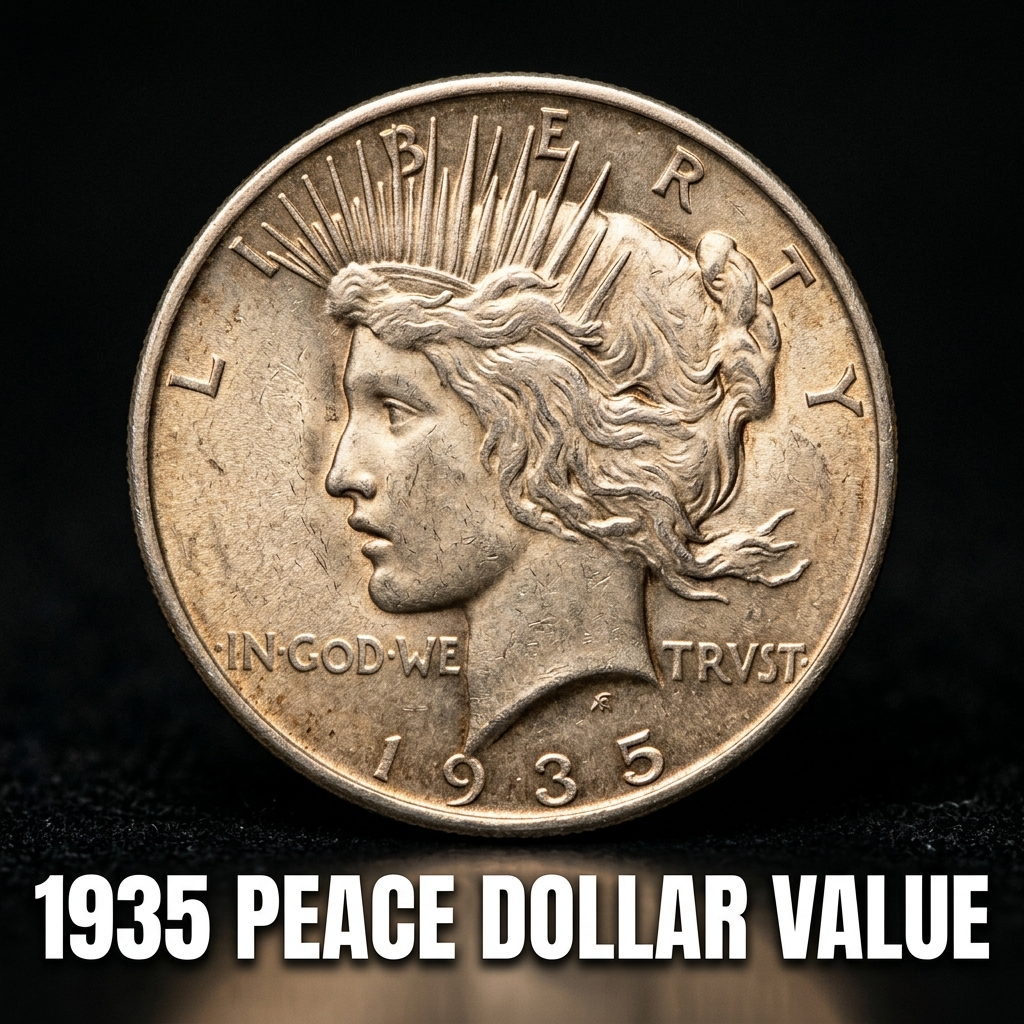
The 1935 Peace Dollar is worth anywhere from $25 in heavily worn condition to well over $1,000 in pristine mint state — and certain high-grade examples have sold for thousands at major auctions. If you recently found one of these classic silver dollars in a drawer, a coin jar, or an old collection, you’re holding something genuinely valuable. Read on to find out exactly what yours might be worth.
What Makes the 1935 Peace Dollar Special
The 1935 Peace Dollar holds a unique place in American coinage history. It was one of the final years of Peace Dollar production — the series was struck from 1921 to 1928, then briefly revived in 1934 and 1935 before being discontinued. That revival factor alone makes the 1935 issue interesting to collectors.
The coin itself is composed of 90% silver and 10% copper, giving it a base silver melt value that rises and falls with the silver market. As of recent silver prices hovering around $28–$30 per ounce, the raw metal content of a 1935 Peace Dollar is roughly $20–$22 on its own. That means even a heavily circulated example typically sells for a bit above melt value, usually in the $25–$35 range.
But condition is everything in coin collecting. A lightly circulated example can fetch $35–$60, while a coin graded Mint State 63 or higher by a professional grading service like PCGS or NGC can easily reach several hundred dollars. The best examples graded MS-65 or above? They’ve crossed the $1,000 mark at auction.
If you want to get a quick sense of what your coin is worth before diving deeper, using the best coin identifier app can give you a solid starting point right from your phone.
1935 Peace Dollar Mint Marks and Where to Find Them
One of the first things you’ll want to check on your 1935 Peace Dollar is the mint mark. This small letter tells you where the coin was struck, and it directly affects the value.
There are two varieties of the 1935 Peace Dollar:
– 1935 (Philadelphia) — No mint mark. Philadelphia struck the majority of 1935 Peace Dollars with a mintage of about 1.57 million coins.
– 1935-S (San Francisco) — The “S” mint mark is located on the reverse side of the coin, just above the eagle’s tail feathers. The San Francisco mint produced roughly 1.96 million of these.
Interestingly, the 1935-S tends to be slightly more available in higher grades because San Francisco’s production quality was often more consistent. However, the Philadelphia issue can command a premium in top-tier grades simply due to collector demand and strike quality variations.
| Grade | 1935 (No Mint Mark) | 1935-S |
|---|---|---|
| Good (G-4) | $26 – $32 | $26 – $32 |
| Very Fine (VF-20) | $35 – $45 | $35 – $48 |
| Extremely Fine (EF-40) | $45 – $60 | $48 – $65 |
| Mint State (MS-63) | $120 – $200 | $130 – $220 |
| Mint State (MS-65) | $600 – $1,200+ | $700 – $1,400+ |
For the most current and detailed 1935 Peace Dollar price data across mint state grades, it’s worth checking a regularly updated database to stay on top of current auction results and market trends.
How to Grade Your 1935 Peace Dollar at Home
You don’t need to be a professional numismatist to get a rough sense of your coin’s grade. Here’s a quick guide:
Heavily Worn (Good to Fine): Lady Liberty’s hair details are mostly flat and blended together. The word “PEACE” on the reverse may appear faint. These coins are worth mainly silver melt value plus a small premium.
Lightly Circulated (VF to EF): You can see clear hair strands on Liberty, and the reverse eagle retains decent feather detail. These coins are noticeably more attractive and worth $35–$65.
Uncirculated (MS): No wear whatsoever. The coin’s original luster should show, and high points like Liberty’s cheek and the eagle’s breast feathers should look sharp. These are the valuable ones, especially if the luster is full and unbroken.
A loupe or magnifying glass (10x) helps a lot when examining finer details. For a fast digital option, CoinHix uses photo recognition technology to help you assess your coin’s grade and estimated market value with just a snapshot.
Getting the Most Accurate 1935 Peace Dollar Value
If you believe you have a high-grade or especially clean example, professional grading by PCGS or NGC is worth considering. For coins potentially worth $200 or more, the grading fee pays off because a certified grade dramatically increases buyer confidence and resale price.
For everyday reference, apps like CoinHix make it simple to scan your coin and get an instant value estimate based on real market data. Whether you’re at a flea market, sorting through an estate collection, or just curious about something you found in Grandma’s dresser, having a reliable tool in your pocket saves time and guesswork.
You can also browse a comprehensive breakdown of the 1935 dollar’s value by grade and mint mark to compare your coin against established price benchmarks.
The 1935 Peace Dollar is a beautiful, historically significant coin that’s been rising in collector interest. Whether yours is a circulated $30 coin or a gem mint state beauty worth over $1,000, knowing what you have is the first step to making smart decisions about it.
FAQ
Q: How do I tell if my 1935 Peace Dollar is real or fake?
A: Genuine 1935 Peace Dollars weigh 26.73 grams and are 38.1mm in diameter. A kitchen scale and a ruler can give you a quick reality check. Real silver also has a distinct ring when tapped lightly. For extra certainty, CoinHix can help flag visual inconsistencies in photos that may suggest a counterfeit or altered coin.
Q: Is a 1935 Peace Dollar with no mint mark worth more than the 1935-S?
A: In most circulated grades, the two varieties are very close in value. In top mint state grades (MS-65 and above), prices can vary based on current auction demand and strike quality. Always check recent sales data for the most accurate comparison.
Q: Should I clean my 1935 Peace Dollar to make it look better?
A: Absolutely not. Cleaning a coin — even gently — removes the natural surface patina that collectors expect and value. A cleaned coin will almost always grade lower and sell for less than an uncleaned one in the same underlying condition. Leave it exactly as you found it.