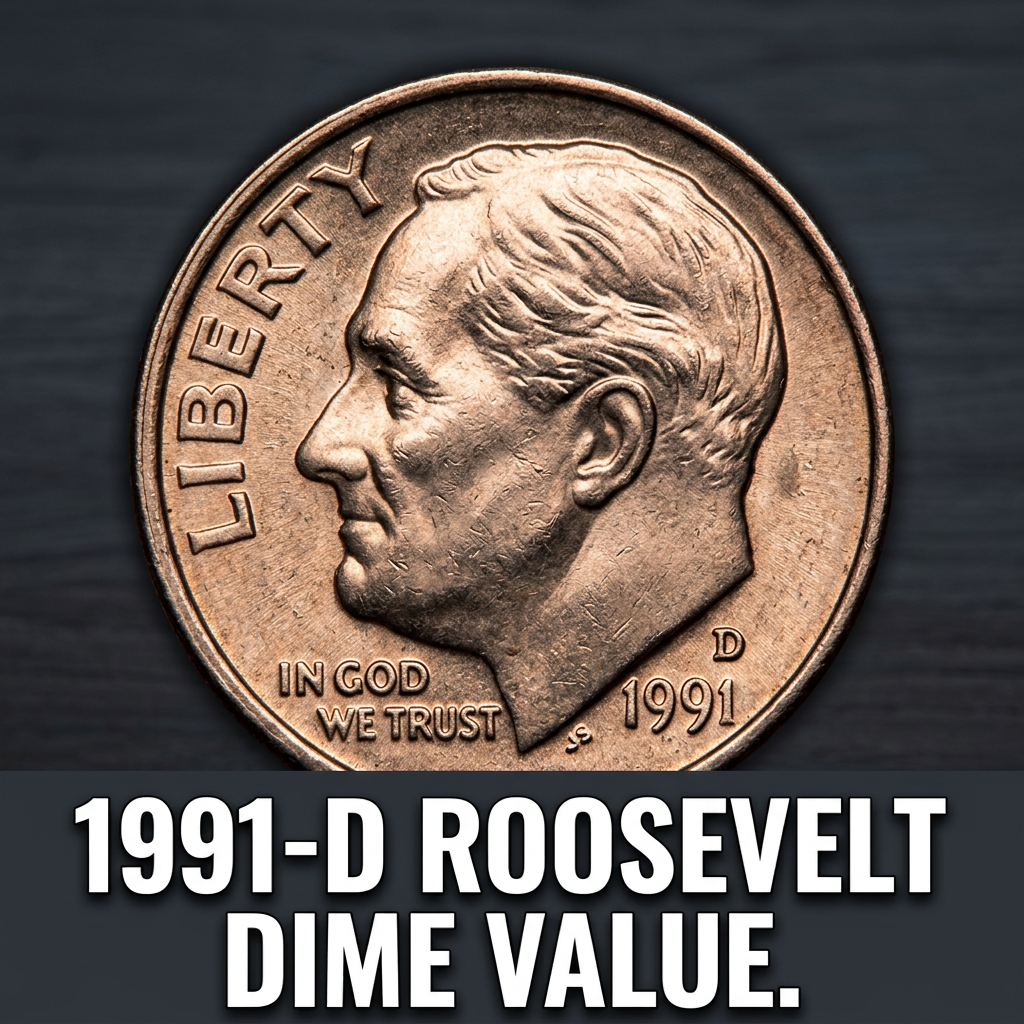
The 1991-D Roosevelt Dime is worth between $0.10 and $5 for most circulated examples, but uncirculated coins in top condition can fetch $15 or more. If you found one in a jar of old change, you might be sitting on more than face value — let’s break it all down.
What Makes the 1991-D Roosevelt Dime Special?
The 1991-D Roosevelt Dime was struck at the Denver Mint, which is where the “D” mintmark comes from. You’ll find it on the obverse (front) of the coin, just above the date. Denver produced over 630 million of these dimes in 1991, making them fairly common in circulation. That said, common doesn’t always mean worthless — condition plays a huge role in determining value.
If you’ve recently stumbled across one of these coins and want a quick identification, using the best coin identifier app can help you pinpoint the exact coin, mintmark, and grade in seconds. This is especially handy if you’re not sure whether the “D” mintmark is present or if the coin looks a little different from what you expected.
The Roosevelt Dime series has been running since 1946, and while most modern examples are made of a copper-nickel clad composition (no silver like the earlier years), collectors still pursue high-grade examples with enthusiasm. The 1991-D is no exception.
How Much Is a 1991-D Roosevelt Dime Worth by Condition?
Condition — or “grade” in collector terms — is the single biggest factor in determining what your coin is worth. A heavily worn 1991-D dime pulled from pocket change is essentially worth face value ($0.10). But a coin that was never circulated and still has its original mint luster can be worth considerably more.
Here’s a quick breakdown to give you a clearer picture:
| Condition / Grade | Estimated Value |
|---|---|
| Circulated (Good to Fine) | $0.10 – $0.25 |
| Extremely Fine (EF-40) | $0.25 – $0.75 |
| About Uncirculated (AU-55) | $0.75 – $2.00 |
| Mint State (MS-63) | $2.00 – $5.00 |
| Gem Uncirculated (MS-65) | $5.00 – $15.00+ |
| Superb Gem (MS-67 or higher) | $25.00 – $100+ |
For those curious about the top-tier auction market prices and certified coin data, you can explore detailed Roosevelt Dime price records in mint state grades to see how similar coins have performed at major sales.
How to Grade Your 1991-D Roosevelt Dime at Home
You don’t need to be a professional numismatist to get a rough idea of your coin’s condition. Start by examining it under good lighting — natural daylight or a bright lamp works best. Look at the hair details above Roosevelt’s ear and the torch on the reverse. In well-worn coins, these fine lines will be mostly flat and indistinct. In uncirculated examples, every tiny line will still be crisp and sharp.
The Full Bands (FB) designation is one thing Roosevelt Dime collectors get excited about. This refers to the horizontal bands crossing the torch on the reverse being fully separated and well-defined. A 1991-D dime graded MS-65 Full Bands can command a premium over a standard MS-65, sometimes doubling or tripling the typical value.
CoinHix is a great tool to scan and identify your coin digitally if you’re having trouble placing its grade — it gives you estimated values and condition details right from your phone.
1991-D vs. 1991-P and 1991-S: Knowing the Difference
The 1991 dime was produced at three different mints: Denver (D), Philadelphia (P), and San Francisco (S). The Philadelphia version has no mintmark. The San Francisco mint made proof coins only, which are special mirror-finish coins sold in collector sets — those can be worth $3 to $10 in pristine condition.
The 1991-D and 1991-P are both business-strike coins meant for everyday commerce. Their values are generally comparable, though slight population differences between mint facilities can affect pricing at the top grades. For a thorough look at all the value details and variety comparisons, this complete 1991 dime value guide walks through every mint variety in one place.
Knowing which version you have is step one. Step two is grading. Step three is deciding whether to sell, hold, or add it to a collection. CoinHix can streamline all three steps for you by providing real-time price data and grading guidance in a simple interface.
Is the 1991-D Roosevelt Dime Worth Keeping?
For most people, the 1991-D Roosevelt Dime in everyday circulated condition is still essentially a ten-cent coin. However, if you’ve come across one that looks unusually bright and sharp — no wear, full luster, no scratches — it’s worth setting aside. High-grade examples in MS-66 or MS-67 have sold for significant premiums because certified top-pop coins always attract collector interest.
Roosevelt Dimes as a whole are an affordable and rewarding series to collect. A complete set in circulated condition can be assembled for relatively little money, but pursuing full mint-state sets with Full Bands designations becomes a real challenge and a fun hobby.
FAQ
Q: Is the 1991-D Roosevelt Dime made of silver?
A: No. The 1991-D dime is made of a copper-nickel clad composition — 75% copper and 25% nickel. Silver Roosevelt Dimes were only made through 1964. However, the San Francisco Mint did produce 90% silver proof dimes in special collector sets during some modern years.
Q: How can I tell if my 1991-D dime is in mint state condition?
A: Look for original luster (a slight cartwheel shine when you tilt the coin under light), no signs of wear on the high points of the design (Roosevelt’s cheek, hair, and the torch bands on the reverse), and no significant scratches or contact marks. If all that checks out, you likely have an uncirculated coin. Apps like CoinHix can also help you assess condition quickly.
Q: Where is the best place to sell a 1991-D Roosevelt Dime?
A: For common circulated examples, a local coin dealer is your easiest option. For higher-grade or certified coins, online platforms like eBay or major coin auction houses will get you more competitive prices. Having your coin professionally graded by PCGS or NGC before selling a high-quality piece is always a smart move.