The 2004-P Michigan State Quarter is worth anywhere from 25 cents in circulated condition to around $5–$15 in higher mint state grades, with top-quality examples occasionally reaching $20 or more at auction. If you’ve pulled one of these out of your change jar or found it in an old coin collection, you’re in the right place to find out exactly what you have.
What Is the 2004-P Michigan State Quarter?
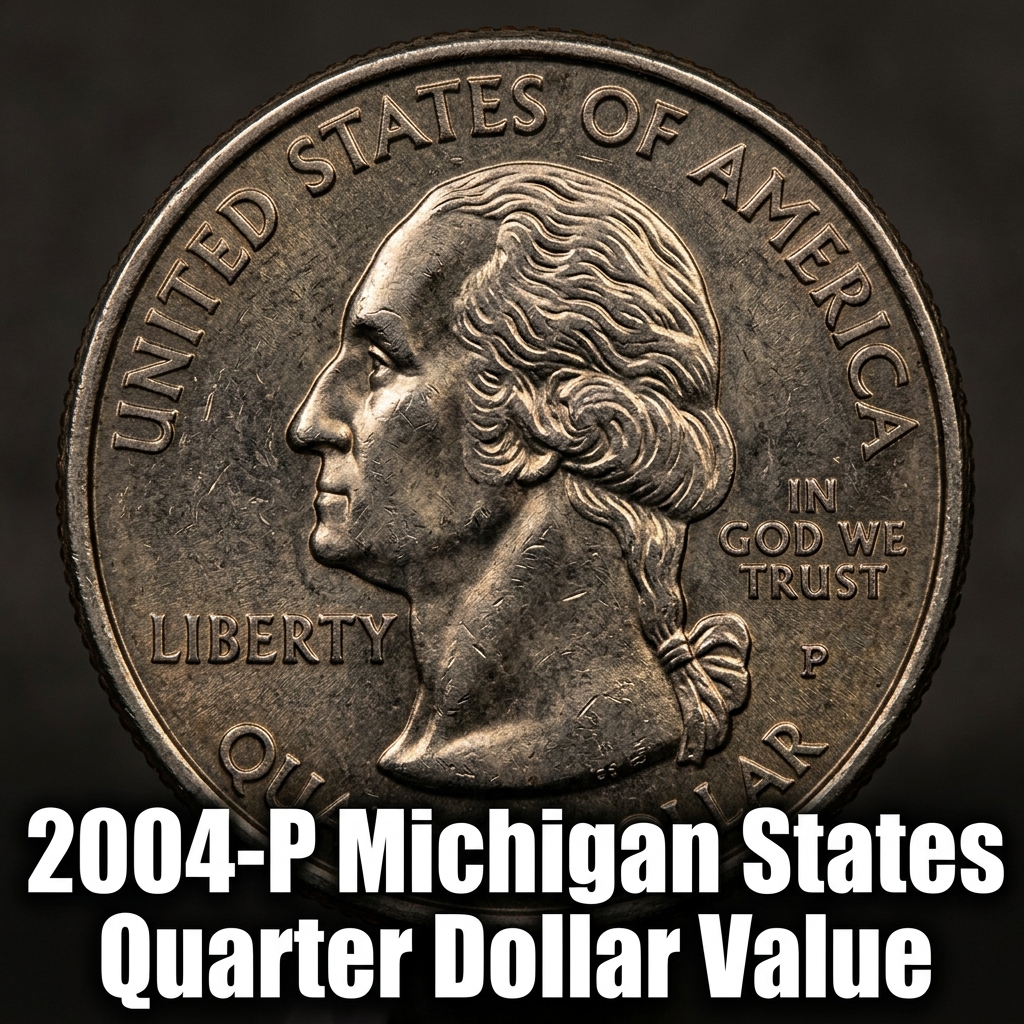
The 2004-P Michigan State Quarter was struck at the Philadelphia Mint as part of the hugely popular 50 State Quarters Program, which ran from 1999 to 2008. The “P” mintmark stands for Philadelphia, and this coin features a beautiful reverse design showing an outline of the state of Michigan with the Great Lakes prominently displayed. The obverse carries the classic portrait of George Washington that has appeared on quarters since 1932.
If you want to quickly identify coins like this one, using the best coin identifier app on your phone is one of the easiest ways to get started. These tools can scan your coin, confirm the date and mintmark, and give you a ballpark value in seconds — no expertise required.
The Philadelphia Mint produced over 233 million of these quarters in 2004, making them common in circulation. But “common” doesn’t always mean “worthless,” and the condition of your specific coin makes all the difference.
How Condition Affects the 2004-P Michigan Quarter Value
Like any coin, the 2004-P Michigan State Quarter’s value depends heavily on its grade — that is, how well-preserved it is. Coins are graded on a scale from 1 to 70, with 70 being a perfect, uncirculated example. Here’s a quick breakdown of what you can expect to see across different grades:
| Grade | Description | Estimated Value |
|---|---|---|
| Good (G-4) | Heavily worn, major details visible | Face value ($0.25) |
| Fine (F-12) | Moderate wear, all lettering clear | $0.25–$0.50 |
| Extremely Fine (EF-40) | Light wear on high points | $0.50–$1.00 |
| Mint State (MS-63) | Uncirculated, some contact marks | $2–$5 |
| Mint State (MS-65) | Gem uncirculated, few blemishes | $5–$15 |
| Mint State (MS-67+) | Superb gem, rare at this level | $20–$50+ |
For a more detailed look at certified sale prices and grade-by-grade data, check out this comprehensive price breakdown for the 2004-P Michigan quarter in mint state grades — it pulls from real auction records and is updated regularly.
Are There Any Rare Varieties or Errors Worth More?
Here’s where things get interesting for treasure hunters. While the standard 2004-P Michigan State Quarter isn’t rare, error coins and varieties can be worth considerably more. Collectors and dealers have documented a few notable errors on this issue, including:
– Die cracks and cuds: Raised lines or blobs caused by a cracked die. Depending on size and placement, these can add $5–$30 to a coin’s value.
– Off-center strikes: If the design is noticeably shifted from center, these errors range from $10 to well over $50.
– Doubled die errors: Look closely at the lettering or Great Lakes outline for any doubling. Strong examples can bring $25–$100 or more.
– Clipped planchets: A coin with a missing edge piece due to a miscut blank. These typically sell for $10–$30.
If you suspect you have an error coin, downloading CoinHix is a smart first step. CoinHix lets you photograph your coin and compare it against a database of known errors and varieties, saving you the guesswork.
How to Check the Current Market Value
Coin values change over time based on collector demand, silver prices (though State Quarters are clad, not silver), and what’s been selling at auction lately. That’s why it’s important to look at current data rather than relying on old price guides.
For a full picture of what 2004 quarters are selling for right now, this up-to-date guide on 2004 quarter values across all mint facilities covers both Philadelphia and Denver issues with current market estimates.
You can also use CoinHix to track real-time price data for the 2004-P Michigan quarter and hundreds of other State Quarters, all in one place. It’s free to download and built specifically for everyday collectors who want straightforward answers without digging through auction archives.
Should You Get Your Coin Graded?
If your 2004-P Michigan quarter looks like it’s never been used — no scratches, full luster, sharp details — it might be worth submitting to a professional grading service like PCGS or NGC. A coin graded MS-66 or higher can sell for multiples of what a raw, ungraded coin would fetch. The cost of grading typically runs $20–$40 per coin, so it only makes financial sense if your coin appears to be in gem condition.
For most people who find these in circulation or a coin jar, the coin is worth face value or just a little more. But for an uncirculated example from an original bank roll or a well-preserved collection, professional grading can be a worthwhile investment.
Frequently Asked Questions
Q: How do I know if my 2004-P Michigan quarter is worth more than face value?
A: Look at the surface carefully. If it shows no signs of wear, retains its original shine, and has no visible scratches or contact marks, it may grade MS-63 or higher and be worth $2–$15. Error coins — with off-center strikes, doubled lettering, or die cracks — can be worth significantly more regardless of grade.
Q: Where is the mintmark on the 2004-P Michigan State Quarter?
A: The mintmark is located on the obverse (front) of the coin, just to the right of Washington’s portrait ribbon near the bottom of the bust. A “P” indicates it was struck at the Philadelphia Mint, while a “D” means Denver.
Q: Is the 2004-P Michigan quarter made of silver?
A: No. The standard 2004-P Michigan State Quarter is made of a copper-nickel clad composition, with an outer layer of 75% copper and 25% nickel bonded to a pure copper core. There is a 90% silver proof version issued for collectors through the U.S. Mint’s special sets, but those are distinctly different coins and would not be found in everyday change.