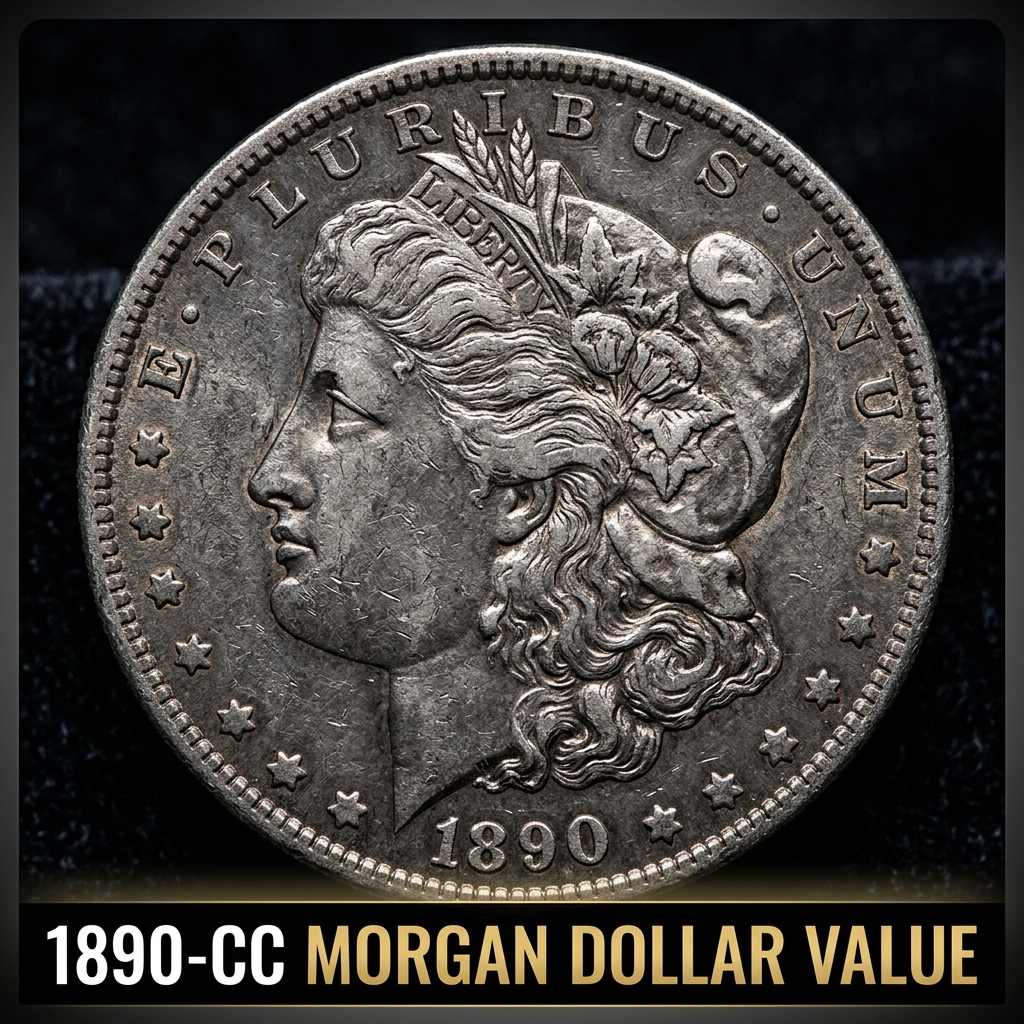
The 1890-CC Morgan Dollar is worth anywhere from $45 in heavily worn condition to well over $1,500 or more in high mint state grades — and certain certified examples have sold for tens of thousands of dollars at auction. If you found one of these coins in an old collection, a safe, or a family drawer, you’re holding a piece of genuine American history minted at the legendary Carson City Mint in Nevada.
What Makes the 1890-CC Morgan Dollar Special
Not all Morgan Dollars are created equal, and the “CC” mintmark on the reverse of this coin tells you something important — it was struck at the Carson City Mint, one of the most storied and short-lived minting facilities in U.S. history. Carson City coins are consistently popular among collectors because of their wild west heritage and relatively lower mintage numbers compared to Philadelphia-struck coins.
The 1890-CC had a mintage of approximately 2,309,041 coins, which sounds like a lot, but keep in mind that millions were melted over the decades under the Pittman Act and other government programs. That dramatically reduced the surviving population, especially in higher grades. Today, finding a well-preserved 1890-CC is harder than you might think.
If you’re not sure whether your coin has the CC mintmark, you can use the best coin identifier app to scan your coin and get an instant identification. It’s a quick and easy way to confirm what you have before diving deeper into value research.
1890-CC Morgan Dollar Value by Grade
The condition of your coin — called its “grade” — is the single biggest factor in determining its value. Morgan Dollars are graded on a scale from Poor (P-1) to Perfect Mint State (MS-70). Here’s a general breakdown of what the 1890-CC Morgan Dollar is worth at different grade levels:
| Grade | Description | Estimated Value |
|---|---|---|
| G-4 (Good) | Heavy wear, major details visible | $45 – $65 |
| VG-8 (Very Good) | Moderate wear, clear design | $65 – $100 |
| F-12 (Fine) | Light to moderate wear | $100 – $150 |
| EF-40 (Extremely Fine) | Light wear on high points only | $175 – $275 |
| AU-55 (About Uncirculated) | Slight wear, most luster remains | $350 – $600 |
| MS-63 (Mint State) | Uncirculated, minor blemishes | $900 – $1,500 |
| MS-65 (Gem Mint State) | Fully struck, lustrous, few marks | $5,000+ |
For the most up-to-date market data, you can check live 1890-CC Morgan Dollar price trends across mint state grades to see what collectors are actually paying right now.
The Tailbar Variety — A Hidden Gem Worth Knowing
Here’s something that even casual coin hunters should know: the 1890-CC has a famous variety called the “Tailbar” variety. On this variety, a small die gouge appears below the eagle’s tail feathers on the reverse, looking like a short horizontal bar or scratch. This isn’t damage — it’s a mint error that happened during die production.
The Tailbar variety is actively sought by Morgan Dollar specialists, and it can command a meaningful premium over standard examples. A circulated Tailbar example might fetch $100–$300 more than its non-variety counterpart, and in higher grades, the difference can be even more dramatic.
If you want to identify whether your coin is a Tailbar variety, CoinHix makes it easy — just scan your coin using the app and it can help flag known varieties and match your coin to certified examples in its database.
How to Get Your 1890-CC Morgan Dollar Appraised
If you believe your coin is in decent condition or might be a variety, getting it professionally graded is worth considering. Third-party grading services like PCGS and NGC will authenticate your coin, assign it an official grade, and seal it in a tamper-proof holder. This process — called “slabbing” — makes your coin much easier to sell and can significantly increase buyer confidence.
Before spending money on grading, though, it makes sense to do your homework. You can review detailed 1890 Silver Dollar value information by grade and mintmark to get a clearer picture of whether submitting your coin is worth the cost. Grading fees typically run $30–$100 per coin depending on the service level, so you want to make sure the potential gain is worth it.
For a faster at-home assessment, CoinHix lets you photograph your coin and get an estimated value range instantly — a great first step before deciding whether to pursue professional grading.
Silver Melt Value and Why It Matters
Even a well-worn 1890-CC Morgan Dollar isn’t worthless. Every Morgan Dollar contains 0.7734 troy ounces of 90% pure silver, which means its value is always supported by the precious metal it contains. When silver prices hover around $28–$30 per troy ounce, the melt value of any Morgan Dollar sits at roughly $21–$23. That’s your baseline — no matter what condition it’s in, it’s at minimum worth that in silver content alone.
Of course, the Carson City mintmark pushes collector premiums well above melt value even for heavily worn examples, which is why even a beat-up 1890-CC typically sells for $45 or more.
Frequently Asked Questions
Q: How do I know if my 1890 Morgan Dollar was made at Carson City?
A: Look at the reverse of the coin — the side showing the eagle. Just below the eagle and above the “ONE DOLLAR” text, you’ll see a small mintmark. If it reads “CC,” your coin was struck at the Carson City Mint. No mintmark means it was made in Philadelphia.
Q: Is the 1890-CC Morgan Dollar rare?
A: It’s not considered a key date, but it’s far from common in higher grades. The Tailbar variety adds an extra layer of rarity. In grades of MS-64 and above, certified examples are genuinely scarce and command strong collector premiums.
Q: Where is the best place to sell an 1890-CC Morgan Dollar?
A: Options include online auction platforms like eBay, major coin auction houses such as Heritage Auctions or Stack’s Bowers, local coin dealers, and coin shows. If your coin is in high grade or is a recognized variety, a major auction house will typically get you the best price. For everyday circulated examples, a reputable local dealer or online sale works well.