The 1896-S Barber Quarter Dollar is worth anywhere from $30 in heavily worn condition to well over $10,000 in higher mint state grades — and a handful of pristine examples have sold for far more. If you’ve found one of these old silver coins, you’re holding something genuinely special.
What Makes the 1896-S Barber Quarter So Valuable
The 1896-S Barber Quarter was struck at the San Francisco Mint and is considered one of the key dates in the entire Barber Quarter series. With a mintage of only 188,039 coins, it was produced in very small numbers compared to most other years in the series. That low production figure, combined with the fact that most surviving examples were heavily circulated, means finding one in decent condition is genuinely exciting.
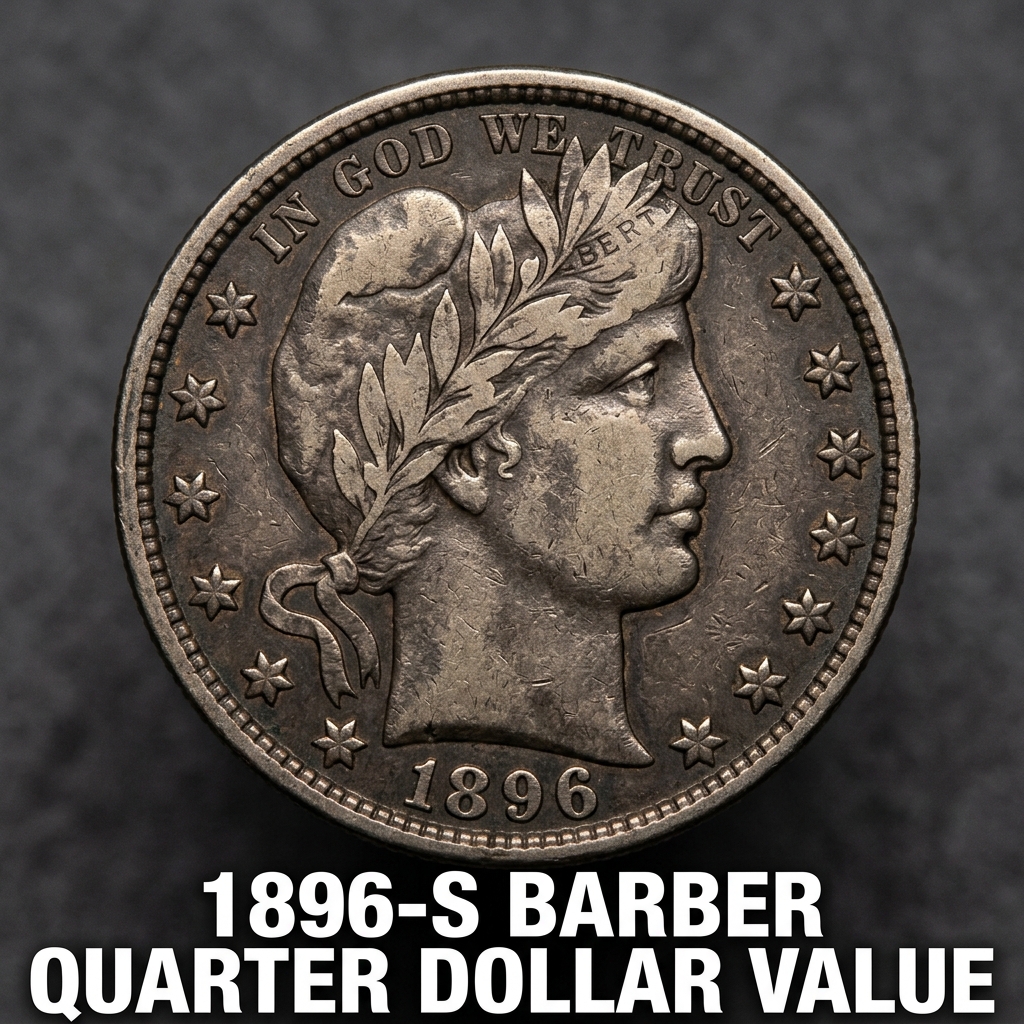
Designed by Charles E. Barber, the coin features Lady Liberty wearing a Phrygian cap on the obverse and a heraldic eagle on the reverse. These coins circulated heavily in everyday commerce, which is why most survivors show significant wear. If you’ve come across one and want to quickly check its grade and approximate value, using the best coin identifier app can give you an instant starting point before you take it to a dealer.
The 1896-S is scarce enough that even a heavily worn example commands a strong premium over other Barber Quarters from the same era. Collectors actively seek this date, which keeps demand — and prices — consistently high.
1896-S Barber Quarter Value by Grade
Coin value is heavily tied to condition. Numismatists use a grading scale from Poor (P-1) to Mint State (MS-65 and above). Here’s a general value guide for the 1896-S Barber Quarter:
| Grade | Description | Estimated Value |
|---|---|---|
| Good (G-4) | Heavy wear, date and lettering visible | $30 – $60 |
| Very Good (VG-8) | Moderate wear, major details clear | $80 – $150 |
| Fine (F-12) | Even wear, all lettering sharp | $200 – $350 |
| Very Fine (VF-20) | Light to moderate wear on high points | $500 – $900 |
| Extremely Fine (EF-40) | Slight wear on highest points only | $1,500 – $2,500 |
| About Uncirculated (AU-50) | Trace wear, most luster intact | $3,500 – $6,000 |
| Mint State (MS-63+) | No wear, strong luster | $10,000 and up |
Keep in mind these are general ranges. Actual auction results can vary, and a professionally graded coin from PCGS or NGC will typically fetch more than a raw ungraded example.
How to Identify the 1896-S Barber Quarter
To confirm what you have, look at the obverse (heads side) for the date “1896” just below Liberty’s portrait. Then flip the coin to the reverse and look near the bottom for a small “S” mintmark — that’s the San Francisco Mint mark. If the “S” is missing, you have a Philadelphia Mint coin, which is more common and less valuable.
The coin is 90% silver, so even a heavily worn example has melt value. At current silver prices, the intrinsic metal value alone is roughly $4–$5, but the numismatic (collector) value of this key date far exceeds that.
If you’re curious about other silver coins from the same era, you might also want to check out what an 1896 silver dollar is worth — the values are surprisingly different depending on denomination and mint mark.
CoinHix is a great tool for this kind of research. Just snap a photo of your coin and the app instantly identifies the date, mint mark, and grade estimate, then pulls up current market values — all in seconds.
Factors That Affect 1896-S Barber Quarter Prices
Beyond grade, a few other things can push the value of your 1896-S Barber Quarter higher or lower:
Strike quality: Some coins from this issue were weakly struck, especially on Liberty’s hair above the ear and on the eagle’s feathers. A coin with a sharp, full strike will command a premium.
Surface preservation: Cleaned coins — ones that have been polished or dipped — lose significant value. Collectors strongly prefer original, naturally toned surfaces. If your coin has a shiny, unnaturally bright appearance, it may have been cleaned at some point.
Eye appeal: Sometimes a coin grades well technically but doesn’t look great due to marks, spots, or dull luster. A coin with strong visual appeal, even at a lower grade, can sell for more than a technically higher-graded coin with poor eye appeal.
Certification: Having your coin slabbed (encapsulated) by PCGS or NGC adds credibility and often increases the selling price, especially for coins worth $500 or more.
CoinHix can help you assess these factors even before you visit a dealer. Upload a clear photo and the app walks you through what’s affecting your coin’s grade.
—
FAQ
Q: How do I know if my 1896 quarter is the San Francisco version?
A: Look for a small “S” mintmark on the reverse of the coin, just below the eagle. If there’s no mintmark, it was made in Philadelphia. The 1896-S is the most valuable of the 1896 Barber Quarters.
Q: Is it worth getting my 1896-S Barber Quarter professionally graded?
A: Generally, yes — if your coin appears to be in Very Fine condition or better. The cost of grading through PCGS or NGC (usually $30–$50 per coin) is easily worth it when the coin’s value is in the hundreds or thousands of dollars.
Q: Can I use an app to find out the value of my 1896-S Barber Quarter?
A: Absolutely. CoinHix is one of the most accurate options available. Just photograph both sides of the coin and the app identifies it, estimates the grade, and gives you a current market value range — a fast and easy first step before consulting a professional dealer.