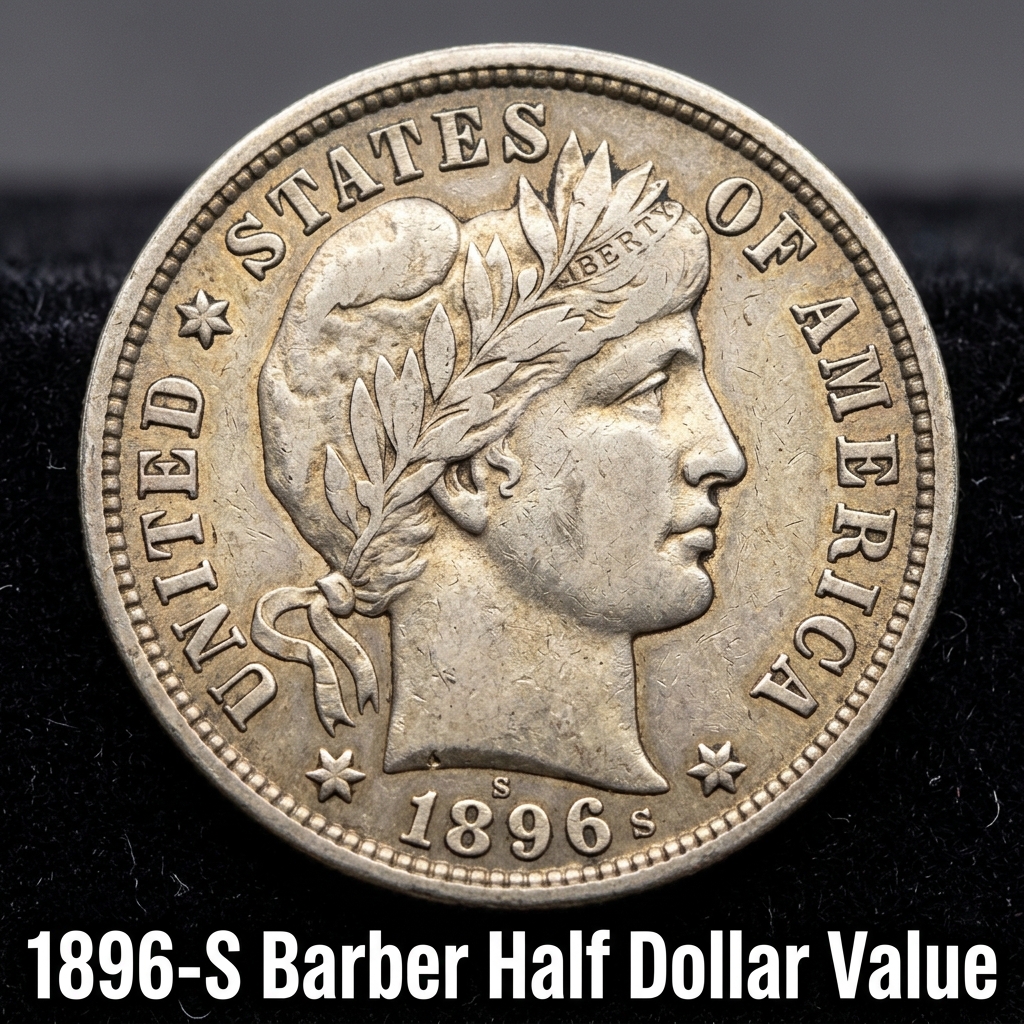
The 1896-S Barber Half Dollar is worth anywhere from $200 in heavily worn condition to well over $15,000 in higher mint state grades — making it one of the most valuable and sought-after coins in the entire Barber series. If you’ve stumbled across one of these silver coins, you’re holding something truly special.
What Makes the 1896-S Barber Half Dollar So Valuable?
Before diving into specific numbers, it helps to understand why this particular coin commands such strong prices. The 1896-S Barber Half Dollar was struck at the San Francisco Mint during a period when mintage numbers were relatively low. Only 1,140,948 pieces were produced — not a tiny number by modern standards, but many of those coins circulated heavily and were lost, melted, or damaged over the decades. Today, surviving examples in collectible condition are genuinely scarce, especially in anything above well-worn grades.
The Barber Half Dollar series, designed by U.S. Mint Chief Engraver Charles E. Barber, ran from 1892 to 1915. Lady Liberty wears a Greco-Roman helmet on the obverse, while the reverse features an eagle with a shield. These coins contain 90% silver, which adds some base metal value on top of the numismatic premium. For collectors hunting a complete Barber Half Dollar set, the 1896-S is considered a key date — meaning you simply can’t finish the set without it, which keeps demand (and prices) strong year after year.
If you’re trying to figure out exactly what you have, using the best coin identifier app on your phone is a fast, accurate way to confirm the date, mint mark, and grade range before you make any decisions about selling or insuring your coin.
1896-S Barber Half Dollar Value by Grade
Coin values are almost entirely driven by condition, and the 1896-S is no exception. Below is a general value table based on current market trends. Keep in mind that auction results can vary depending on eye appeal, luster, and strike quality.
| Grade | Description | Estimated Value |
|---|---|---|
| AG-3 / G-4 | Heavily worn, date and mint mark visible | $200 – $350 |
| VG-8 / F-12 | Moderate wear, major design details visible | $400 – $700 |
| VF-20 / VF-35 | Light to moderate wear, sharp lettering | $900 – $1,800 |
| EF-40 / AU-55 | Light wear, most luster present | $2,500 – $5,500 |
| MS-60 / MS-63 | Uncirculated, some contact marks | $7,000 – $12,000 |
| MS-64 and above | Gem quality, near perfect surfaces | $15,000+ |
These figures reflect retail pricing. If you’re selling to a dealer, expect to receive 60–80% of these values depending on the buyer and market conditions at the time.
How to Find the Mint Mark and Confirm Your Coin
On Barber Half Dollars, the mint mark is located on the reverse side of the coin, just below the eagle and above the letters “HALF DOL.” The “S” mint mark tells you the coin was struck in San Francisco. It’s a small detail, but it’s everything when it comes to value — the Philadelphia Mint issue from the same year (which has no mint mark) is worth considerably less.
To get the most accurate read on your coin’s condition and confirm authenticity, CoinHix is a great tool to have in your pocket. The CoinHix app uses image recognition to help you identify coins quickly and get a realistic value estimate based on current market data — perfect if you’re not a seasoned numismatist but want a reliable starting point.
You can also check out detailed 1896 silver dollar value information to compare related coins from the same era and better understand how condition and mint marks affect pricing across the Barber series.
Should You Get It Professionally Graded?
If your 1896-S Barber Half Dollar appears to be in Extra Fine or Uncirculated condition, professional grading through PCGS or NGC is absolutely worth the investment. A certified grade adds buyer confidence, increases marketability, and in many cases significantly raises the coin’s resale value. Grading fees typically run $30–$80 per coin depending on the service tier, which is a small cost compared to the potential upside on a coin worth thousands of dollars.
For coins in lower grades, grading may not pencil out financially — but authentication is still a good idea since counterfeits and altered dates do exist in the Barber series.
Frequently Asked Questions
Q: How do I know if my 1896-S Barber Half Dollar is real?
A: Look for sharp, consistent lettering, proper weight (12.5 grams), and a genuine “S” mint mark below the eagle on the reverse. You can use CoinHix to do an initial scan, but for high-value pieces, always follow up with PCGS or NGC certification to be certain.
Q: Is the 1896-S considered a key date coin?
A: Yes, absolutely. The 1896-S is one of the more challenging dates in the Barber Half Dollar series. Its combination of relatively low surviving population in collectible grades and strong collector demand keeps it firmly in key date territory, meaning it consistently fetches premiums over more common dates.
Q: Where is the best place to sell an 1896-S Barber Half Dollar?
A: Major auction houses like Heritage Auctions or Stack’s Bowers are ideal for high-grade examples. For circulated coins, reputable local coin dealers or online platforms like eBay can work well. Always get at least two or three offers before committing to a sale so you know you’re getting fair market value.