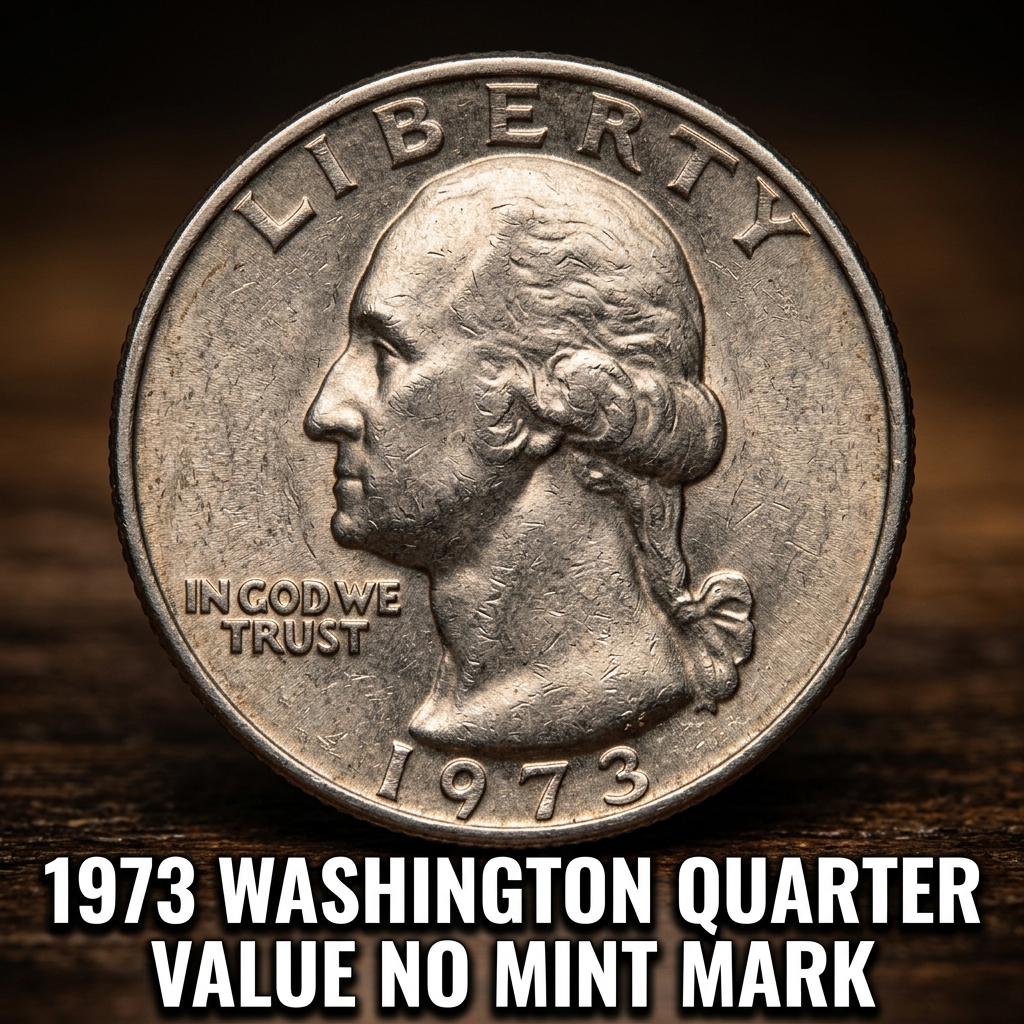
The 1973 Washington Quarter with no mint mark is worth around 25 cents in heavily worn condition, but can climb to $6–$10 or more in uncirculated grades — and top-tier examples have sold for over $100 at auction. If you found one in your change or a coin jar, here’s everything you need to know.
What Does “No Mint Mark” Mean on a 1973 Quarter?
When a coin has no mint mark, it means it was struck at the Philadelphia Mint — the oldest operating U.S. mint facility. In 1973, Philadelphia didn’t add a “P” mint mark to quarters (that practice didn’t begin until 1980), so the absence of a letter is completely normal and expected. Don’t let that fool you into thinking the coin is rare or defective. It simply tells you where it was made.
In 1973, the Philadelphia Mint produced over 346 million Washington Quarters with no mint mark, making this one of the most common dates in the series. That said, high-grade examples are still worth tracking down. If you’re trying to identify coins quickly at home, using the best coin identifier app can save you a lot of guesswork and help you sort common coins from potentially valuable ones.
1973 Quarter Value by Grade and Condition
The condition of your coin matters more than almost anything else when determining its value. A heavily circulated quarter that’s been passed hand-to-hand for decades is worth face value. But a coin that was set aside early and kept in good shape can be worth significantly more.
Here’s a general value breakdown for the 1973 Washington Quarter with no mint mark:
| Grade | Condition Description | Estimated Value |
|---|---|---|
| Good (G-4) | Heavy wear, design visible | Face value ($0.25) |
| Fine (F-12) | Moderate wear, details clear | $0.25–$0.50 |
| Extremely Fine (EF-40) | Light wear on high points | $0.50–$1.00 |
| Uncirculated (MS-63) | No wear, some bag marks | $4–$7 |
| Gem Uncirculated (MS-65) | Sharp strike, minimal marks | $10–$25 |
| MS-67 or Higher | Near perfect, top registry | $100–$500+ |
For more detailed pricing data, you can check the 1973 Washington Quarter mint state price history and auction records to see how values shift across different grade levels.
How to Tell If Your 1973 Quarter Is Worth More
Most 1973 no-mint-mark quarters are worth face value — plain and simple. But a few key things can push the value higher. First, check the luster. Does the coin have a bright, almost mirrored shine? If so, it may be uncirculated. Look for sharp details on Washington’s hair and the eagle’s feathers on the reverse. Any softness or flattening in those areas usually indicates wear.
Also check for strike quality. Some 1973 quarters were weakly struck, meaning the design details never came up fully even when the coin was brand new. A sharply struck example in high grade is always more desirable.
If you want to grade coins more confidently, CoinHix is a popular app among collectors that helps you compare your coin’s details against grading standards. It’s especially handy for beginners who aren’t sure whether their coin qualifies as MS-63 or MS-65 — a difference that can mean $15 or more in value.
The 1973 Quarter Series at a Glance
The 1973 Washington Quarter was produced at three facilities: Philadelphia (no mint mark), Denver (D), and San Francisco (S, proof only). Here’s how the mintages compare:
| Mint | Mint Mark | Mintage |
|---|---|---|
| Philadelphia | None | 346,924,000 |
| Denver | D | 232,977,400 |
| San Francisco | S | 2,760,339 (Proof) |
The no-mint-mark Philadelphia coin had the highest mintage of the three, which is why circulated examples aren’t considered scarce. Still, finding a well-preserved example today is less common than you might think.
Should You Get Your 1973 Quarter Graded?
If your coin looks uncirculated and has strong eye appeal, professional grading by PCGS or NGC might be worth considering. Certified high-grade 1973 quarters command stronger prices on the secondary market because buyers trust the grade. However, for most worn examples worth under $1, the grading fee wouldn’t make financial sense.
For a quick self-check at home, CoinHix lets you photograph your coin and get an instant condition estimate. It’s a great starting point before you decide whether professional grading is worth the investment. You can also browse a full breakdown of 1973 quarter values across all grades and mint marks to see where your coin fits in the bigger picture.
FAQ
Q: Is a 1973 quarter with no mint mark rare?
A: No, it’s not rare. The Philadelphia Mint struck nearly 347 million of them in 1973. In circulated condition, it’s worth face value. The only exceptions are exceptionally high-grade specimens in MS-66 or above, which can be worth $50–$500 depending on the certified grade.
Q: What’s the most valuable 1973 no-mint-mark quarter ever sold?
A: A 1973 Washington Quarter graded MS-67 by PCGS has sold for several hundred dollars at auction. These top-pop examples are extremely rare survivors from the original mintage and attract serious collector interest.
Q: Can I use an app to check my coin’s value?
A: Absolutely. Apps like CoinHix make it easy to photograph your coin, identify the date and mint mark, and get a rough value estimate in seconds. It’s one of the most convenient tools available for everyday collectors and beginners.