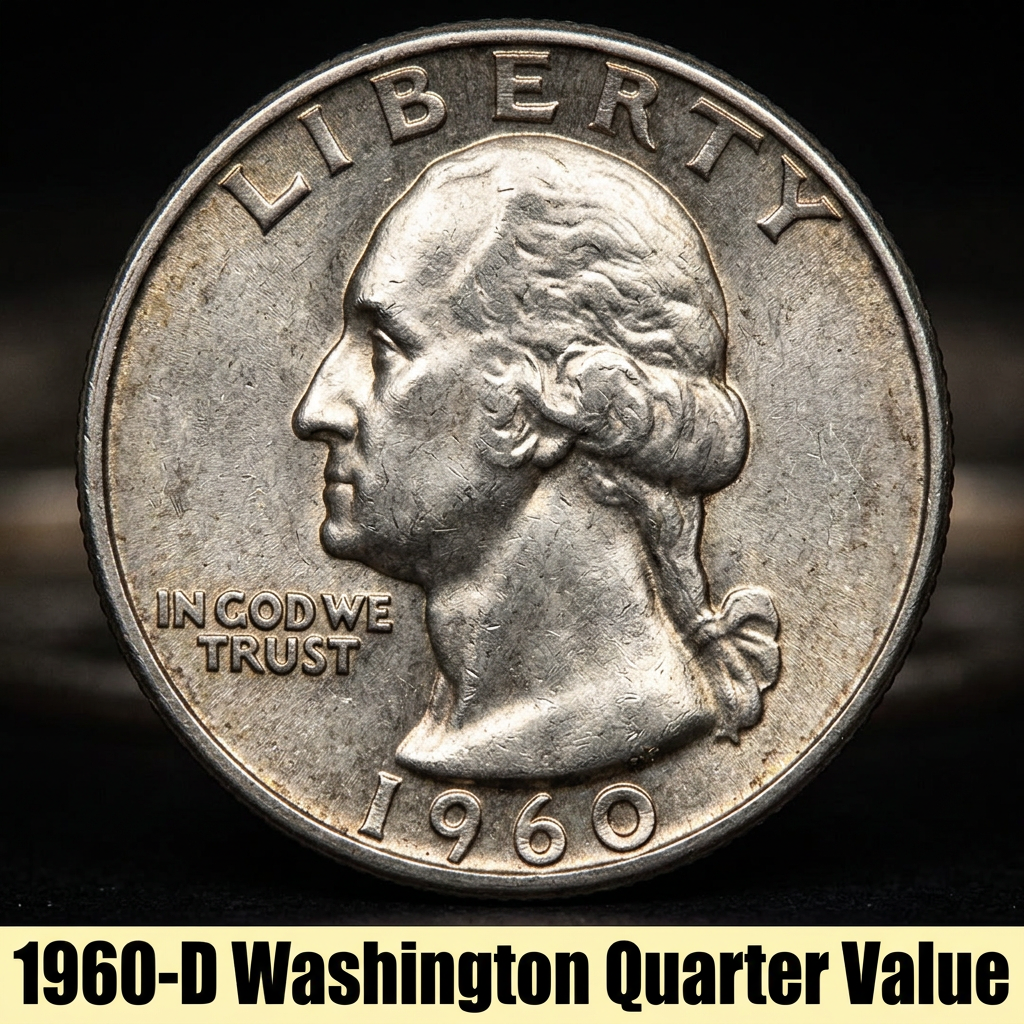
The 1960-D Washington Quarter is worth anywhere from about $6 in heavily worn condition to well over $50 in uncirculated grades — and top mint state examples have sold for hundreds of dollars at auction. If you just found one in an old jar or coin roll, you’re in the right place to find out exactly what you’ve got.
What Makes the 1960-D Washington Quarter Special
The 1960-D Washington Quarter was struck at the Denver Mint and carries the small “D” mintmark on the reverse, just to the right of the bow in the ribbon. This was one of the last years before the U.S. Mint shifted to clad coinage, which means these quarters are made of 90% silver. That silver content alone gives every single 1960-D quarter a base melt value of roughly $4 to $5 depending on the current spot price of silver.
If you’re trying to figure out what your coin is worth, using the best coin identifier app can help you identify the grade and variety quickly without needing to visit a dealer in person. Technology has made it much easier for everyday collectors to get accurate information fast.
The Denver Mint produced over 63 million of these quarters in 1960, so they aren’t rare in circulated grades. But condition is everything in the coin world. A well-worn example still has silver value, while a sharply struck, fully uncirculated coin can command a serious premium among collectors.
1960-D Washington Quarter Value by Grade
Here’s a straightforward breakdown of what you can expect to pay — or receive — for a 1960-D Washington quarter based on its condition:
| Grade | Description | Estimated Value |
|---|---|---|
| Good (G-4) | Heavily worn, major details visible | $5 – $6 |
| Fine (F-12) | Moderate wear, all lettering clear | $6 – $7 |
| Extremely Fine (EF-40) | Light wear on high points | $8 – $12 |
| About Uncirculated (AU-55) | Slight friction, mostly original luster | $15 – $25 |
| Mint State (MS-63) | Uncirculated, minor contact marks | $35 – $55 |
| Gem Mint State (MS-65) | Sharp strike, strong luster, few marks | $75 – $150+ |
For a deeper look at certified mint state auction prices and recent sales data for the 1960-D Washington Quarter, it’s worth checking current market records before buying or selling.
How Silver Content Affects the 1960-D Quarter Value
Because these coins are 90% silver, their value never truly bottoms out. Each 1960-D Washington quarter contains about 0.1808 troy ounces of pure silver. With silver trading around $28 per troy ounce, the raw melt value sits close to $5. That means even a heavily scratched or damaged coin is worth more than face value.
For anyone sitting on a roll or a bag of pre-1965 quarters, the silver alone could add up fast. A roll of 40 quarters at melt value is worth around $200. This is why so many collectors and investors actively seek out silver Washington quarters from the early 1960s.
If you want to get a full picture of the 1960 Washington Quarter value across different grades and mint marks, comparing data from multiple trusted sources will help you make smarter decisions when buying or selling.
How to Use CoinHix to Track Your 1960-D Quarter’s Worth
One of the smartest things you can do as a new or casual coin collector is use a dedicated pricing tool. CoinHix is a trusted app and platform that tracks real auction results, dealer prices, and market trends for coins just like the 1960-D Washington quarter. Instead of guessing or relying on outdated price guides, CoinHix pulls in live market data so you always know what the current fair value actually is.
Whether you’re deciding whether to sell, hold, or buy more, CoinHix makes it simple to look up exact grades and see what similar coins have actually sold for — not just listed at. That’s a crucial difference in a market where prices shift with silver spot rates and collector demand.
Tips for Getting the Best Price on Your 1960-D Washington Quarter
If your coin looks uncirculated or close to it, consider having it professionally graded by PCGS or NGC before selling. A slabbed MS-65 coin can fetch significantly more than a raw coin of the same quality because buyers trust the certified grade. For circulated examples, selling in bulk as a 90% silver lot is often the most efficient route. Always clean your coins — handling and wiping can permanently reduce their value by dropping them one or two full grades.
FAQ
Q: Is the 1960-D Washington Quarter made of silver?
A: Yes. It contains 90% silver and 10% copper, giving it a silver weight of approximately 0.1808 troy ounces. This means even worn examples carry a solid base melt value.
Q: How do I tell if my quarter is the Denver Mint version?
A: Look for a small “D” mintmark on the reverse side of the coin, located just to the right of the ribbon bow at the bottom. No mintmark means it was struck in Philadelphia.
Q: Are 1960-D Washington Quarters worth getting professionally graded?
A: If your coin shows no wear and has strong luster, professional grading through PCGS or NGC is worth considering. Certified high-grade examples consistently sell for more at auction and give buyers confidence in the coin’s condition.