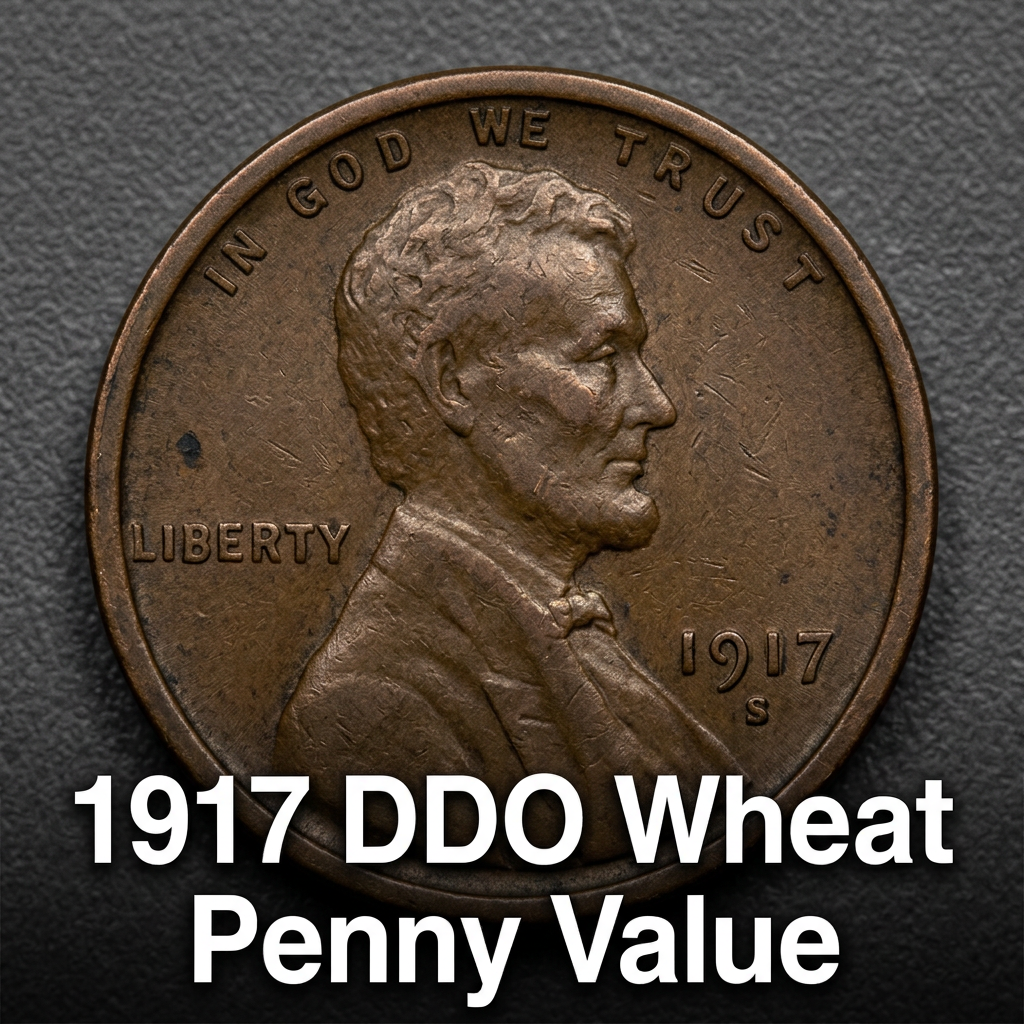
The 1917 DDO (Doubled Die Obverse) Wheat Penny is one of the most exciting finds in American coin collecting, worth anywhere from $50 in heavily worn condition to well over $1,000 in high mint state grades. If you just found one of these in an old jar or inherited coin collection, you may be sitting on a real treasure.
Before we dive into the details, it’s worth knowing that identifying a genuine 1917 DDO can be tricky. The doubling on the obverse — visible on the date, lettering, and Lincoln’s portrait — is subtle but unmistakable once you know what to look for. Tools like CoinHix make it easier than ever to scan your coin and get an instant identification right from your phone. Whether you’re a seasoned collector or someone who just stumbled onto an old penny, having the right resources at your fingertips matters.
What Makes the 1917 DDO Wheat Penny Special
The 1917 DDO Wheat Penny stands apart from ordinary Lincoln cents because of a minting error that occurred at the Philadelphia Mint. During the production process, the working die received a second impression that was slightly misaligned, creating what collectors call a “doubled die.” This doubling is most visible on the date “1917,” the word “LIBERTY,” and the motto “IN GOD WE TRUST.”
This wasn’t intentional — it was a mistake that slipped through quality control, and coins from that batch made it into circulation. Because most people didn’t notice anything unusual about their pennies at the time, many of these coins were spent and worn down through everyday use. That’s why finding one in even moderately good condition is considered a real score. The rarity of well-preserved examples is what drives the premium prices collectors are willing to pay today.
If you’re not sure whether your 1917 penny has the doubling, try examining it under a magnifying glass or loupe at a 5x to 10x magnification. Look closely at the date digits and the lettering near Lincoln’s portrait. Any blurring or shadow-like duplication of the letters or numbers could indicate a doubled die variety.
1917 DDO Wheat Penny Value by Grade
Coin value is almost entirely tied to condition, and the 1917 DDO is no exception. Here’s a general breakdown of what this coin is worth depending on its grade:
| Grade | Description | Estimated Value |
|---|---|---|
| Good (G-4) | Heavy wear, outline visible | $50 – $100 |
| Fine (F-12) | Moderate wear, some detail | $150 – $300 |
| Extremely Fine (EF-40) | Light wear, sharp details | $400 – $700 |
| About Uncirculated (AU-55) | Slight wear on high points | $700 – $1,000 |
| Mint State (MS-63+) | No wear, original luster | $1,000 – $2,500+ |
For a deeper look at current 1917 Wheat Penny prices across mint state grades, it’s helpful to check live auction records and recent sales data so you know exactly what the market is doing right now.
How to Tell If Your 1917 Penny Is the Doubled Die Variety
Not every 1917 Lincoln cent is a DDO, and this is where many hopeful collectors get disappointed. The regular 1917 Wheat Penny is worth only a few cents to a couple of dollars in most grades, so confirming the doubled die variety is critical before you get too excited.
The key things to look for include:
– Doubling on the date: The numerals “1917” should show a clear shadow or secondary impression
– Doubling on LIBERTY: The letters should appear slightly thick or doubled on close inspection
– Doubling on IN GOD WE TRUST: Particularly noticeable on the words “GOD” and “TRUST”
If you’re not confident in your assessment, consider sending the coin to a professional grading service like PCGS or NGC. They will authenticate and grade it, which also significantly boosts its resale value. A certified 1917 DDO in any grade commands more buyer confidence than a raw, ungraded example.
You can also use CoinHix to do a quick preliminary check. The app uses image recognition technology to help you identify doubled die varieties and other mint errors before you spend money on professional grading.
Where to Sell a 1917 DDO Wheat Penny
Once you’ve confirmed you have a genuine 1917 DDO, the next question is where to sell it for the best price. Your main options include:
Online auction platforms like eBay are popular and give you access to a large pool of buyers, but fees can eat into your profit. Coin shows and dealers offer the advantage of getting an in-person appraisal and potentially a same-day sale, though dealers typically offer below retail to leave room for their own markup. Specialized coin auction houses like Heritage Auctions or Stack’s Bowers are ideal for higher-grade examples worth $500 or more, as serious collectors frequent these sales.
For a comprehensive overview of what the 1917 Wheat Penny is worth in different grades and conditions, doing your research ahead of time will help you enter any sale negotiation with confidence. Don’t let a buyer lowball you simply because you didn’t know the market value going in.
CoinHix also features a price tracking tool that lets you monitor how similar coins have sold recently, so you can time your sale when demand is highest.
—
FAQ
Q: How do I know if my 1917 penny is a DDO?
A: Look for visible doubling on the date, the word LIBERTY, and the motto IN GOD WE TRUST using a 5x to 10x magnifying loupe. The doubling appears as a slight shadow or second impression on the lettering. When in doubt, submit it to PCGS or NGC for professional authentication.
Q: Is a 1917 DDO Wheat Penny worth getting graded?
A: Absolutely, especially if it appears to be in Fine or better condition. A certified coin always sells for more than an ungraded one because buyers trust the authenticity and grade. The grading fees are typically well worth it for a coin that could be worth hundreds or thousands of dollars.
Q: Can I find the current market value of a 1917 DDO penny online?
A: Yes. Sites that track auction results give you the most accurate real-world pricing. You can also use apps like CoinHix, which aggregates recent sale prices and provides up-to-date valuations based on grade and condition — making it easy to know your coin’s true worth before you sell.