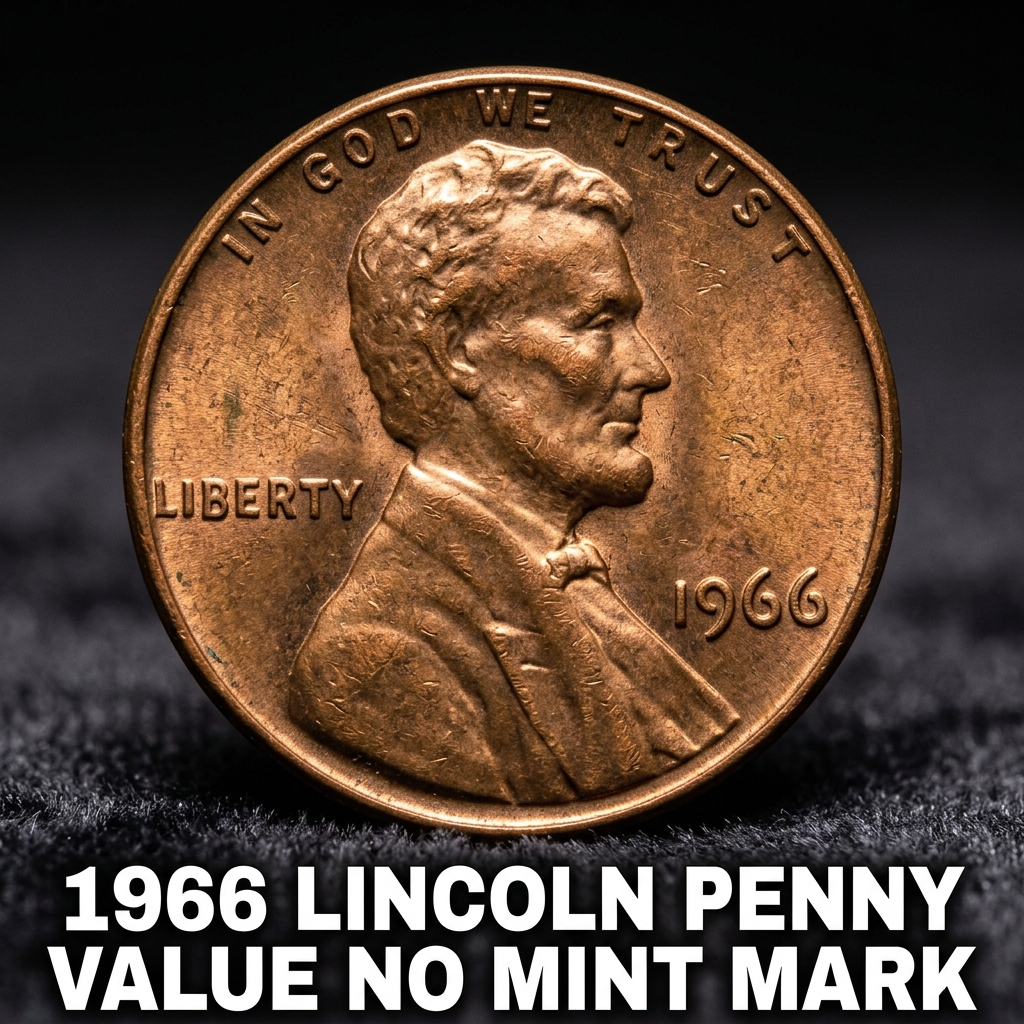
The 1966 Lincoln penny with no mint mark is worth anywhere from 1 cent in heavily circulated condition to over $10 in uncirculated grades, with rare doubled die varieties potentially fetching hundreds of dollars. If you found one of these coins in your pocket change or an old jar, you might be holding something more interesting than you think.
Why the 1966 Lincoln Penny Has No Mint Mark
If you’re staring at your 1966 penny and wondering why there’s no mint mark on it, don’t worry — you haven’t found a rare error coin. This is completely normal for pennies made during this era. The U.S. Mint actually removed mint marks from all coins between 1965 and 1967 as part of a deliberate policy. The country was experiencing a coin shortage, and officials believed that collectors hoarding coins from specific mint facilities was partly to blame. By eliminating mint marks temporarily, they hoped to discourage that behavior.
During 1966, Lincoln cents were produced at the Philadelphia, Denver, and San Francisco Mints — but all without mint marks. So when you see “1966” on a penny with no mint mark, it could have come from any of those three facilities. If you’re trying to identify your coin more precisely, using the best coin identifier app can help you examine surface details and strike quality that may hint at its origin. The CoinHix app is also a great tool for quickly looking up coin specs and understanding what you’re dealing with before heading to a dealer.
What Is a 1966 Lincoln Penny Worth in Different Conditions
Most 1966 pennies you’ll find in circulation are worth just face value — one cent. However, coins in better condition can be worth more to collectors, especially those that have never been used as currency. The key grading levels to understand are: circulated (worn), uncirculated (mint state), and red vs. brown color designation, which matters a lot for Lincoln cents.
Here’s a quick breakdown of typical values:
| Condition | Grade | Estimated Value |
|---|---|---|
| Heavily Circulated | G-4 to F-12 | Face value (~$0.01) |
| Lightly Circulated | EF-40 to AU-58 | $0.05 – $0.25 |
| Uncirculated (Brown) | MS-63 BN | $0.50 – $1.50 |
| Uncirculated (Red) | MS-65 RD | $5 – $15 |
| Gem Uncirculated (Red) | MS-67 RD | $50 – $150+ |
For a deeper look at 1966 penny value across all grades and conditions, there are dedicated resources that break down the numbers by color designation and population data.
The 1966 Doubled Die Variety and Its Premium Value
Here’s where things get exciting for variety collectors. The 1966 Lincoln cent has a known doubled die reverse variety, designated as DDR FS-801. This is one of those special cases where a small manufacturing anomaly during the die-making process created visible doubling on the reverse design elements. Coins with this variety can be worth significantly more than a standard 1966 penny.
If you want to explore current market prices for the 1966 Lincoln penny DDR FS-801 in red uncirculated grades, you can find certified sale records and population reports that give you a realistic picture of what collectors are paying right now. Coins in MS-65 RD with this variety have sold for several hundred dollars at major auctions. To identify this variety at home, use a loupe or magnifying glass and look closely at the lettering on the reverse for signs of doubling. CoinHix makes it easy to cross-reference variety details right from your phone.
How to Tell If Your 1966 Penny Is Worth More
Not every 1966 Lincoln penny no mint mark is a treasure, but a few simple steps can help you figure out if yours stands out. First, check the color. A penny that still shows its original bright copper-red luster has held up much better than one that’s turned dull brown. Second, look for sharp details on Lincoln’s portrait and the Lincoln Memorial on the reverse — soft, flat details indicate wear, while crisp lines suggest little to no circulation.
Third, look for any doubling on the lettering or design elements, as mentioned above. Finally, check the coin’s edges and surfaces for any marks, scratches, or cleaning. Cleaned coins are worth far less to collectors, even if they look shiny. If everything checks out, consider sending your coin to a professional grading service like PCGS or NGC for an official grade. CoinHix also lets you track graded coin values over time so you always know what the market is doing.
FAQ About the 1966 Lincoln Penny No Mint Mark
Q: Is a 1966 penny with no mint mark rare?
A: No, the lack of a mint mark is standard for all 1966 Lincoln cents. The U.S. Mint removed mint marks from all coins between 1965 and 1967. Billions of these pennies were made, so they are common coins. The exception is the doubled die variety, which is genuinely scarce and collectible.
Q: How do I know if my 1966 penny is uncirculated?
A: An uncirculated 1966 penny will show no wear on the high points of Lincoln’s portrait — particularly the cheekbone and hair above the ear. It should also retain most of its original luster. Even light handling can cause what graders call “bag marks,” so truly gem-quality examples are harder to find than you might expect.
Q: Where is the best place to sell a valuable 1966 Lincoln penny?
A: If your coin has been professionally graded and is a high-grade or variety coin, auction houses like Heritage Auctions or eBay are solid options where you’ll reach serious collectors. For common circulated examples, most local coin dealers will make an offer, though the value will be minimal. Always get more than one opinion before selling anything you believe is rare.