The 1890 Liberty Nickel is worth anywhere from $2 in heavily worn condition to over $200 or more in uncirculated mint state grades. If you just found one of these old nickels tucked away in a drawer or inherited coin collection, you’re in the right place — let’s break down exactly what you might be sitting on.
—
What Is the 1890 Liberty Nickel?
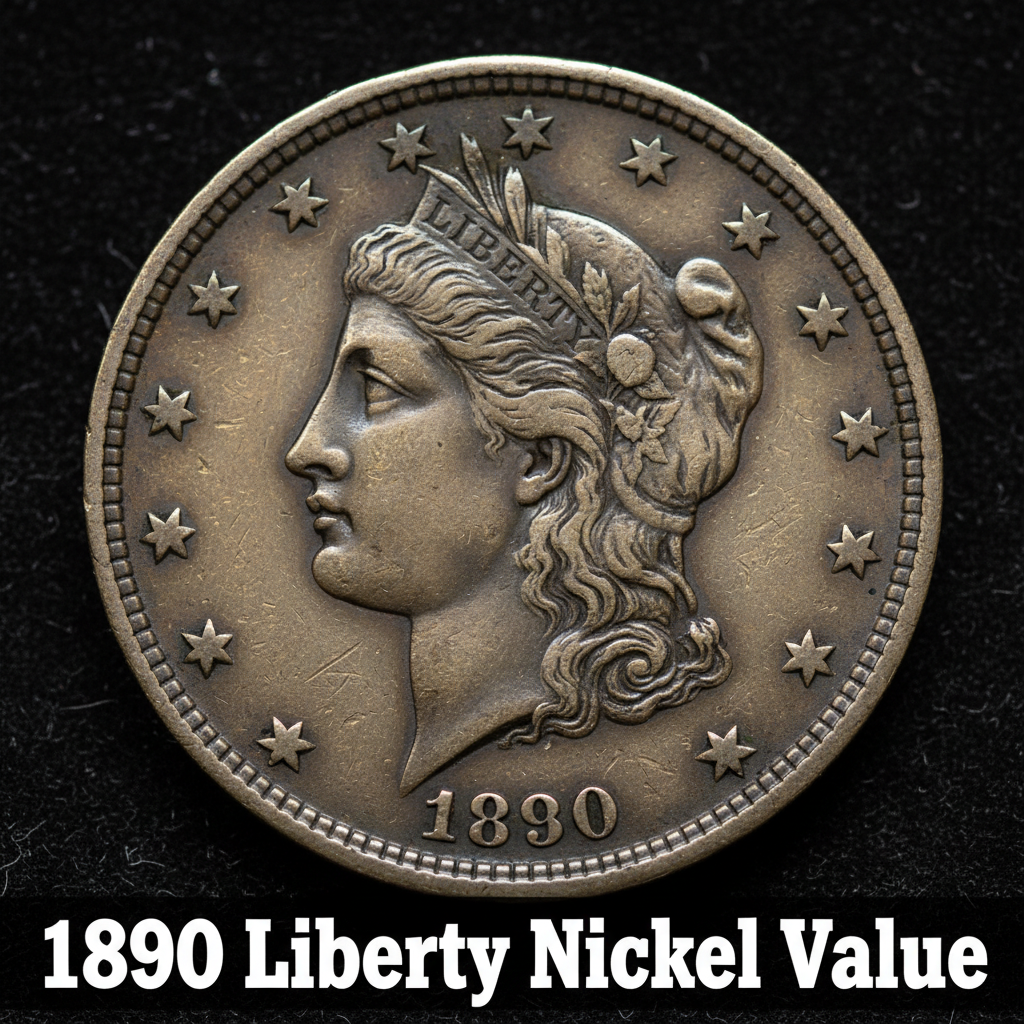
The 1890 Liberty Nickel — also called the “V Nickel” because of the Roman numeral “V” on its reverse — was struck at the Philadelphia Mint as part of a series that ran from 1883 to 1912. Designed by Charles Barber, the obverse features a left-facing portrait of Liberty surrounded by stars, while the reverse displays the large “V” encircled by a wreath and the words “CENTS” at the bottom.
These coins were a daily-use item for ordinary Americans in the late 1800s, which means most surviving examples show significant wear. But if yours has sharp details, visible hair strands on Liberty’s portrait, and a clean surface, you could be looking at a coin worth well over $50 — or even $100+. To get a quick read on your coin’s grade and identity, try using the best coin identifier app on your phone before heading to a dealer.
—
1890 Liberty Nickel Value by Grade
The condition — or “grade” — of your coin is the single biggest factor in its value. Coin grading runs from Poor (P-1) at the bottom to Mint State (MS-65+) at the top. Here’s a general value breakdown for the 1890 Liberty Nickel:
| Grade | Description | Estimated Value |
|---|---|---|
| Good (G-4) | Heavy wear, outline visible | $2 – $5 |
| Fine (F-12) | Moderate wear, some details | $10 – $20 |
| Extremely Fine (EF-40) | Light wear on high points | $35 – $55 |
| About Uncirculated (AU-50) | Slight wear, strong luster | $70 – $100 |
| Mint State (MS-63) | No wear, minor marks | $150 – $225 |
| Gem Mint State (MS-65) | Exceptional strike and surfaces | $400+ |
For the most current auction results and certified coin prices, you can check out the 1890 Liberty Nickel mint state price data on CoinHix to see real-time market values broken down by grade.
—
How Condition Affects the 1890 Liberty Nickel Price
Most 1890 Liberty Nickels you’ll encounter in old jars or collections are in Good to Fine condition — heavily worn but still recognizable. In these grades, they’re worth a few dollars at best. However, coins that were saved soon after minting and never put into circulation are a different story entirely.
An uncirculated 1890 Liberty Nickel with original luster and sharp details is a legitimate collector’s piece. The mintage for 1890 was 16,259,272 coins — a fairly healthy number — which means it’s not a rare date. But high-grade examples are scarce simply because few people bothered to save them back then. The combination of age, design appeal, and condition scarcity is what drives values up at the top end of the grading scale.
Always look at the coin under good lighting. If Liberty’s hair curls are sharp, the stars on the obverse are well-defined, and there’s no heavy scratching or cleaning, you may have something worth getting professionally graded by PCGS or NGC.
—
Mint Marks and Varieties to Know
The 1890 Liberty Nickel was produced only at the Philadelphia Mint, which means there is no mint mark on the coin. Philadelphia coins of this era were issued without a mint mark, so don’t be alarmed if you don’t see one — that’s completely normal and expected.
There are no major varieties for the 1890 issue that dramatically increase value for average collectors, though minor die varieties do exist for specialists. If you’re curious whether your coin might have a special characteristic, CoinHix offers variety lookup tools that can help you cross-reference die details quickly and confidently.
For those who also collect other coins from this era, you might be interested in how much an 1890 silver dollar is worth — another fascinating coin from the same period that can carry serious value depending on condition and mint mark.
—
Tips for Selling Your 1890 Liberty Nickel
If you’ve decided to sell, here are a few practical steps:
– Don’t clean the coin. Cleaning damages the surface and drastically reduces collector value, even if it makes the coin look shiny.
– Get a second opinion. Show it to at least two dealers or use CoinHix to compare against current market prices before accepting an offer.
– Consider professional grading. If your coin looks uncirculated or close to it, spending $30–$50 on PCGS or NGC grading could increase your selling price significantly.
– Sell in the right place. eBay, heritage auctions, and local coin shows are all viable options for 1890 Liberty Nickels, depending on grade.
—
FAQ
Q: Is my 1890 Liberty Nickel made of silver?
A: No. The Liberty V Nickel is composed of 75% copper and 25% nickel — no silver content at all. Don’t confuse it with the silver dollars or dimes of the same era.
Q: How do I know if my 1890 Liberty Nickel has been cleaned?
A: Cleaned coins often show an unnatural brightness, fine hairline scratches under magnification, or a “washed out” look that removes the natural gray-black toning. A cleaned coin is worth significantly less than a naturally toned one in the same grade.
Q: Where can I find the most accurate current value for my 1890 Liberty Nickel?
A: The most reliable sources are recent auction records from PCGS CoinFacts, NGC Price Guide, or CoinHix, which tracks real-time prices for Liberty Nickels across all grades. Always compare multiple sources before making a buying or selling decision.