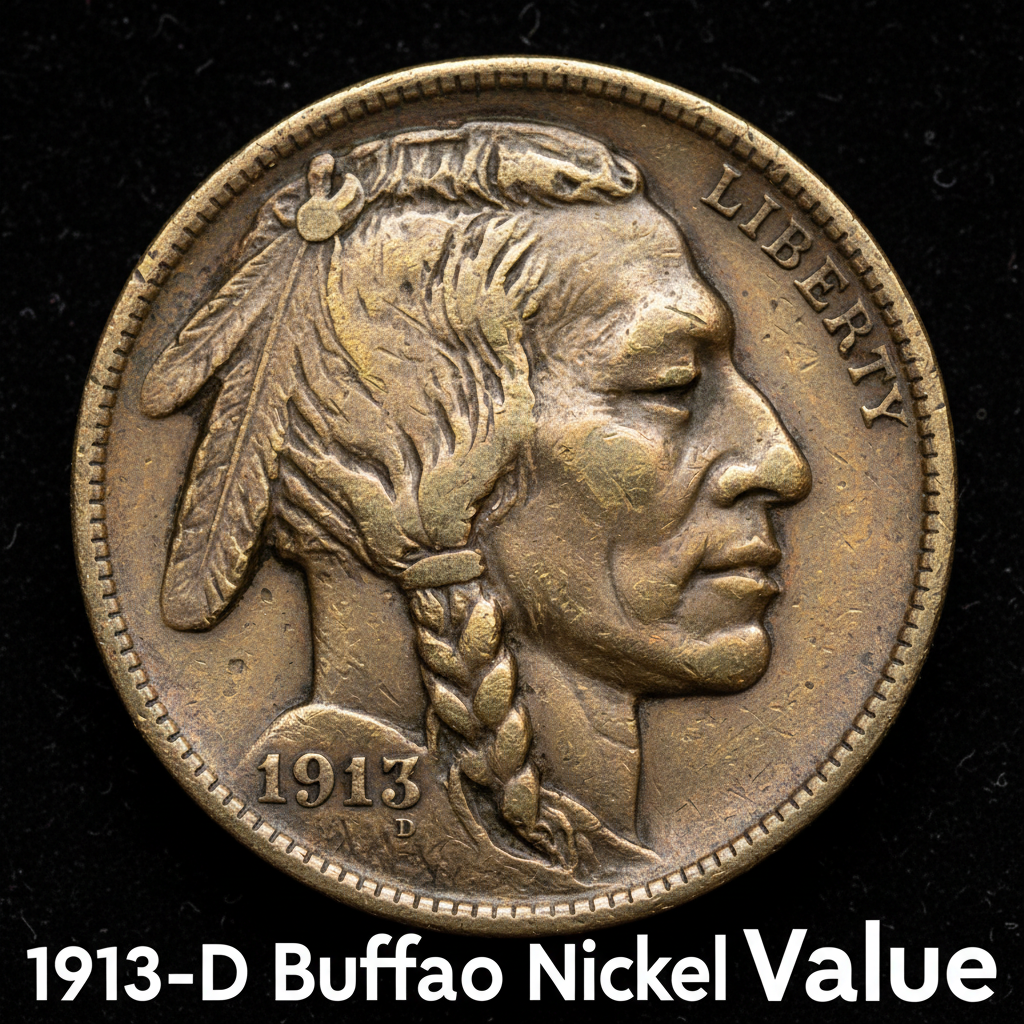
The 1913-D Buffalo Nickel is worth anywhere from $20 in heavily worn condition to well over $1,500 or more in higher mint state grades. If you’ve found one of these coins tucked away in an old collection or passed down from a grandparent, you might be sitting on something genuinely valuable. Read on to find out exactly what yours could be worth.
What Makes the 1913-D Buffalo Nickel Special
The Buffalo Nickel, also known as the Indian Head Nickel, was first introduced in 1913 — making that very first year a historically significant one for collectors. The “D” mint mark tells you this coin was struck at the Denver Mint, and it comes in two distinct varieties: the Type 1 (with the buffalo standing on a mound) and the Type 2 (with the buffalo on a flat line). Both types were produced in 1913, and both carry real collector value today.
If you’re not sure which type you have or how to tell a Denver coin from a Philadelphia or San Francisco issue, the best coin identifier app can help you scan and identify your coin in seconds — no numismatic experience required.
The Denver Mint produced around 5.3 million Type 1 and 4.1 million Type 2 Buffalo Nickels in 1913, making the “D” issues somewhat scarcer than their Philadelphia counterparts. Scarcity, combined with the coin’s iconic design by sculptor James Earle Fraser, keeps collector demand strong year after year.
1913-D Buffalo Nickel Value by Grade and Type
The condition of your coin — what collectors call its “grade” — is the single biggest factor in determining its value. A coin that still shows sharp detail in the buffalo’s horn and the Native American chief’s hair braids is worth dramatically more than one that’s been rubbed smooth from circulation. Here’s a general look at current market values:
| Grade | Type 1 Value | Type 2 Value |
|---|---|---|
| Good (G-4) | $20 – $30 | $25 – $40 |
| Very Fine (VF-20) | $80 – $130 | $100 – $160 |
| Extremely Fine (EF-40) | $175 – $250 | $200 – $300 |
| About Uncirculated (AU-55) | $350 – $500 | $400 – $600 |
| Mint State (MS-63) | $700 – $1,200 | $900 – $1,500+ |
For the most up-to-date pricing across all grades, you can check the 1913-D Buffalo Nickel price data across mint state grades to see exactly where the market stands right now.
How to Tell a Type 1 from a Type 2
This is where a lot of people get confused, so let’s keep it simple. Flip your coin over to the reverse — the side with the American bison. On a Type 1, the buffalo is standing on a raised mound, and below the mound you’ll see “FIVE CENTS” in raised letters. On a Type 2, the ground beneath the buffalo is flat, and “FIVE CENTS” is recessed into the design inside a notched-out area.
Why does this matter? Because the Type 1 design was changed within months of its 1913 debut. Collectors and mint officials found that the raised mound caused the “FIVE CENTS” text to wear off coins very quickly in circulation — making it impossible to tell what denomination you were holding. The fix was fast, but both types were minted that same year, giving collectors two varieties to chase.
Using CoinHix to look up your coin by type makes this process much easier — the app breaks values down by variety so you’re never guessing.
What Affects the 1913-D Buffalo Nickel Price Beyond Grade
Grading is crucial, but it’s not the only thing that moves the needle on value. Here are a few additional factors to consider:
Eye appeal: Two coins graded MS-63 can look very different. A coin with original luster, strong strike, and no distracting marks will always sell for more than a technically equal coin that looks dull or spotted.
Certification: Coins graded and encapsulated by PCGS or NGC generally sell for a premium because buyers trust the grade. A raw (ungraded) 1913-D Buffalo Nickel of the same quality will typically bring less at auction.
Strike quality: Denver Mint coins from this era are sometimes weakly struck, especially in the high points of the design. A sharply struck example is genuinely rarer and worth more.
You can explore detailed 1913 nickel value information by mint mark and condition to compare your coin against certified examples and recent auction results.
Is It Worth Getting Your 1913-D Buffalo Nickel Graded
If your coin looks like it’s in About Uncirculated or better condition, professional grading is almost certainly worth the cost. Submitting to PCGS or NGC typically runs $30–$50 per coin for basic service, and a certified MS-63 or better 1913-D Buffalo Nickel can fetch hundreds of dollars more than a raw one of equal quality. For worn examples in Good or Fine grades, though, the grading fees usually aren’t worth it — just sell or hold as-is.
Not sure where your coin falls? Download CoinHix and run a quick search — it gives you real market data so you can make a smarter decision before spending money on certification.
Frequently Asked Questions
Q: How do I know if my Buffalo Nickel is a 1913-D?
A: Look at the obverse (the side with the Native American portrait) just below the date. If you see a small “D” mint mark there, it was struck at the Denver Mint. No mint mark means Philadelphia; “S” means San Francisco.
Q: My 1913-D Buffalo Nickel has no readable date — is it still worth anything?
A: Unfortunately, dateless Buffalo Nickels are worth very little to most collectors, usually just $1–$2 for their novelty. There are chemical date-restoration kits available, but they typically damage the coin’s surface and don’t raise the value significantly.
Q: Where is the best place to sell a 1913-D Buffalo Nickel?
A: For higher-grade coins, major auction houses like Heritage Auctions or Stack’s Bowers are strong options. For more worn examples, eBay or local coin shops are practical choices. Always get at least two or three opinions on value before selling.