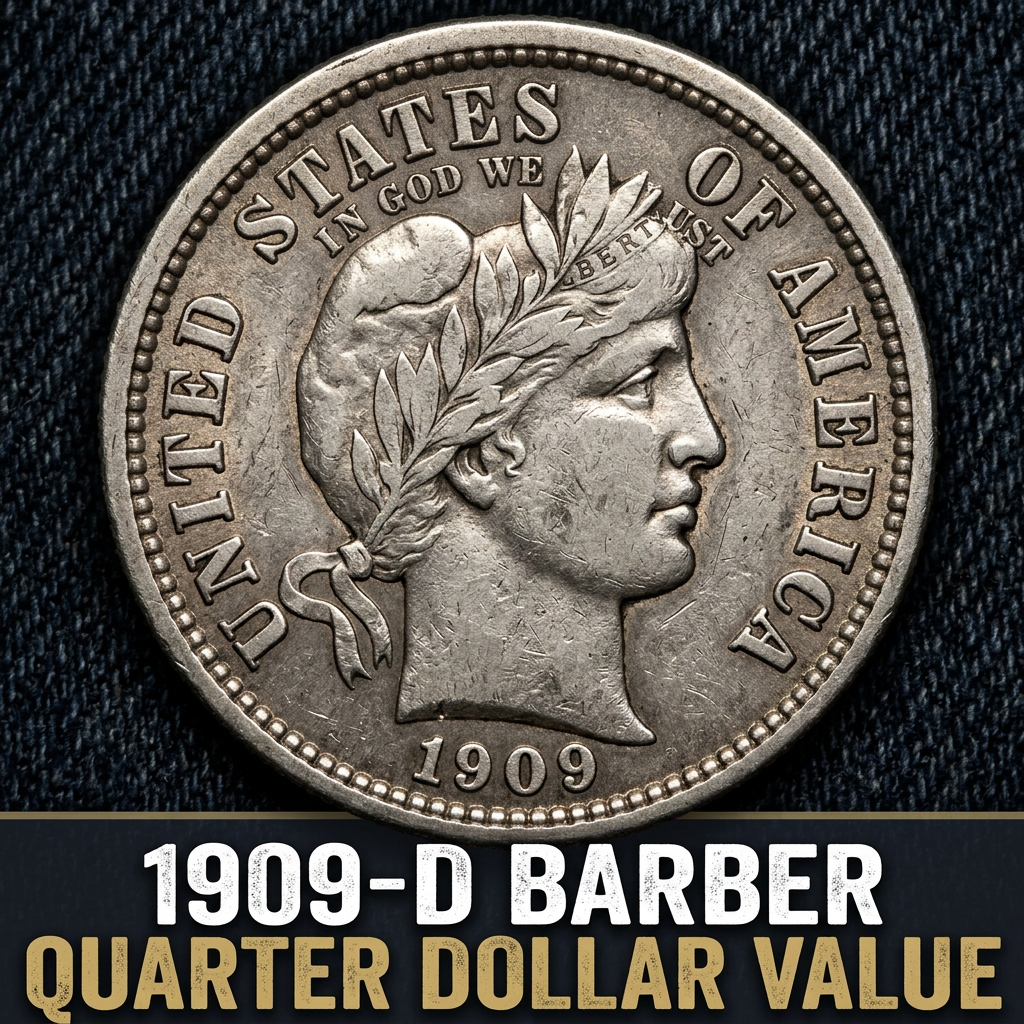
The 1909-D Barber Quarter Dollar is worth anywhere from $10 in heavily worn condition to well over $500 or more in higher grades, making it one of the more sought-after Denver Mint coins from the Barber series. If you’ve found one of these in an old coin collection or tucked away in a drawer, you’re holding something with real numismatic value.
What Is the 1909-D Barber Quarter?
The Barber Quarter series ran from 1892 to 1916, designed by U.S. Mint Chief Engraver Charles E. Barber. The obverse features Lady Liberty wearing a Phrygian cap, while the reverse displays an eagle with a shield. The “D” mintmark on the reverse indicates the coin was struck at the Denver Mint, which opened in 1906. In 1909, the Denver Mint produced just over 2.6 million Barber Quarters — a relatively modest mintage compared to the Philadelphia issues of the same year. That lower production number is a key reason why the 1909-D carries a premium over more common dates in the series. If you’re trying to identify whether your coin has a mintmark, using the best coin identifier app can make the process fast and accurate, especially if you’re new to coin collecting.
1909-D Barber Quarter Value by Grade
Condition is everything when it comes to coin values. A coin that has been heavily circulated and shows significant wear will always sell for far less than one that retained its original mint luster. Here’s a general value breakdown for the 1909-D Barber Quarter based on grade:
| Grade | Description | Estimated Value |
|---|---|---|
| Good (G-4) | Heavy wear, design outline visible | $10 – $15 |
| Very Good (VG-8) | Moderate wear, major details clear | $20 – $30 |
| Fine (F-12) | Even wear, all lettering visible | $40 – $65 |
| Very Fine (VF-20/30) | Light wear on high points | $80 – $150 |
| Extremely Fine (EF-40) | Slight wear, sharp details | $200 – $300 |
| About Uncirculated (AU-50) | Trace wear only, most luster present | $350 – $500 |
| Mint State (MS-60+) | No wear, full mint luster | $600 – $1,500+ |
These are approximate retail values based on recent market trends. Auction results can vary depending on eye appeal, strike quality, and collector demand.
How the 1909-D Compares to Other Silver Coins of the Era
Collectors often compare the 1909-D Barber Quarter to other silver issues from the same year when building type sets or date sets. For example, if you’re researching silver coinage from 1909 more broadly, you might also want to look at detailed value information for the 1909 Barber Dime, which shares the same design style and offers a complementary piece for any early 20th-century collection. The quarter, being a larger denomination with silver content of 90%, tends to trade at higher absolute prices than dimes of the same grade, but both have loyal followings among type collectors.
The Barber series as a whole is considered a classic American design, and Denver Mint issues from the early years of that facility are particularly prized. Collectors who focus on mintmark varieties often rank the 1909-D among the coins worth tracking down in better grades.
Tips for Getting the Best Price for Your 1909-D Barber Quarter
If you believe you have a 1909-D Barber Quarter in decent condition, there are a few things worth doing before you sell or trade it. First, never clean the coin — even gentle polishing can dramatically reduce its numismatic value and make it nearly impossible to grade at a professional level. Second, consider getting it graded by a third-party service like PCGS or NGC if the coin appears to be in Very Fine or better condition. A certified grade provides buyer confidence and typically results in higher sale prices.
You can also use CoinHix to get a quick value estimate right from your phone. CoinHix lets you photograph the coin, identifies it automatically, and gives you a real-time market value — a genuinely useful tool if you’re sorting through a collection and want to know what’s worth grading professionally. It’s especially handy for Barber series coins where the difference between Fine and Very Fine can mean a significant jump in value.
Is the 1909-D Barber Quarter a Good Investment?
For everyday collectors and investors, the 1909-D Barber Quarter offers solid long-term potential. It’s not the rarest coin in the series, but it’s scarce enough that demand consistently holds up. Higher-grade examples — particularly those graded MS-63 or above — have shown appreciation over the past decade. The coin’s 90% silver content also provides a baseline intrinsic value tied to the silver market, which currently adds roughly $4 to $5 in melt value for each coin regardless of numismatic premium.
Whether you’re a seasoned collector or someone who just found a silver quarter in grandma’s jewelry box, the 1909-D Barber Quarter is worth taking seriously. Download CoinHix to start identifying and valuing your coins with confidence, and always consult recent auction records before making buying or selling decisions.
FAQ
Q: How do I know if my quarter is really a 1909-D Barber Quarter?
A: Look at the date on the obverse (front) of the coin — it should read 1909. Then flip the coin to the reverse (back) and look just below the eagle’s tail feathers for a small “D” mintmark. The design should show Lady Liberty with a cap and laurel wreath on the front. If you’re unsure, a coin identifier app like CoinHix can confirm the details instantly using your phone’s camera.
Q: Is the 1909-D Barber Quarter made of silver?
A: Yes. Like all Barber Quarters, the 1909-D is composed of 90% silver and 10% copper, giving it a total silver weight of approximately 0.1808 troy ounces. Even in worn condition, your coin contains real silver value in addition to its collector premium.
Q: Where is the best place to sell a 1909-D Barber Quarter?
A: Options include online platforms like eBay or Heritage Auctions, local coin dealers, or coin shows. For higher-grade examples, a certified coin auction house will typically get you the strongest price. If you’re not sure of the grade or value, start by using the CoinHix app to get an estimate, then decide whether professional grading makes sense before listing.