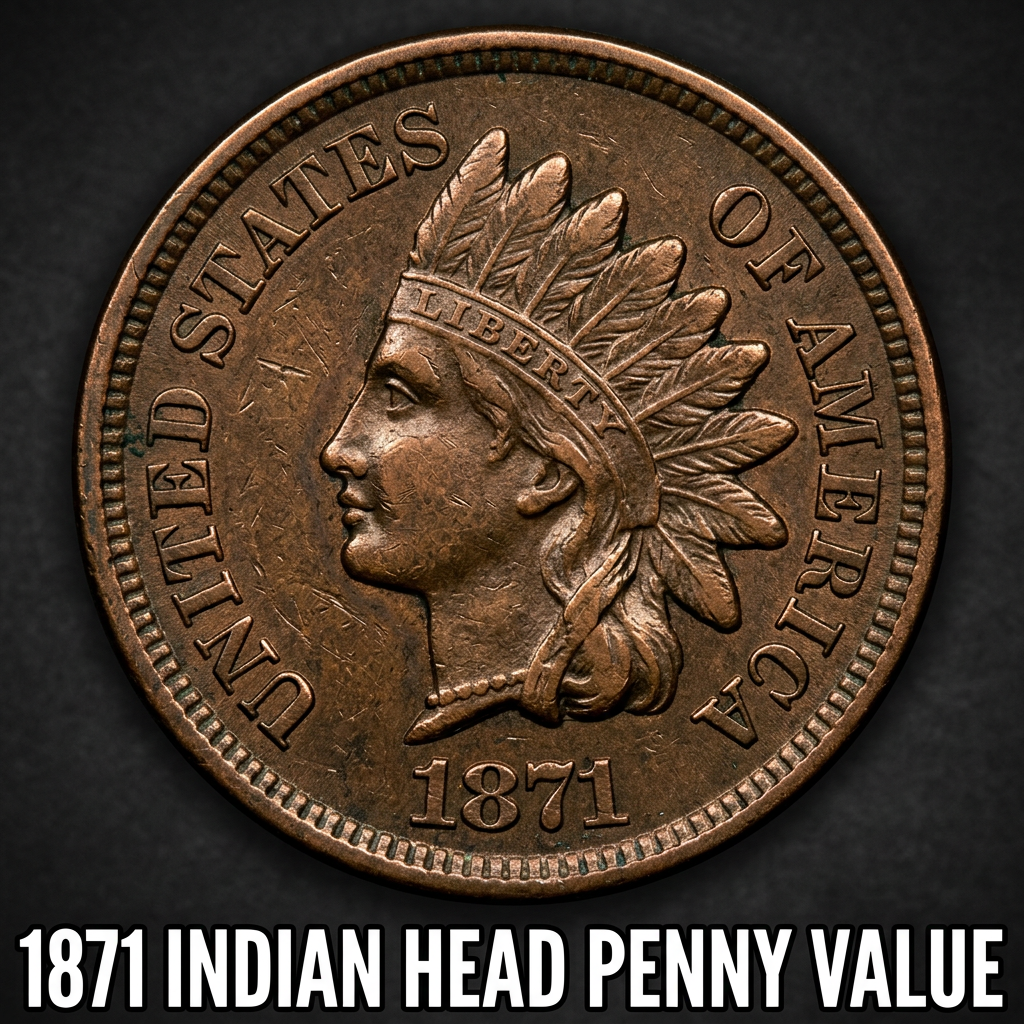
The 1871 Indian Head Penny is worth anywhere from $20 in heavily worn condition to over $1,000 or more in higher mint state grades. If you’ve recently found one of these coins in an old jar, a drawer, or an inherited collection, you’re holding a piece of American history that could be surprisingly valuable.
If you want a quick and easy way to check your coin’s identity and condition right from your phone, try using the best coin identifier app available — it takes just a few seconds and helps you get started before diving deeper into research.
Why the 1871 Indian Head Penny Is a Key Date Coin
Not all Indian Head Pennies are created equal, and the 1871 issue is one that collectors specifically seek out. The Philadelphia Mint struck only about 3,929,500 examples that year — a relatively low mintage compared to other dates in the series. Fewer coins made means fewer survivors today, and that scarcity drives up demand and price.
The Indian Head Penny series ran from 1859 to 1909, and the early years of the 1870s are consistently among the toughest to find in good condition. Most 1871 pennies that exist today show significant wear from decades of circulation. Finding one in fine or better condition is genuinely exciting for any collector, and even a well-worn example carries respectable value.
The coin features the iconic portrait of Liberty wearing a Native American headdress on the obverse, with a wreath and shield design on the reverse. It was designed by James Longacre and made of copper-nickel (changed to bronze in 1864), giving it a distinctive appearance compared to later issues.
1871 Indian Head Penny Value by Grade
The value of your 1871 Indian Head Penny depends heavily on its condition, or grade. Here’s a breakdown of approximate retail values across common grades:
| Grade | Description | Estimated Value |
|---|---|---|
| Good (G-4) | Heavy wear, design visible | $20 – $35 |
| Very Good (VG-8) | Moderate wear, major details clear | $40 – $65 |
| Fine (F-12) | Even wear, all lettering visible | $75 – $110 |
| Very Fine (VF-20) | Light wear on high points | $130 – $200 |
| Extremely Fine (EF-40) | Slight wear, sharp details | $300 – $450 |
| Mint State (MS-63) | No wear, some marks | $800 – $1,200+ |
For the most up-to-date figures on high-grade examples, you can check current auction and retail price data for the 1871 Indian Head Penny in MS Red grades to see where the market stands today.
How to Grade Your 1871 Indian Head Penny at Home
Grading coins takes practice, but you can get a pretty solid sense of your coin’s condition with a few simple tools — good lighting, a magnifying glass, and a reference image. Start by looking at the highest points of the design: the feathers in Liberty’s headdress, the cheekbone, and the ribbon lettering. If those areas show smooth, flat wear, the coin is likely in Good to Fine range.
If you can still see individual feather details and the ribbon lettering “LIBERTY” is clearly readable in the headband, you’re looking at a Very Fine or better coin — and that’s where values start climbing significantly for the 1871 date.
CoinHix is a fantastic resource here. The CoinHix app lets you look up graded examples side by side so you can visually compare your coin to certified specimens. This kind of reference is invaluable when you’re trying to decide whether to send your coin in for professional grading or sell it as-is.
Should You Get It Graded by PCGS or NGC?
If your 1871 Indian Head Penny looks like it’s in Very Fine condition or better, it’s almost certainly worth submitting to a professional grading service like PCGS or NGC. A graded and slabbed coin in a higher grade can sell for significantly more than a raw (ungraded) coin of the same quality, simply because buyers trust the certification.
For coins below Very Fine, the cost of grading (usually $30–$50 minimum per coin) may eat into or exceed the coin’s value, so it might not make financial sense. In those cases, knowing the approximate grade yourself is usually sufficient for selling or trading.
It’s also worth exploring how values compare across related issues. For example, you can learn from a detailed look at what the 1898 Indian Head Penny is worth across all grades — seeing how a more common date is priced helps put the 1871’s relative scarcity and premium into better perspective.
Where to Sell Your 1871 Indian Head Penny
Once you know what you have, selling options include eBay, coin shows, local coin dealers, and auction houses for higher-value examples. eBay is great for research too — search “1871 Indian Head Penny sold listings” to see real transaction prices.
For everyday collectors and casual sellers, CoinHix also provides market insights and tools to help you understand fair pricing before you list or trade your coin. Knowing your coin’s true value puts you in a much stronger negotiating position.
—
Frequently Asked Questions
Q: How do I know if my 1871 Indian Head Penny is real?
A: Look for the date, the “LIBERTY” inscription in the headdress ribbon, and the mint mark (there is none for Philadelphia). Counterfeits do exist for key dates, so if you think your coin is high-grade, professional authentication is recommended.
Q: Is a 1871 Indian Head Penny with no mint mark more or less valuable?
A: All 1871 Indian Head Pennies were struck at the Philadelphia Mint and carry no mint mark. There is no mint mark variety for this date, so all examples come from the same source.
Q: What makes the 1871 Indian Head Penny more valuable than other years?
A: Its relatively low mintage of under 4 million coins makes it a key date in the series. Combined with the natural attrition of 150+ years, finding a well-preserved example is genuinely difficult, which pushes collector demand — and prices — higher than for more common dates.