The 1957-D Wheat Penny is worth anywhere from $0.10 in heavily worn condition to over $10 or more in mint state, with top-grade examples fetching surprising prices at auction. If you found one of these classic Lincoln cents in a jar, drawer, or old collection, you’re in the right place to find out exactly what it’s worth.
The 1957-D Wheat Penny was struck at the Denver Mint and is one of the last of the iconic Wheat Penny series, which ended in 1958. Because millions of these coins were saved by collectors at the time, they’re not rare in circulated grades — but high-quality examples can still turn heads. If you want a fast, reliable way to identify and value old coins you find at home, using the best coin identifier app can save you a lot of time and guesswork before you even head to a coin shop.
What Is the 1957-D Wheat Penny and Why Does It Matter
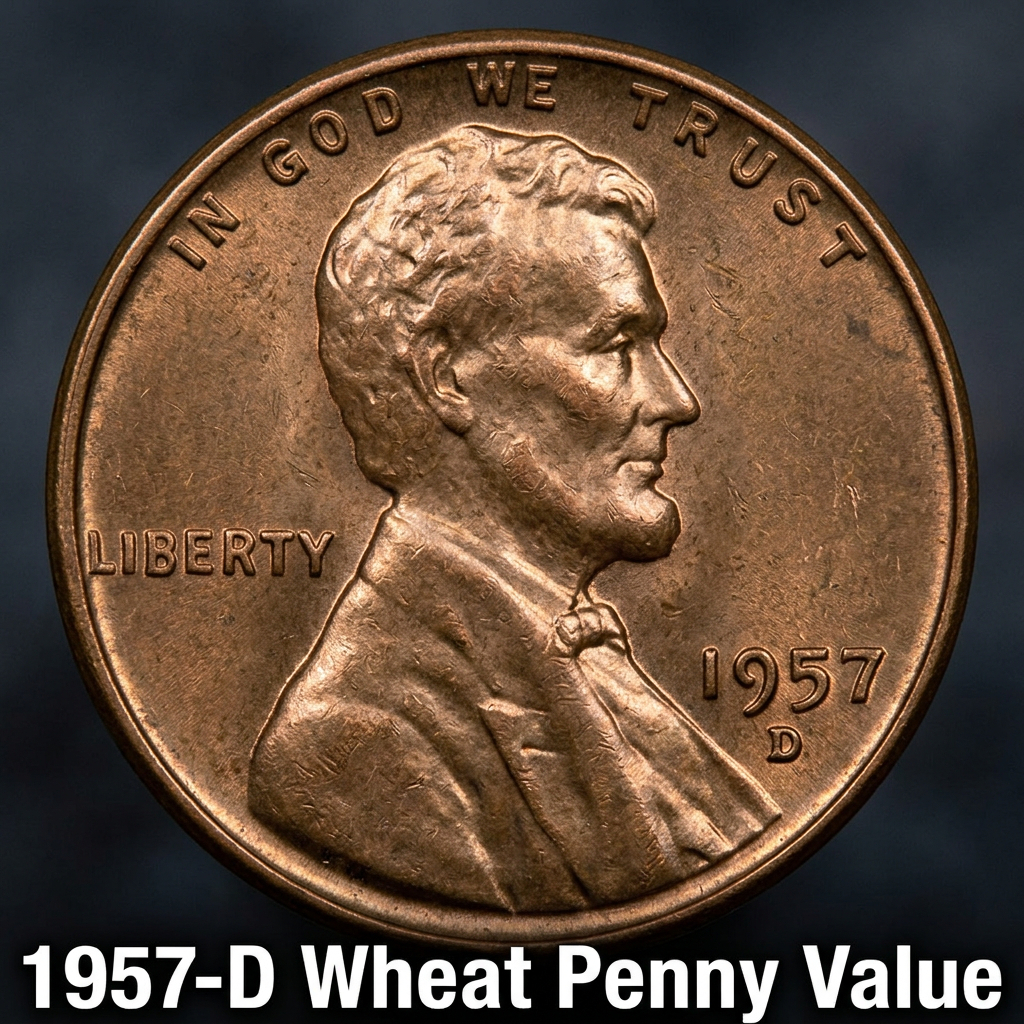
The 1957-D Wheat Penny is a Lincoln cent minted in Denver, identifiable by the small “D” mint mark just below the date on the obverse side. It was part of the Wheat Penny series that ran from 1909 to 1958, featuring Abraham Lincoln on the front and two stalks of wheat framing the words “ONE CENT” on the reverse. The “D” designation means it was produced at the Denver Mint, which struck over 1.05 billion of these coins in 1957 alone — making it one of the highest-mintage Wheat Pennies ever produced.
Because so many were made, the 1957-D is considered a common date in the series. Most circulated examples are only worth a few cents above face value. However, coins that never entered circulation and have been carefully preserved — known as Mint State coins — can be worth considerably more, especially those graded MS-65 Red or higher by professional grading services like PCGS or NGC.
1957-D Wheat Penny Value by Grade
The value of your 1957-D Wheat Penny depends almost entirely on its condition, also called its grade. Here’s a breakdown of what these coins typically sell for depending on how worn or preserved they are:
| Grade | Condition Description | Estimated Value |
|---|---|---|
| Good (G-4) | Heavy wear, outline visible | $0.10 – $0.25 |
| Fine (F-12) | Moderate wear, some details remain | $0.25 – $0.50 |
| Extremely Fine (EF-40) | Light wear on high points | $0.50 – $1.00 |
| Mint State (MS-63) | Uncirculated, minor blemishes | $1.50 – $3.00 |
| Mint State (MS-65 Red) | Gem uncirculated, full red luster | $8.00 – $15.00+ |
| MS-67 Red (Top Grade) | Exceptional, virtually perfect | $100.00+ |
For the most up-to-date market pricing, you can view current 1957-D Wheat Penny prices across Mint State grades to see how the red, brown, and red-brown designations affect value. The color designation matters — a full “Red” coin is worth more than a “Red-Brown” or “Brown” example in the same numerical grade.
How to Tell If Your 1957-D Wheat Penny Is Worth More
Start by examining the coin under good lighting or a magnifying glass. Look for:
– Full red color — Wheat Pennies with original copper luster (called “Red”) command the highest premiums. Brown or spotted coins are worth less.
– Sharp details — On Lincoln’s portrait, look for clear hair strands and a well-defined bow tie. On the reverse, the wheat stalks should be crisp and fully defined.
– No cleaning — A coin that has been polished or cleaned with chemicals loses significant value, even if it looks shiny. Collectors and dealers can easily spot cleaned coins.
– Errors — Doubling, off-center strikes, or die cracks can make a 1957-D Wheat Penny worth dramatically more. Examine the lettering and date closely.
If you’re unsure about the condition or want a second opinion before selling, the CoinHix app offers fast, detailed coin valuations right from your phone. It’s a trusted tool among both casual collectors and serious numismatists.
Where to Sell a 1957-D Wheat Penny
Once you know what your coin is worth, your options for selling include:
– eBay — Great for reaching a wide audience. Search completed listings for your coin’s grade to set a fair price.
– Local coin shops — Fast and convenient, though dealers typically buy at wholesale prices (below retail value).
– Coin shows — Ideal for higher-grade coins where you can negotiate directly with collectors.
– Online marketplaces like PCGS CoinFacts or Heritage Auctions — Best for certified, high-grade coins worth $25 or more.
Before you sell, make sure you have a realistic sense of value. You can explore a detailed breakdown of 1957 penny values by mint mark and grade to make sure you’re not leaving money on the table. And if you want to check your entire collection at once, CoinHix makes it simple to scan and track multiple coins in one place.
Is the 1957-D Wheat Penny Worth Getting Graded
Professional grading by PCGS or NGC typically costs between $20 and $50 per coin, so it only makes sense for coins that are likely worth well above that threshold. For a 1957-D Wheat Penny, grading makes financial sense only if:
– The coin appears to be MS-65 Red or higher
– The coin shows a possible error (doubling, off-center strike, etc.)
– You believe it’s a full Red example with eye appeal above average
For typical circulated examples or even lower Mint State coins, grading fees would eat into your profit. However, if you’re unsure, CoinHix can help you make a quick initial assessment before spending money on professional submission.
—
Frequently Asked Questions
Q: How much is a 1957-D Wheat Penny worth in average circulated condition?
A: In typical circulated grades (Good through Extremely Fine), a 1957-D Wheat Penny is worth between $0.10 and $1.00. It’s a common coin, but it’s still worth more than face value as a collectible.
Q: Is there a rare version of the 1957-D Wheat Penny?
A: There’s no major rare variety for the 1957-D, but top-grade examples (MS-67 Red) and error coins — such as doubled die or off-center strikes — can be worth significantly more than standard examples.
Q: How do I know if my 1957-D Wheat Penny is Red, Red-Brown, or Brown?
A: A “Red” coin retains 95% or more of its original copper luster with no toning. “Red-Brown” shows between 5% and 95% red color. “Brown” coins have lost most of their original luster. This distinction only applies to uncirculated coins and has a major impact on value.