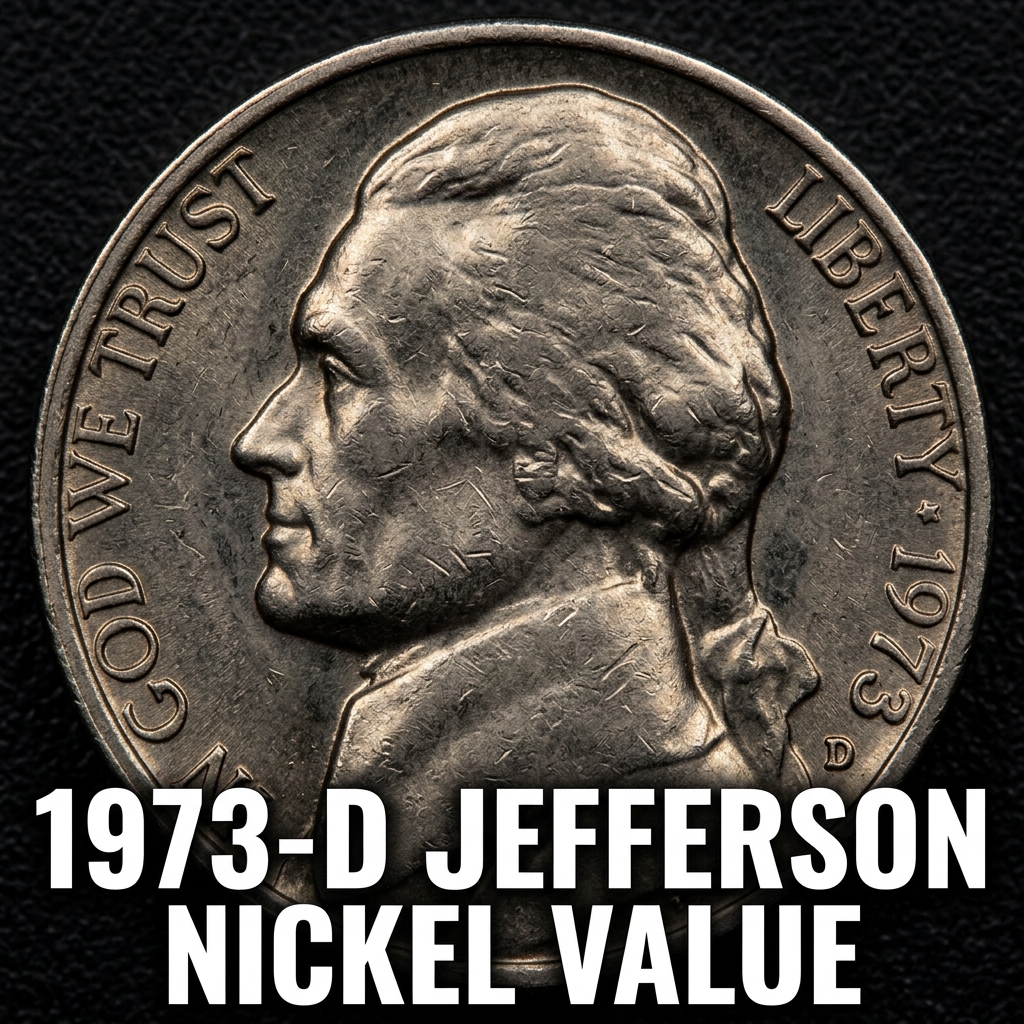
The 1973-D Jefferson Nickel is worth anywhere from 5 cents in heavily circulated condition to around $15 or more in pristine mint state, with a few exceptional examples fetching even higher prices at auction. If you found one in a coin jar or old collection, you’re in the right place to find out exactly what you’ve got.
What Is the 1973-D Jefferson Nickel?
The “D” in 1973-D stands for Denver, meaning this coin was struck at the Denver Mint. In 1973, the Denver Mint produced a massive 261,405,000 Jefferson Nickels — that’s over 261 million coins. Because of that high mintage, most 1973-D Jefferson Nickels you’ll find in circulation aren’t worth much more than face value. But don’t toss it aside just yet. Coin condition makes a huge difference in value, and some well-preserved examples are genuinely worth collecting.
The Jefferson Nickel series began in 1938, replacing the Buffalo Nickel. These coins feature Thomas Jefferson on the obverse and his Monticello home on the reverse. By 1973, the design was well established and widely used in everyday commerce. If you’re not sure what you’re looking at, using the best coin identifier app can help you quickly confirm the coin’s date, mint mark, and condition before you decide whether to sell or keep it.
1973-D Jefferson Nickel Value by Condition
Condition — or “grade” in coin collecting terms — is everything when it comes to determining value. A coin that looks shiny and sharp will always be worth more than a beat-up, worn example. Here’s a general breakdown of what the 1973-D Jefferson Nickel is worth across different grades:
| Grade / Condition | Description | Estimated Value |
|---|---|---|
| Good (G-4) | Heavy wear, design still visible | $0.05 – $0.10 |
| Fine (F-12) | Moderate wear, details clearer | $0.10 – $0.25 |
| Extremely Fine (EF-40) | Light wear on high points | $0.50 – $1.00 |
| Mint State (MS-63) | Uncirculated, minor contact marks | $3 – $6 |
| Mint State (MS-65) | Gem uncirculated, sharp strike | $10 – $18 |
| Mint State (MS-67) | Near perfect, rare at this level | $50+ |
For the most up-to-date 1973-D Jefferson Nickel price data across all mint state grades, it’s worth checking a reliable pricing database before buying or selling.
How to Check Your Coin’s Grade
You don’t need to be a professional numismatist to get a rough idea of what your 1973-D Jefferson Nickel is worth. Start by looking at the high points of the design — Jefferson’s cheekbone, hair details, and the steps of Monticello on the reverse. If those areas look flat or smooth from wear, the coin has seen a lot of circulation. If the details are crisp and the coin has some original luster, you might have an uncirculated example.
One of the easiest ways to get a quick estimate is to use CoinHix, a free app that lets you scan your coin and instantly get condition-based value estimates. CoinHix pulls from real market data, so you’re not guessing — you’re getting actual collector prices. It’s especially handy when you’re sorting through a large batch of old coins and want fast, reliable answers.
Are Any 1973-D Nickels Worth More Than Others?
Most 1973-D Jefferson Nickels are common coins, but there are a few things that can make one stand out. Error coins — like those with a doubled die, off-center strikes, or die cracks — can command a premium from error coin collectors. These aren’t easy to spot with the naked eye, so a magnifying glass or jeweler’s loupe is a worthwhile investment.
Full Steps (FS) designation is another big value booster. On the reverse of the Jefferson Nickel, Monticello has a set of steps at its base. If five or six of those steps are fully struck and clearly defined, the coin qualifies as “Full Steps” — and that can dramatically increase its value. A 1973-D nickel graded MS-65 might be worth $12, but the same coin with Full Steps (MS-65 FS) could fetch $30 or more. You can explore detailed 1973 nickel value information including Full Steps premiums to better understand what your specific coin could be worth.
Should You Sell or Keep Your 1973-D Jefferson Nickel?
If your coin is circulated and shows obvious wear, it’s really just worth face value at this point — 5 cents. But if it’s uncirculated or shows signs of a strong, sharp strike, it’s worth holding onto or at least getting properly evaluated. Consider submitting high-grade examples to a third-party grading service like PCGS or NGC, especially if you think it might qualify for Full Steps.
For casual collectors and people just starting out, CoinHix is a great free tool to organize and value your collection without needing a professional appraisal every time. Whether you’re flipping coins for fun or building a serious Jefferson Nickel set, knowing what you have is the first step.
FAQ
Q: How much is a 1973-D Jefferson Nickel worth today?
A: Most circulated 1973-D Jefferson Nickels are worth only face value — about 5 cents. Uncirculated examples in grades MS-63 to MS-65 are worth anywhere from $3 to $18. Rare high-grade or Full Steps coins can sell for $50 or more.
Q: What does the “D” mint mark mean on a 1973 nickel?
A: The “D” mint mark means the coin was produced at the Denver Mint in Denver, Colorado. You’ll find the mint mark on the reverse of the coin, to the right of Monticello.
Q: Is a 1973-D nickel made of silver?
A: No. The 1973-D Jefferson Nickel is made of a standard copper-nickel alloy — 75% copper and 25% nickel. It contains no silver. The only Jefferson Nickels made with silver were the wartime issues from 1942 to 1945.