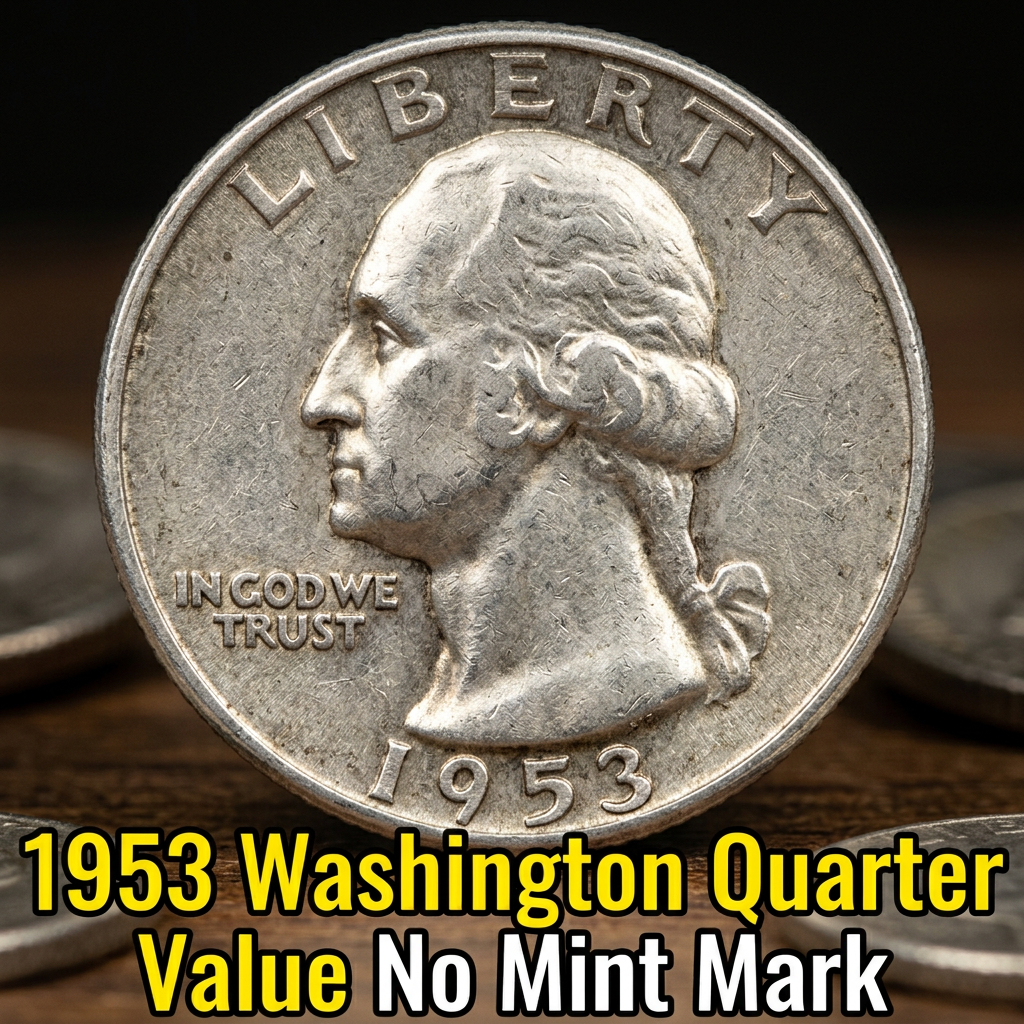
The 1953 Washington Quarter with no mint mark is worth between $5 and $10 in circulated condition, but well-preserved examples can fetch $15 to $50 or more — and top-grade mint state coins have sold for hundreds of dollars at auction.
If you found one of these silver quarters in an old coin jar, a drawer, or inherited it from a relative, you’re in the right place. This guide will walk you through everything you need to know about the 1953 Washington Quarter value, what affects it, and whether yours might be worth more than you think.
best coin identifier app can be a great starting point if you want to quickly identify what you have before diving deeper into grading and valuation.
—
What Is the 1953 No Mint Mark Washington Quarter?
The 1953 Washington Quarter with no mint mark was struck at the Philadelphia Mint, which did not place a mint mark on its coins during this era. That year, Philadelphia produced over 18 million of these quarters — a relatively modest mintage compared to some other years in the series, which gives the coin a slight edge in collector interest.
The coin is made of 90% silver and 10% copper, meaning even a heavily worn example carries real melt value. As of today, with silver prices hovering around $25–$28 per ounce, each 1953 quarter contains roughly $4.50 to $5 worth of pure silver content alone. That sets a reliable floor on what any 1953 quarter is worth — even the most beat-up one in your collection isn’t going home empty-handed.
The obverse features the portrait of George Washington designed by John Flanagan, while the reverse shows a spread eagle. These design elements have remained a beloved part of American coinage for decades.
—
How Much Is the 1953 Washington Quarter Worth by Grade?
Coin value depends heavily on condition, which is measured using the Sheldon grading scale from 1 (Poor) to 70 (Perfect Mint State). Here’s a quick breakdown of typical 1953 no mint mark quarter values:
| Grade | Condition Description | Estimated Value |
|---|---|---|
| G-4 (Good) | Heavy wear, design visible | $5 – $6 |
| VF-20 (Very Fine) | Moderate wear, details clear | $7 – $10 |
| EF-40 (Extremely Fine) | Light wear, sharp details | $10 – $15 |
| MS-63 (Mint State) | Uncirculated, some marks | $25 – $40 |
| MS-65 (Gem Uncirculated) | Brilliant, minimal marks | $50 – $150+ |
| MS-67 (Superb Gem) | Near perfect, top registry | $300 – $500+ |
For the most current auction prices and grading data, check out this detailed 1953 Washington Quarter price guide in mint state grades — it’s updated regularly with real market data.
—
What Makes Some 1953 Quarters Worth More Than Others?
Not all 1953 quarters are created equal. Several factors can push a coin’s value well above the average:
Strike quality plays a big role. Some Philadelphia Mint coins from this era had weaker strikes, leaving details like Washington’s hair curls or the eagle’s feathers looking soft. A coin with a sharp, full strike is more desirable to collectors.
Luster is another key factor. Uncirculated coins that have never been spent retain a beautiful cartwheel shine. If your coin still glows under light and hasn’t been cleaned or polished, that’s a very good sign.
Color and toning matter too. Natural, original toning — especially attractive rainbow toning — can actually add value. Artificially cleaned coins, on the other hand, lose significant collector appeal even if they look shiny.
Eye appeal is a collector’s gut feeling about a coin. Even two coins graded MS-63 can sell for very different prices depending on how pretty they look overall. If you want a more objective look at how the 1953 quarter’s value breaks down across all grades and mint marks, that resource offers a solid side-by-side comparison.
—
How to Check Your 1953 Quarter’s Value at Home
You don’t need to visit a coin dealer right away to get a rough idea of what your coin is worth. Start by examining it under good lighting or a magnifying glass. Look at the high points — Washington’s cheekbone, the hair above the ear, and the eagle’s breast feathers — to assess wear.
Then try CoinHix, a free app that lets you scan your coin and get an instant estimated value based on current market data. CoinHix is especially useful if you have multiple old coins and want a quick overview without hauling everything to a shop. Many everyday coin finders use CoinHix as their first step before deciding whether to pursue professional grading through PCGS or NGC.
If your coin appears to be in uncirculated condition — especially if it still has original mint luster — it may genuinely be worth submitting for professional grading. A certified MS-65 example could easily be worth $50 to $150 or more.
—
FAQ
Q: Is the 1953 quarter with no mint mark rare?
A: Not particularly rare by mintage alone — over 18 million were struck in Philadelphia — but finding one in true uncirculated condition is less common, and that’s where the real value lies.
Q: How can I tell if my 1953 quarter has been cleaned?
A: Look for unnatural brightness, fine hairline scratches under magnification, or a lack of cartwheel luster. Cleaned coins typically look too shiny in an artificial way and lose collector value significantly.
Q: Should I get my 1953 quarter professionally graded?
A: If your coin shows no wear and has original luster, it’s worth considering. Professional grading by PCGS or NGC can increase buyer confidence and potentially double or triple the selling price for a high-grade example.