The 2005-D Kansas State Quarter is worth between $0.25 and $1 in circulated condition, but well-preserved examples graded MS-65 or higher can fetch $5 to $15 or more — and rare error coins from this issue have sold for hundreds of dollars.
If you recently found a 2005-D Kansas State Quarter in your change jar or inherited a coin collection, you’re probably wondering whether it’s worth holding onto. Good news: you’ve come to the right place. This guide breaks down everything you need to know about this coin’s value, history, and what makes certain examples worth more than face value. To quickly identify and grade coins at home, many collectors rely on the best coin identifier app available today, which can save you a lot of guesswork.
Background on the 2005-D Kansas State Quarter
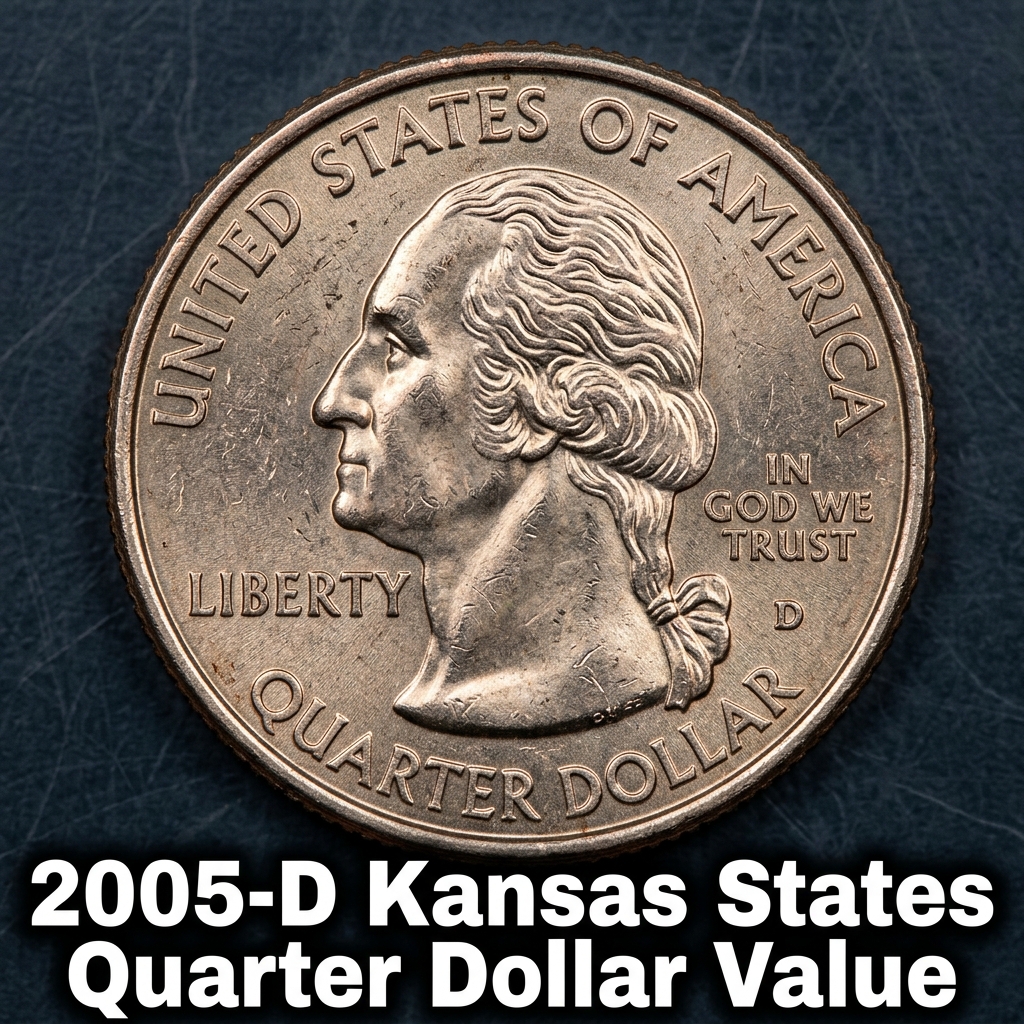
The 2005-D Kansas State Quarter was struck at the Denver Mint and is part of the United States Mint’s popular 50 State Quarters Program, which ran from 1999 to 2008. Kansas was the 34th state admitted to the Union, and its quarter — released in 2005 — features a sunflower (the state flower) and a buffalo on the reverse, with the motto “Home on the Range” inscribed beneath. The obverse shows the classic portrait of George Washington, as seen on all quarters in the series.
The “D” mintmark stands for Denver, distinguishing it from the Philadelphia Mint version (2005-P). The Denver Mint produced hundreds of millions of these quarters, making them widely available. Because of that high mintage, most circulated examples are worth only face value or a small premium. However, condition is everything when it comes to coin collecting, and this is where the 2005-D Kansas quarter gets interesting.
How Much Is the 2005-D Kansas Quarter Worth Today?
Value depends heavily on the coin’s grade and condition. Coins that have been circulated — meaning they’ve passed through everyday commerce — typically show wear on the high points and are worth $0.25 to $1. Uncirculated coins that were never spent can command a modest premium, especially when professionally graded.
Here’s a quick breakdown of approximate values by grade:
| Grade | Condition | Estimated Value |
|---|---|---|
| Good (G-4) | Heavy wear, design visible | $0.25 |
| Fine (F-12) | Moderate wear | $0.25 – $0.50 |
| Extremely Fine (EF-45) | Light wear on high points | $0.50 – $1 |
| Mint State (MS-63) | Uncirculated, minor contact marks | $2 – $5 |
| Gem Mint State (MS-65) | Full luster, minimal marks | $8 – $15 |
| MS-67 or Higher | Near-perfect, rare | $25 – $100+ |
For a deeper dive into what 2005 State Quarter values look like across different grades and mint marks, you’ll find up-to-date price comparisons helpful before buying or selling.
Error Coins and Special Varieties Worth More Money
The most exciting — and valuable — versions of the 2005-D Kansas quarter are error coins. One of the most well-known is the “IN GOD WE RUST” error, where grease filled the die during striking and partially obscured the motto “IN GOD WE TRUST,” making the “T” disappear. These errors became famous and are genuinely sought after by collectors.
Other known errors include doubled die varieties, off-center strikes, and broadstrikes. If your coin looks unusual in any way — text looks weak or missing, the design seems shifted, or the edge doesn’t look right — it could be worth getting it professionally examined.
CoinHix is a great tool for quickly looking up error coin values and recent sales. The app is used by thousands of collectors to identify and price coins without needing expert knowledge, right from your smartphone.
Comparing the 2005-D to the 2005-P Kansas Quarter
Both Denver (D) and Philadelphia (P) mint versions of the 2005 Kansas quarter were released in the same year, but the D-mint version tends to be slightly more available in roll and bag form. For serious collectors interested in graded examples or registry sets, the MS-grade pricing data for the 2005-P California quarter offers a useful comparison point to understand how State Quarters from the same year are valued in higher grades.
The P and D versions are equally popular among type collectors, but in practice, the values at equivalent grades are nearly identical. When building a complete 50 State Quarters set, most collectors aim to include both mint marks for each state.
How to Get the Most for Your 2005-D Kansas Quarter
If you believe your coin is in exceptional condition, the best move is to submit it to a professional grading service like PCGS or NGC. A coin graded MS-67 or higher in a certified holder can sell for a strong premium on platforms like eBay, Heritage Auctions, or Great Collections.
Before submitting, use CoinHix to check recent auction results and get a realistic sense of what your coin might bring. It’s completely free to browse and can help you decide whether grading fees are worth it for your particular coin.
If you don’t want to go through the grading process, simply keeping a 2005-D Kansas quarter in a coin flip or protective sleeve will preserve its condition and ensure it doesn’t lose any future value through additional handling.
Frequently Asked Questions
Q: Is the 2005-D Kansas State Quarter rare?
A: No, it’s not rare in general circulation. The Denver Mint produced over 300 million of them. However, coins in gem uncirculated condition (MS-65 and above) are harder to find, and genuine error varieties like the “IN GOD WE RUST” die-fill errors are considered scarce and collectible.
Q: What’s the “IN GOD WE RUST” error and how do I spot it?
A: This error occurred when grease clogged the die during striking, filling the letter “T” in “TRUST” so it didn’t show up on the coin. Look carefully at the motto on the obverse. If the “T” is partially or fully missing, you may have an error coin worth researching further. CoinHix can help you compare your coin to known examples.
Q: Where’s the best place to sell a valuable 2005-D Kansas quarter?
A: For circulated examples worth face value, your best option is a coin dealer or simply spending it. For high-grade or error coins, eBay, Heritage Auctions, or NGC/PCGS certified coin marketplaces offer the best exposure to serious buyers willing to pay fair market prices.