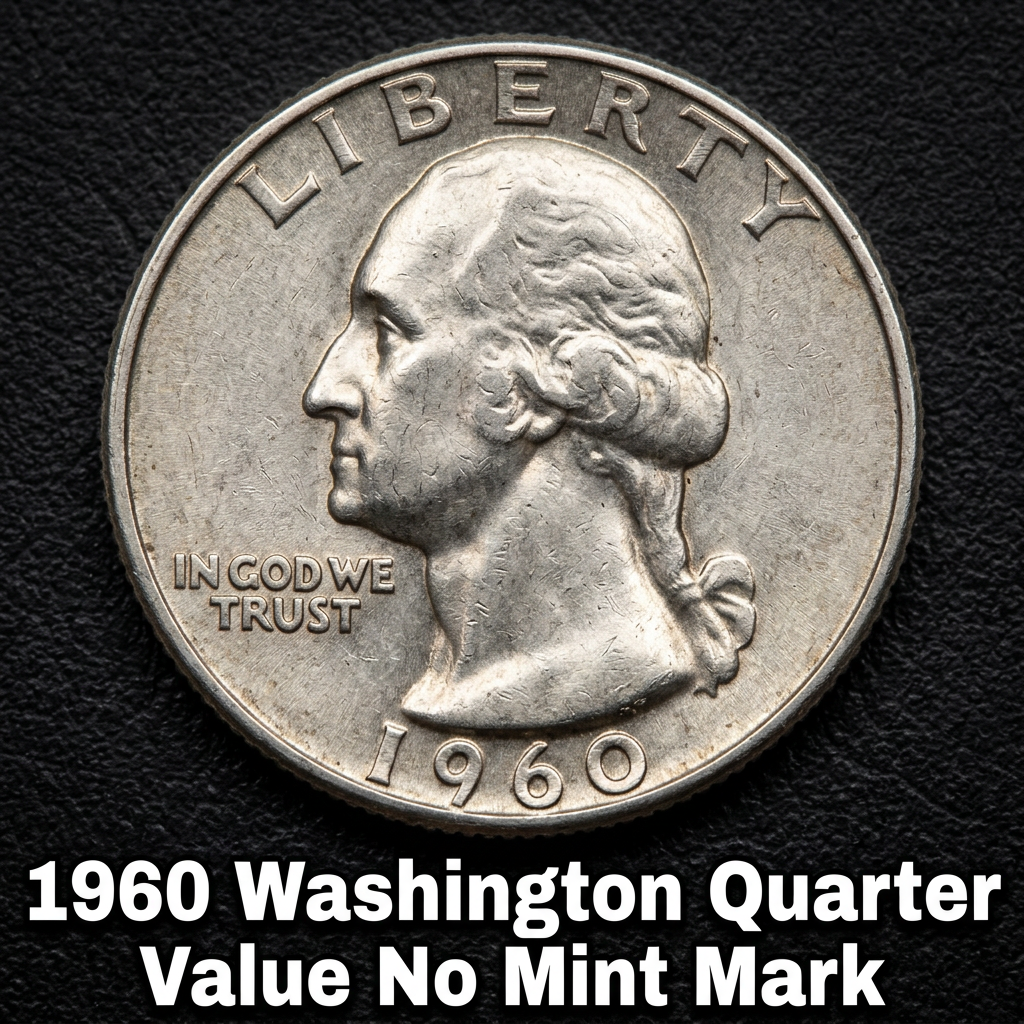
The 1960 Washington Quarter with no mint mark is worth between $5 and $15 in average circulated condition, but well-preserved examples can fetch $20 to $100 or more depending on grade — and a few exceptional coins have sold for hundreds of dollars at auction.
If you dug an old quarter out of a jar or found one tucked away in a drawer, you might be wondering whether it’s worth holding onto. The good news is that the 1960 Philadelphia quarter is a fascinating little piece of American history, and understanding what makes it valuable could put more money in your pocket. Using the best coin identifier app is a great first step to figure out exactly what you’ve got before you sell or trade it.
—
What Is the 1960 Washington Quarter With No Mint Mark?
The 1960 Washington Quarter with no mint mark was struck at the Philadelphia Mint. In those days, Philadelphia didn’t use a mint mark on its coins, which is why you’ll see a blank space below the eagle’s tail feathers on the reverse side. This was standard practice until 1980, when the “P” mint mark was finally introduced for Philadelphia coinage.
In 1960, the Philadelphia Mint produced over 29 million of these quarters, making them relatively common in circulated grades. However, that doesn’t mean every coin is equal. The 1960 quarter is made of 90% silver and 10% copper, giving it real intrinsic metal value regardless of its numismatic condition. With silver prices fluctuating around $25–$30 per ounce in recent years, even a worn 1960 Washington Quarter is worth melting down — though collectors would rather you didn’t!
The coin features John Flanagan’s classic portrait of George Washington on the obverse and an eagle on the reverse, a design that has become iconic in American numismatics.
—
How Much Is the 1960 Washington Quarter Worth Today?
Value depends heavily on condition, also known as “grade” in the coin world. A heavily worn coin might only be worth its silver melt value — roughly $4 to $5. But move up the scale to a lightly circulated or uncirculated example, and prices climb quickly.
Here’s a general value guide for the 1960 Washington Quarter No Mint Mark:
| Grade | Description | Estimated Value |
|---|---|---|
| Good (G-4) | Heavy wear, outlines visible | $4 – $6 |
| Fine (F-12) | Moderate wear, some detail | $6 – $8 |
| Extremely Fine (EF-40) | Light wear on high points | $8 – $15 |
| About Uncirculated (AU-50) | Slight wear, most luster intact | $15 – $25 |
| Mint State (MS-63) | Uncirculated, minor marks | $30 – $60 |
| Mint State (MS-65) | Gem uncirculated, sharp strike | $75 – $150+ |
For the most up-to-date pricing data, you can check out current 1960 Washington Quarter mint state prices and auction results to see what similar coins are actually selling for in the market right now.
—
What Makes a 1960 Quarter More Valuable?
Not all 1960 Philadelphia quarters are created equal. Several factors can push a coin’s value significantly above average:
Strike Quality: Some coins from this era were struck with exceptional sharpness. A well-struck coin with full, crisp details commands a premium over average examples.
Luster and Eye Appeal: Uncirculated coins that have never been cleaned or damaged retain their original mint luster — a bright, flowing shine that collectors love. Even small scratches or spots from cleaning can drop a coin’s value dramatically.
Proof Coins: In 1960, the Philadelphia Mint also struck proof versions of the Washington Quarter for collectors. These coins have mirror-like fields and frosted designs. A 1960 Proof Quarter is worth considerably more — often $15 to $30 even in typical grades, and over $100 for top-tier examples. If your coin looks especially sharp and reflective, it might be a proof.
Toning: Natural, original toning (a rainbow or golden patina that develops over decades) can actually add value to a coin in the eyes of experienced collectors. Artificial toning, however, is a red flag.
Using CoinHix to research comparable sales can help you spot whether your coin falls into one of these premium categories before you decide to sell.
—
Should You Get It Graded?
If you believe your 1960 Washington Quarter is in mint state condition or is a proof coin, professional grading could be worth the investment. Services like PCGS or NGC will authenticate and grade your coin, encasing it in a tamper-evident slab with an official grade. A graded MS-65 or PR-65 coin can sell for significantly more than a raw, ungraded example.
That said, for most well-worn circulation strikes, the cost of grading often exceeds the potential value increase. If you’re not sure which category your coin falls into, CoinHix offers an easy way to compare photos, grades, and recent sale prices to get a quick read on what you’ve got.
For a comprehensive breakdown of the 1960 quarter’s value across all grades and mint marks, it’s worth spending a few minutes reviewing detailed collector guides before making any decisions.
—
FAQ
Q: Is the 1960 Washington Quarter with no mint mark rare?
A: Not particularly — over 29 million were minted in Philadelphia that year. However, finding one in true uncirculated condition is much harder, and those coins do carry a meaningful premium over circulated examples.
Q: Is the 1960 quarter made of silver?
A: Yes! The 1960 Washington Quarter is composed of 90% silver and 10% copper. This gives it an intrinsic melt value of roughly $4–$5 based on current silver prices, meaning it’s always worth more than face value even if heavily worn.
Q: How do I know if my 1960 quarter is a proof coin?
A: Proof coins are struck with polished dies and specially prepared blanks, giving them razor-sharp details and mirror-like fields. If your coin looks unusually brilliant and reflective — almost like a mirror — it may be a proof. You can use CoinHix or consult a local coin dealer to confirm, as proof quarters are worth considerably more than regular business strike coins.