The 1900-O Barber Quarter Dollar is worth anywhere from $8 in heavily worn condition to well over $1,500 or more in uncirculated mint state. If you just found one of these old silver coins tucked away in a drawer or inherited collection, you’ve got something genuinely interesting on your hands — and possibly worth real money.
What Makes the 1900-O Barber Quarter Special
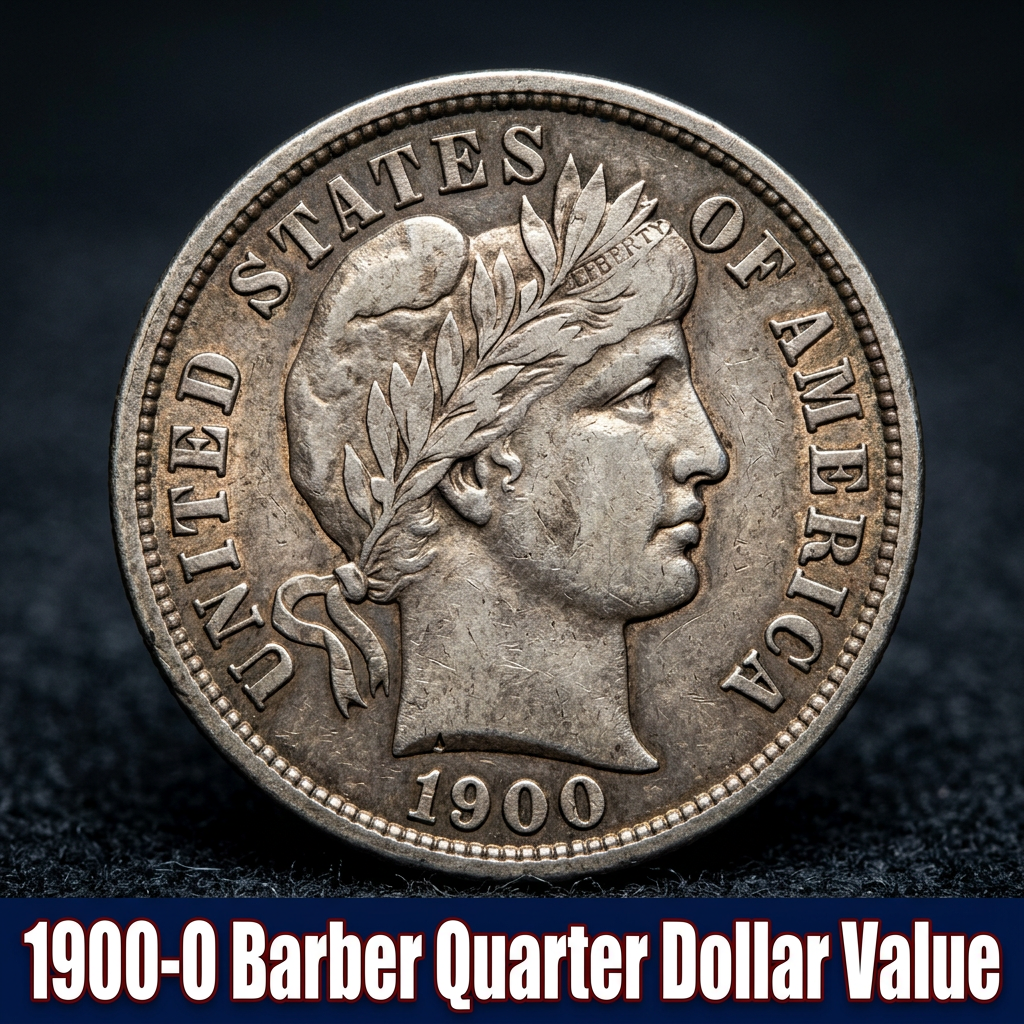
The 1900-O Barber Quarter was struck at the New Orleans Mint, which is what the “O” mint mark stands for. Designed by Charles E. Barber, the Chief Engraver of the U.S. Mint at the time, this coin features Lady Liberty in a classical Greco-Roman style on the obverse and a heraldic eagle on the reverse. The New Orleans Mint was known for producing coins with variable quality control, which means strike sharpness and surface preservation can vary quite a bit from coin to coin.
A total of 3,416,000 examples were struck in 1900 at New Orleans, which makes it a moderately available date in the Barber Quarter series — not the rarest, but certainly not common in nice grades. Because these coins were used heavily in everyday commerce, the vast majority survived only in worn, circulated condition. Finding one with clear details and minimal wear is genuinely exciting. If you want a quick answer on whether your coin might be valuable, using the best coin identifier app can help you identify and assess your coin before consulting a dealer.
How Much Is the 1900-O Barber Quarter Worth by Grade
Coin value is almost entirely driven by condition, also known as grade. Here’s a breakdown of approximate retail values for the 1900-O Barber Quarter based on grade:
| Grade | Description | Estimated Value |
|---|---|---|
| AG-3 (About Good) | Heavily worn, outlines visible | $8 – $12 |
| G-4 (Good) | Major details visible, flat | $12 – $18 |
| VG-8 (Very Good) | Some detail in hair and eagle | $20 – $30 |
| F-12 (Fine) | Moderate wear, clear legends | $35 – $55 |
| VF-20 (Very Fine) | Light wear on high points | $70 – $100 |
| EF-40 (Extremely Fine) | Slight wear on highest points | $150 – $200 |
| AU-50 (About Uncirculated) | Traces of wear, much luster | $275 – $375 |
| MS-63 (Uncirculated) | No wear, some marks | $700 – $1,000 |
| MS-65 (Gem Uncirculated) | Sharp strike, full luster | $1,500+ |
Keep in mind these are approximate values based on recent market trends. Actual prices at auction can vary depending on eye appeal, strike quality, and current collector demand.
Silver Content and Melt Value
One thing many people overlook is that the 1900-O Barber Quarter is made of 90% silver. Each coin contains approximately 0.1808 troy ounces of pure silver. That means even a heavily worn example has real intrinsic metal value regardless of collector interest.
With silver prices fluctuating around $28–$32 per troy ounce in recent years, the melt value of your coin sits at roughly $5 to $6 just from the silver alone. Of course, no reputable coin dealer or collector would melt a genuine 1900-O Barber Quarter — its numismatic value far exceeds its silver content in most grades. But it’s good to know that even the most beat-up example still has something going for it.
For those curious about how silver dollars of the same era compare in value, you can also explore the 1900 silver dollar value to get a better sense of the broader coin market from this period.
How to Check Your Coin’s Condition at Home
You don’t need to be an expert to get a rough sense of your coin’s grade. Start by looking at the hair above Liberty’s ear and forehead — these are the first areas to show wear. On the reverse, check the eagle’s breast feathers and the top of the shield. If those details are sharp and three-dimensional, your coin is in better shape than average.
Never clean your coin. Cleaning removes the original surface, destroys luster in uncirculated examples, and can slash value dramatically. A naturally toned or even slightly dirty coin is worth far more than a polished one. Use a magnifying glass to spot any cleaning lines or unnatural brightness.
For a faster and more reliable assessment, many collectors use CoinHix — a smart app that lets you photograph your coin and get an instant grade estimate and value range. CoinHix uses AI-driven recognition technology trained on thousands of real coin images, making it one of the most practical tools for everyday collectors who want answers quickly.
Where to Sell or Get Your Coin Appraised
If you believe you have a higher-grade 1900-O Barber Quarter, professional grading through PCGS or NGC is worth the investment. A certified coin in a protective slab sells for significantly more than a raw coin of the same grade, simply because buyers can trust the grade.
For lower-grade examples, selling through reputable online platforms like eBay or local coin shows is totally reasonable. Always compare recent sold listings — not just asking prices — to get a realistic picture of what buyers are actually paying. CoinHix also includes a marketplace feature that helps you connect with buyers and see real-time price comparisons before you commit to a sale.
—
Frequently Asked Questions
Q: How do I know if my quarter is an 1900-O Barber Quarter?
A: Look at the date on the obverse (front) — it should read 1900. Then check just below the eagle on the reverse for a small “O” mint mark. If you see both, you’ve got the New Orleans issue. The coin also has “LIBERTY” on the headband above the portrait of Lady Liberty.
Q: Is the 1900-O Barber Quarter rare?
A: It’s not considered a key date, but it’s not common either. Over 3.4 million were made, but most circulated heavily and survived in worn grades. Examples in Very Fine or better condition are genuinely scarce and attract strong collector interest.
Q: Should I get my 1900-O Barber Quarter professionally graded?
A: If your coin appears to be in Extremely Fine or better condition, professional grading is usually worth the cost. A PCGS or NGC-certified coin can sell for 20–50% more than a raw coin. For heavily worn pieces, grading fees may exceed the coin’s value, so it may not make financial sense.