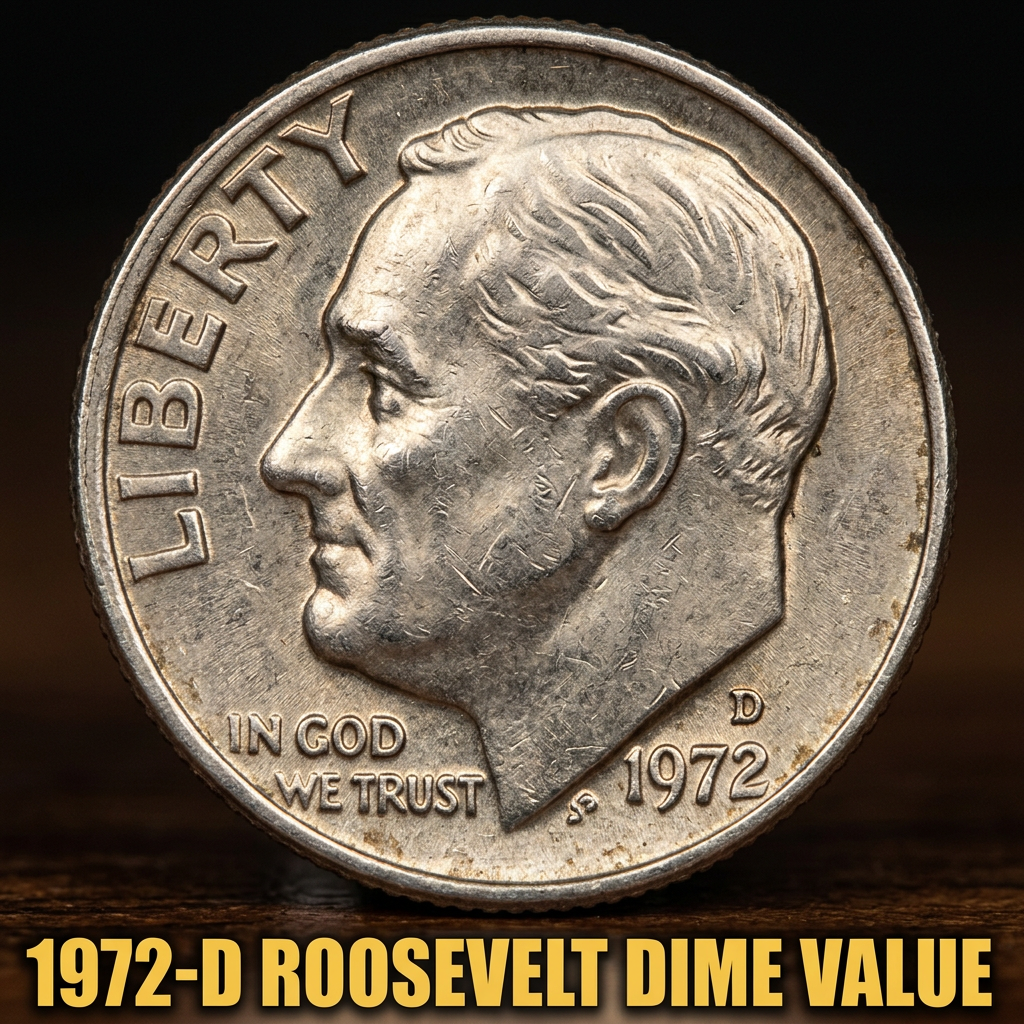
The 1972-D Roosevelt Dime is worth anywhere from about 10 cents in heavily circulated condition to over $15 or more in uncirculated mint state grades. Most examples you find in pocket change are worth face value, but well-preserved coins can surprise you — and that’s exactly what this guide is here to explain.
What Is the 1972-D Roosevelt Dime?
Before diving into values, it helps to know what you’re holding. The “D” in 1972-D stands for the Denver Mint, one of the U.S. facilities that struck dimes that year. Roosevelt dimes have been produced since 1946, featuring President Franklin D. Roosevelt on the obverse and a torch flanked by olive and oak branches on the reverse. The 1972-D was struck in a clad composition — a copper core sandwiched between outer layers of copper-nickel — which replaced the old silver formula back in 1965.
That said, composition matters a lot when evaluating these coins. If you’re unsure whether you have a clad coin or a rare silver version, using the best coin identifier app can help you quickly confirm what you’re working with before you start guessing at value. Apps like CoinHix make identifying and valuing coins fast and surprisingly accurate — even for beginners.
1972-D Roosevelt Dime Value by Grade
The condition of your coin — called its “grade” in the collector world — has the biggest impact on what it’s worth. A dime that’s been bouncing around in someone’s pocket for 50 years looks very different from one that was put straight into a collection.
Here’s a general breakdown of 1972-D Roosevelt Dime values:
| Grade | Description | Estimated Value |
|---|---|---|
| Good (G-4) | Heavy wear, outline visible | $0.10 – $0.25 |
| Fine (F-12) | Moderate wear, some detail | $0.25 – $0.50 |
| Extremely Fine (EF-40) | Light wear on high points | $0.75 – $1.50 |
| About Uncirculated (AU-50) | Slight trace of wear | $1.50 – $3.00 |
| Mint State (MS-63) | Uncirculated, minor bag marks | $3.00 – $8.00 |
| Gem Mint State (MS-65+) | Near perfect, sharp luster | $10.00 – $20.00+ |
For more precise pricing, you can check up-to-date 1972-D Roosevelt Dime price data by grade to see what these coins are actually selling for right now.
How Many 1972-D Dimes Were Made?
The Denver Mint produced a whopping 330,290,000 dimes in 1972. That’s over 330 million coins — which is why most of them aren’t particularly rare in worn condition. High mintage numbers generally keep prices low for circulated examples. However, finding a truly pristine, uncirculated specimen decades later is harder than it sounds. Most coins from circulation show at least some wear, so a gem-quality 1972-D can still attract collector interest and solid pricing.
Are There Any 1972-D Error Coins Worth More?
This is where things get exciting. Error coins — those with minting mistakes — can be worth significantly more than their regular counterparts. For the 1972-D Roosevelt Dime, collectors keep an eye out for:
– Doubled Die errors: Look for slight doubling in the lettering or date under magnification.
– Off-center strikes: If the design is noticeably off-center, the coin could be worth $20–$50 or more.
– Die cracks or cuds: Small raised lines or blobs caused by a damaged die add minor but real premium value.
Error coins are uncommon but they do exist, and sometimes they sit in jars or old shoeboxes for years before someone notices. If you suspect you have an error coin, CoinHix can help you compare your coin’s details to known error varieties quickly from your smartphone.
Tips for Selling or Getting Your 1972-D Dime Appraised
If your coin appears to be in excellent uncirculated condition or shows a possible error, it may be worth getting a professional opinion. Here’s a simple plan:
1. Clean nothing — never clean old coins, as it lowers their value dramatically.
2. Photograph both sides in good lighting.
3. Use a coin app like CoinHix to get an instant value estimate.
4. Check recent sales on platforms like eBay to see real transaction prices.
5. Consider grading services like PCGS or NGC if you believe the coin is high-grade.
For a detailed look at the full 1972 dime value including Philadelphia and Denver mint versions, you’ll find side-by-side comparisons helpful when deciding whether your coin is worth pursuing further.
FAQ
Q: Is the 1972-D dime made of silver?
A: No. By 1972, U.S. dimes were no longer made of silver. The 1972-D Roosevelt Dime is composed of a copper-nickel clad over a pure copper core. Silver Roosevelt dimes were only minted from 1946 to 1964. If the edge of your coin shows an orange or copper stripe, it’s clad — not silver.
Q: What makes a 1972-D dime worth more than face value?
A: Condition is the biggest factor. Coins that were never circulated and still have their original mint luster are worth the most to collectors. Beyond that, error coins — like off-center strikes or doubled dies — can command strong premiums. High-grade examples certified by PCGS or NGC sell for noticeably more than raw, ungraded coins.
Q: How can I tell if my 1972-D dime is uncirculated?
A: An uncirculated coin will show no signs of wear on the high points of the design — particularly on Roosevelt’s cheekbone, hair, and the torch on the reverse. The coin should also have a bright, cartwheel-like luster when tilted under light. If it looks dull or shows flat spots, it’s likely been circulated. A magnifying glass helps, and apps like CoinHix let you compare your coin’s appearance to graded examples for an easy reference.