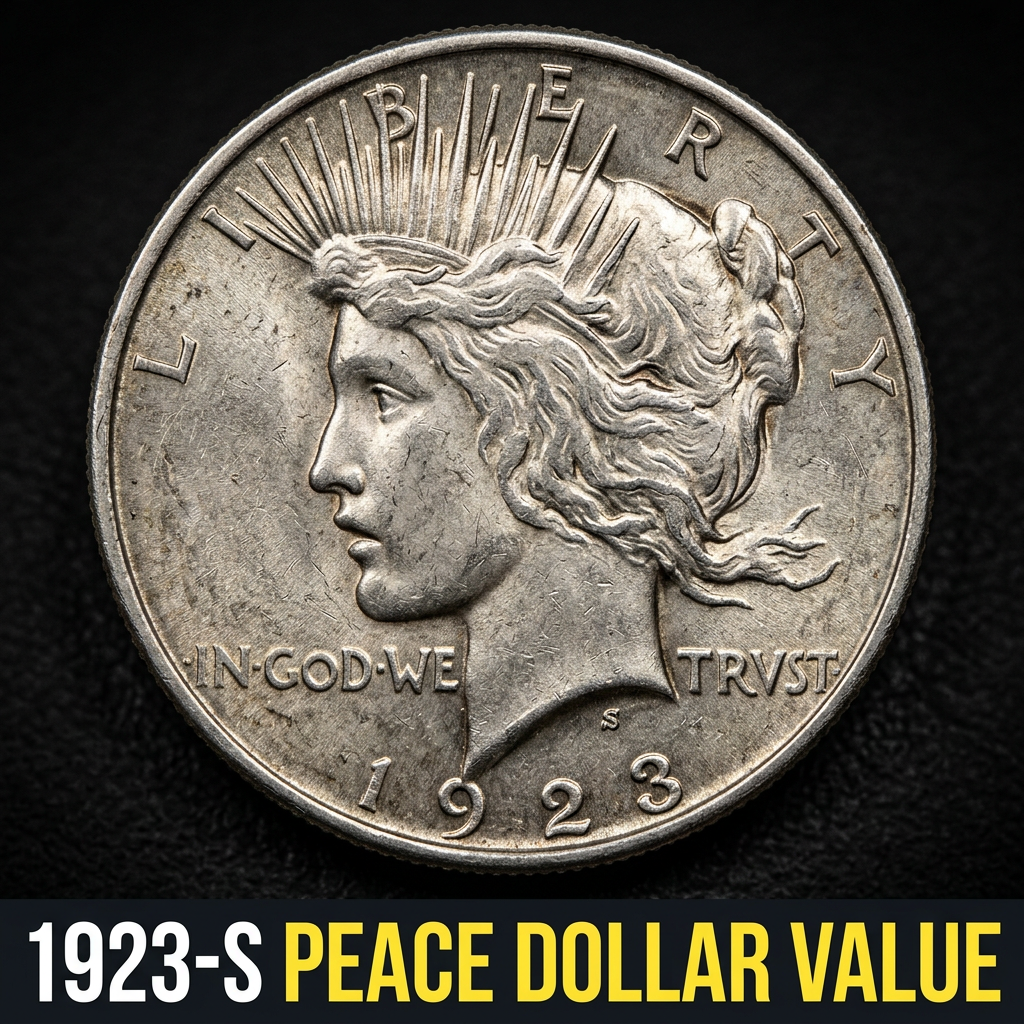
The 1923-S Peace Dollar is worth anywhere from $25 in heavily worn condition to well over $500 or more in high mint state grades. If you found one of these beautiful silver dollars tucked away in an old drawer or inherited coin collection, you’re holding a piece of genuine American history — and it could be worth more than you think.
What Makes the 1923-S Peace Dollar Special
The 1923-S Peace Dollar was struck at the San Francisco Mint, identified by the small “S” mintmark on the reverse side just above the eagle’s tail feathers. That single letter makes a big difference in value compared to the Philadelphia issue. San Francisco produced around 19,020,000 of these coins in 1923 — a substantial mintage, but many have been lost to time, melted down, or heavily circulated over the decades.
The Peace Dollar series itself was born out of the aftermath of World War I. Designer Anthony de Francisci created the iconic image of Lady Liberty with a radiant crown, paired with a majestic eagle perched on an olive branch on the reverse. It was meant to symbolize peace — and it remains one of the most beloved coin designs in American history. If you want a quick way to identify your coin and check its condition, using the best coin identifier app can save you a lot of guesswork before visiting a dealer.
1923-S Peace Dollar Value by Grade
The value of your 1923-S Peace Dollar depends heavily on its condition, or “grade” in coin collecting terms. A coin that’s been passed from hand to hand for decades will show significant wear on Liberty’s hair, cheek, and the eagle’s breast feathers. Meanwhile, an uncirculated example that’s been sitting in a collection since the 1920s can command a serious premium.
Here’s a general breakdown of what collectors and dealers are paying:
| Grade | Description | Estimated Value |
|---|---|---|
| Good (G-4) | Heavy wear, design visible | $25 – $30 |
| Very Fine (VF-20) | Moderate wear, details clear | $35 – $55 |
| Extremely Fine (EF-40) | Light wear on high points | $60 – $85 |
| About Uncirculated (AU-55) | Slight wear, mostly lustrous | $90 – $140 |
| MS-63 | Uncirculated, minor marks | $200 – $350 |
| MS-65 | Gem uncirculated | $500 – $800+ |
For the most current and detailed 1923-S Peace Dollar price data across all mint state grades, you can check live market prices updated by collectors and auction results. Market conditions do shift, so staying current is always smart.
How to Identify Your 1923-S Peace Dollar
Before you can figure out what your coin is worth, you need to confirm what you have. Flip the coin over to the reverse (eagle) side and look just above the tail feathers — if you see a small “S,” you’ve got the San Francisco mint issue. No mintmark means Philadelphia.
Check the obverse (Liberty) side for the date “1923” near the bottom. The coin should weigh about 26.73 grams and measure 38.1mm in diameter. It’s made of 90% silver and 10% copper, giving it that warm silver glow even when worn. Run your fingers across the surface — you’ll feel the high relief of Liberty’s portrait, which is both beautiful and a reason why early Peace Dollars often show wear faster than other designs.
If you’re unsure whether your coin is genuine or has been cleaned or altered, CoinHix offers a quick and easy way to scan and grade your coin right from your phone. Cleaned coins lose significant value, so identification early can help you make smarter decisions.
What Affects the 1923-S Peace Dollar Value Most
Beyond grade, a few other factors move the needle on what your coin is actually worth. First, eye appeal matters — two coins can both grade MS-63, but the one with brilliant luster and minimal marks will always bring more money. Second, color and toning can help or hurt value. Natural rainbow toning on silver coins is often prized by collectors, while artificial toning or dark spotting can reduce appeal significantly.
Third, having your coin certified by a professional grading service like PCGS or NGC makes it far easier to sell at full market value, especially for higher-grade examples worth $200 or more. The cost of grading is usually worth it once you’re in that range. For a comprehensive look at 1923 silver dollar values across all mint varieties and conditions, you’ll find breakdowns that cover every scenario a collector or seller might face.
CoinHix is also a great resource for tracking real-time pricing trends and comparing your coin against recent auction sales, all without needing to visit a shop or hire an expert upfront.
Should You Sell, Hold, or Get It Graded
If you’ve found a 1923-S Peace Dollar in average circulated condition, you’re probably looking at silver melt value plus a small collector premium — roughly $25 to $50 depending on the silver price at the time. That’s still real money for a coin sitting in a box.
If your coin looks like it hasn’t been used much — sharp details, some shine, minimal marks — you could be sitting on something significantly more valuable. In that case, it’s worth getting a professional opinion before selling it to a pawn shop or at face value. Use CoinHix to get an initial estimate, then consider professional certification if the numbers look good.
Don’t clean the coin under any circumstances. Even a gentle rinse can strip the original surface and cut value dramatically. Store it in a soft coin flip or holder and keep it away from humidity.
—
FAQ
Q: How do I know if my coin is the 1923-S or the regular 1923 Peace Dollar?
A: Look at the reverse side of the coin above the eagle’s tail feathers. A small “S” mintmark means it was made in San Francisco. If there’s no mintmark, it came from the Philadelphia Mint. Both are collectible, but values differ.
Q: Is the 1923-S Peace Dollar rare?
A: It’s not considered a key date, but it’s not common in high grades either. The large original mintage means circulated examples are relatively available, but gem uncirculated examples with strong luster are genuinely hard to find and worth a significant premium.
Q: What’s the best way to find out exactly what my 1923-S Peace Dollar is worth today?
A: Start by assessing the condition carefully using a magnifier and comparing it to grading images online. Then check recent auction records for comparable examples. Apps like CoinHix make this process fast and accessible, giving you market-based pricing without needing to visit a dealer first.