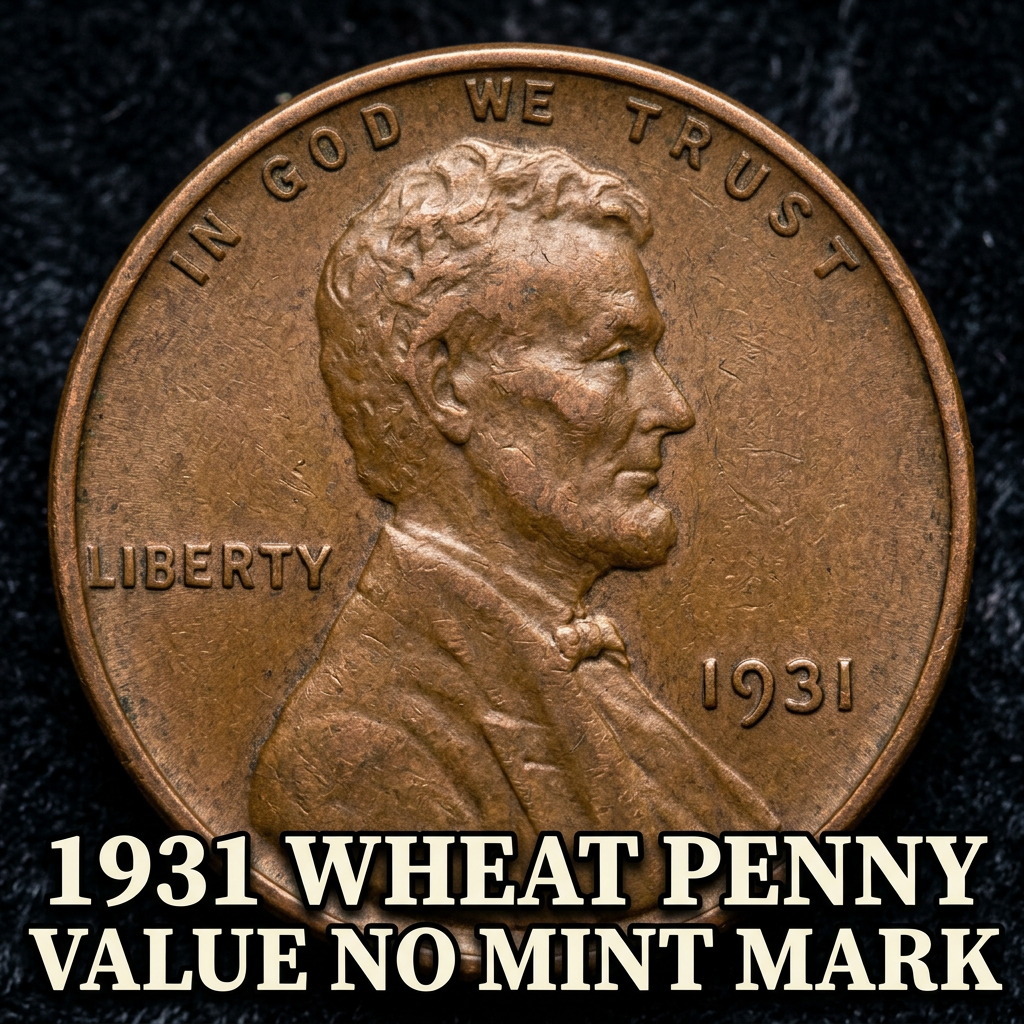
The 1931 Wheat Penny with no mint mark is worth anywhere from $0.50 in heavily worn condition to over $100 or more in mint state. Most circulated examples fall between $1 and $10, making it an affordable yet historically interesting coin that’s well worth a closer look.
What Is the 1931 No Mint Mark Wheat Penny?
The 1931 Lincoln Wheat Penny with no mint mark was struck at the Philadelphia Mint. During the Great Depression, coin production dropped dramatically as the economy collapsed, and 1931 was no exception. The Philadelphia Mint produced just 19,396,000 of these pennies — a relatively low mintage compared to earlier years in the series. That lower production number is one reason why this coin holds more value than your average Wheat cent from a high-mintage year.
The “no mint mark” simply means the coin was made in Philadelphia. Back then, Philadelphia didn’t place a mint mark on its coins, so the absence of a letter beneath the date is actually the identifier itself. If you find a 1931 penny without any letter under the date, you have the Philadelphia issue. If it has an “S,” that’s the San Francisco Mint — and a much more valuable coin altogether. The CoinHix app can help you quickly tell the difference and identify exactly which version you’re holding.
1931 Wheat Penny Value by Grade
Condition is everything when it comes to coin values. A penny that has been heavily circulated and shows significant wear is worth far less than one that was saved from circulation and retained most of its original luster. Here’s a general value breakdown for the 1931 no mint mark Wheat Penny:
| Grade | Condition Description | Estimated Value |
|---|---|---|
| Good (G-4) | Heavy wear, date visible | $0.50 – $1.00 |
| Fine (F-12) | Moderate wear, details clearer | $1.50 – $3.00 |
| Extremely Fine (EF-40) | Light wear, strong details | $8 – $15 |
| About Uncirculated (AU-55) | Slight wear on high points | $20 – $35 |
| Mint State (MS-63) | Uncirculated, minor marks | $60 – $100+ |
| Mint State (MS-65+) | Gem uncirculated, full luster | $150 – $300+ |
For a more complete breakdown of 1931 Wheat Penny price data across all mint state grades, it’s worth checking a dedicated numismatic price resource where auction results are tracked in real time.
How to Grade Your 1931 Wheat Penny at Home
You don’t need to be a professional numismatist to get a rough sense of what your coin is worth. Start by examining the coin under good lighting — natural light or a simple magnifying glass works fine. Look at Lincoln’s portrait on the obverse: the cheekbone, jaw, and ear are the first places to show wear. On the reverse, check the wheat stalks for definition and sharpness.
If Lincoln’s portrait still has strong detail and the wheat stalks show individual lines clearly, your coin is likely in Fine or better condition. If it’s a bit flat but clearly readable with most details intact, you’re probably looking at a Good to Very Good grade. A coin that looks almost new with no visible wear at all is uncirculated — and that’s where value really starts to climb.
You can also use the CoinHix app on your smartphone to scan the coin and get an instant grade estimate. It’s one of the fastest ways for everyday collectors to get a starting point before heading to a dealer or coin show.
What Makes a 1931 Penny More Valuable
Not all 1931 no mint mark pennies are worth the same. Several factors can push the value significantly higher:
Color designation plays a big role in mint state coins. Pennies graded MS-RD (Red) retain their original copper color and command the highest premiums. MS-RB (Red-Brown) coins are worth somewhat less, while MS-BN (Brown) examples are the most affordable in uncirculated grades.
Strike quality matters too. Some coins from this era show weak strikes due to worn dies, which reduces collector appeal. A well-struck example with sharp details is worth more.
Errors and varieties can also add value. While dramatic errors aren’t common on 1931 Philadelphia cents, doubled die varieties and repunched dates do exist. If you notice anything unusual about the lettering or date, it’s worth having the coin examined.
For a thorough overview of what your 1931 penny is worth based on condition and mint mark, a dedicated coin value resource can walk you through each grade level with real market data.
Where to Sell Your 1931 Wheat Penny
If you’ve determined that your coin is worth more than face value, you have several good options. Local coin dealers are a great starting point — bring your coin in and ask for a free assessment. Online platforms like eBay also give you access to a wide collector market, and you can search completed sales to see what similar coins have sold for recently.
Coin shows are another excellent venue, especially if you have a higher-grade example worth $50 or more. Collectors at shows are often willing to pay fair prices for quality material.
Before selling anything, try scanning your coin with CoinHix to get a baseline value estimate. It takes seconds and helps you walk into any transaction better informed.
—
FAQ
Q: How much is a 1931 Wheat Penny worth with no mint mark?
A: A circulated 1931 no mint mark Wheat Penny is typically worth between $0.50 and $15 depending on condition. Uncirculated examples in mint state can range from $60 to over $300 for gem-quality coins.
Q: Is the 1931 no mint mark penny rare?
A: It’s not considered rare, but its relatively low mintage of about 19 million makes it scarcer than many other Wheat cent dates. It’s a semi-key date that collectors do seek out, especially in higher grades.
Q: How can I tell if my 1931 penny is from Philadelphia or San Francisco?
A: Look directly below the date on the obverse. If there is no letter present, the coin was minted in Philadelphia (no mint mark). If you see a small “S,” it’s from San Francisco — and worth significantly more, often hundreds of dollars even in circulated grades.