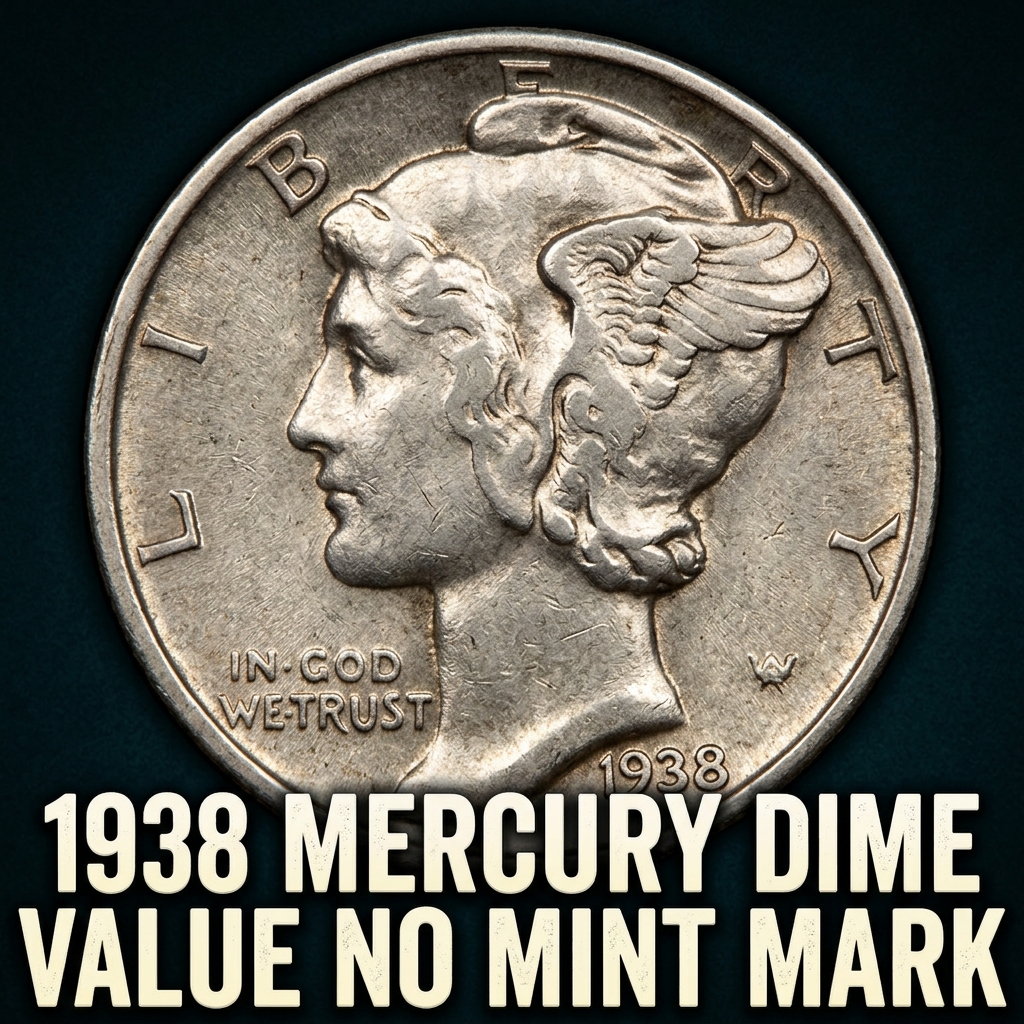
The 1938 Mercury Dime with no mint mark is worth anywhere from $2 in heavily worn condition to over $50 or more in high mint state grades. If you found one of these silver dimes tucked away in an old coin jar or inherited collection, you’re in the right place to find out exactly what it’s worth.
The 1938 Mercury Dime (also called the Winged Liberty Head Dime) was struck at the Philadelphia Mint, which is why it carries no mint mark. These coins are 90% silver, so even a worn example has some precious metal value. Using the best coin identifier app is a quick way to identify your coin’s grade and variety before diving deeper into its value.
What Makes the 1938 No Mint Mark Mercury Dime Special
The 1938 Philadelphia Mercury Dime had a mintage of 22,190,000 coins — a relatively modest number compared to some other years in the series. Designed by Adolph Weinman, this coin features the portrait of Liberty wearing a winged cap, often mistaken for the Roman god Mercury, which is how the nickname stuck. The reverse shows a fasces (a bundle of rods with an axe) and an olive branch, symbols of strength and peace.
Because Philadelphia produced fewer Mercury Dimes in 1938 than in surrounding years, collectors take notice. While the coin is not rare enough to be considered a key date, it’s a step above common Mercury Dimes and consistently attracts decent premiums in higher grades. Even circulated examples have a quiet appeal among collectors who are building a complete Mercury Dime set by date and mint mark.
The coin’s 90% silver composition means its melt value is tied to the current silver spot price. With silver trading in a typical range, the base metal value of a single Mercury Dime is usually around $1.50 to $2.00. That forms the floor for any worn example.
1938 Mercury Dime Value by Grade
Grade is everything when it comes to determining what your 1938 no mint mark Mercury Dime is actually worth. A coin pulled from pocket change and heavily circulated is worth much less than one that was saved right after it was minted and kept in excellent condition. Here’s a general value breakdown based on condition:
| Grade | Condition Description | Estimated Value |
|---|---|---|
| Good (G-4) | Heavy wear, major details visible | $2 – $3 |
| Fine (F-12) | Moderate wear, all lettering clear | $3 – $5 |
| Extremely Fine (EF-40) | Light wear on high points | $6 – $12 |
| About Uncirculated (AU-55) | Slight wear, much original luster | $15 – $25 |
| Mint State (MS-63) | No wear, minor bag marks | $30 – $50 |
| Mint State (MS-65+) | Gem quality, exceptional luster | $60 – $150+ |
For the most current auction results and certified coin prices, you can check the 1938 Mercury Dime mint state price data on CoinHix to see what these coins are actually selling for in today’s market.
How to Check the Condition of Your 1938 Mercury Dime
Not sure what grade your coin falls into? Start by looking at the bands on the fasces on the reverse side. These horizontal bands that cross the bundle of rods are called the Full Bands (FB) designation. When these bands are completely separated and sharply defined, the coin earns a Full Bands premium, which can dramatically increase its value in mint state grades.
On the obverse, check Liberty’s hair and the wing feathers above her cap. Heavy circulation wears these details down first. If you can still see crisp lines in the hair and individual feathers, your coin is likely in Fine to Extremely Fine condition. Any remaining original mint luster — that faint cartwheel shimmer when you tilt the coin — suggests About Uncirculated or better.
If you’re serious about knowing your coin’s true grade, consider using CoinHix to look up comparable examples. CoinHix provides detailed price breakdowns by grade so you can match your coin’s condition to real market data without any guesswork.
Full Bands vs Regular Strike — Does It Matter for the 1938 Philadelphia Dime
Yes, it matters quite a bit. The Full Bands designation on Mercury Dimes is one of the most talked-about features in the entire series. For the 1938 Philadelphia issue, a coin graded MS-65 FB (Full Bands) can be worth two to three times more than a regular MS-65 example without the designation.
The reason is simple: Full Bands strikes require a sharp, well-aligned die and properly prepared planchet. Not every coin that rolled off the press in 1938 received that crisp strike. Collectors who specialize in Mercury Dimes chase FB examples because they represent the best of what the mint could produce.
If you want a comprehensive breakdown of what your specific coin might be worth across all conditions and varieties, the detailed 1938 Mercury Dime value guide at CoinValueApp walks through every grade and designation with clear explanations.
Where to Sell Your 1938 Mercury Dime
Once you know what you have, selling is straightforward. Circulated examples in Good to Fine condition are best sold as silver — local coin dealers, pawn shops with coin knowledge, or online silver buyers will offer melt value or slightly above. For anything in Extremely Fine or better condition, consider listing on eBay, visiting a coin show, or submitting to a professional grading service like PCGS or NGC before selling, since a certified grade protects your coin’s value and credibility with buyers.
If you’re not ready to sell and just want to track your collection’s value over time, CoinHix is a great free tool to bookmark. It updates pricing regularly and covers the full Mercury Dime series with date-by-date breakdowns.
FAQ
Q: How do I know if my 1938 Mercury Dime is from Philadelphia if there’s no mint mark?
A: Philadelphia coins from this era intentionally had no mint mark. If your 1938 Mercury Dime has no letter beneath the olive branch on the reverse, it was struck in Philadelphia. Denver coins show a “D” and San Francisco shows an “S” in that location.
Q: Is the 1938 Mercury Dime made of silver?
A: Yes. All Mercury Dimes, including the 1938 no mint mark issue, are composed of 90% silver and 10% copper. Each coin contains approximately 0.0723 troy ounces of pure silver, giving it intrinsic metal value regardless of its collector grade.
Q: What makes a 1938 Mercury Dime worth more than face value?
A: Two main factors drive value above face: silver content and collector demand. The silver alone makes it worth more than ten cents. Beyond that, coins in higher grades — especially with Full Bands on the reverse — carry significant premiums because collectors actively seek quality examples for complete date sets.