The 1980-D Susan B. Anthony Dollar is worth anywhere from $1 to $2 in average circulated condition, but well-preserved uncirculated examples can climb to $15 or more — and top-grade specimens have sold for over $100 at auction. If you just found one in a drawer or old coin jar, you’re in the right place to find out exactly what you’ve got.
What Is the 1980-D Susan B. Anthony Dollar?
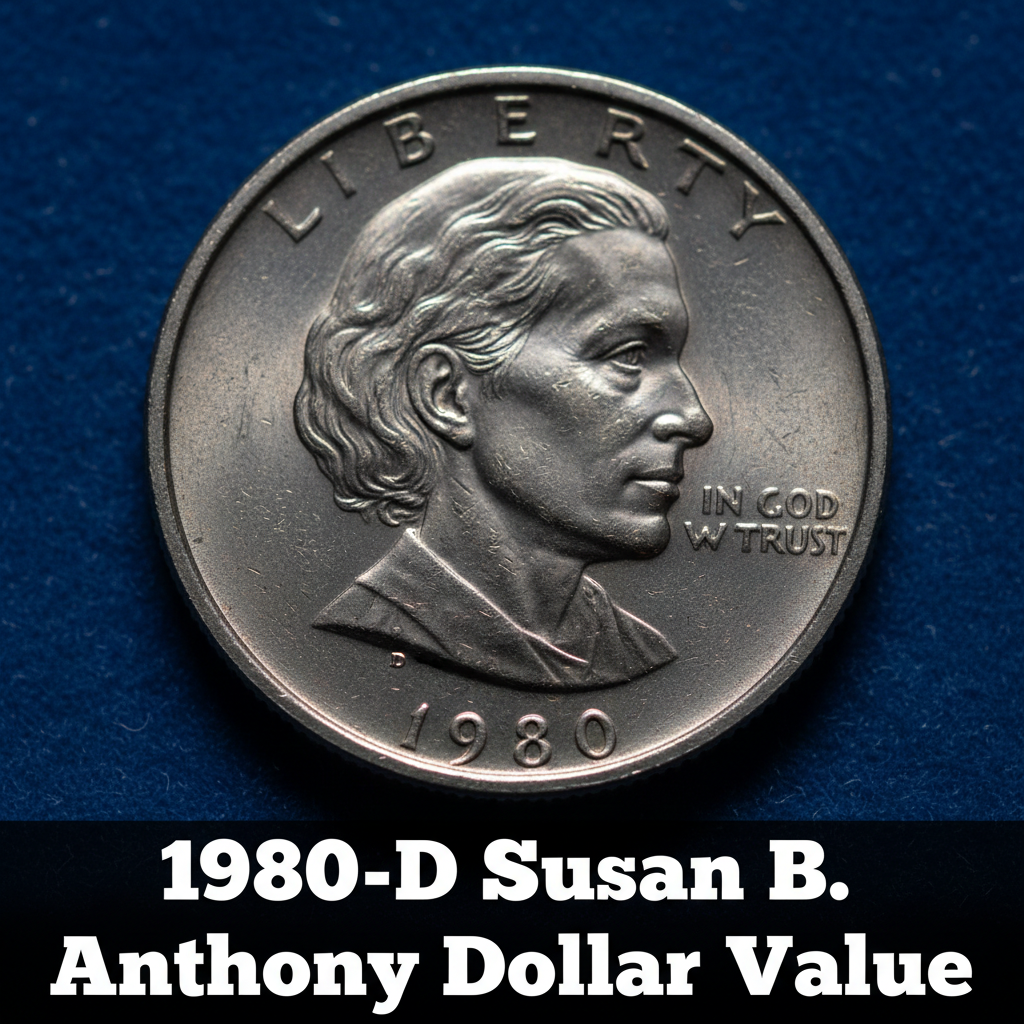
The Susan B. Anthony Dollar was introduced in 1979 as a smaller, more practical alternative to the large silver dollar coins of the past. The “D” in 1980-D tells you this coin was minted at the Denver Mint, one of three facilities that struck SBA dollars that year alongside Philadelphia and San Francisco. The coin features a portrait of suffragist Susan B. Anthony on the obverse and an eagle landing on the moon on the reverse — a nod to the Apollo 11 mission.
Despite being made of a copper-nickel clad composition (not silver), these coins are still collectible, especially in higher grades. If you’re trying to identify your coin or figure out its mint mark location, using the best coin identifier app can save you a lot of time and guesswork. The mint mark “D” appears on the obverse, just above the right shoulder of Susan B. Anthony.
The Denver Mint produced 41,628,708 of these coins in 1980, making them relatively common in lower grades. But condition — as always — is everything in coin collecting.
1980-D Susan B. Anthony Dollar Value by Grade
Most 1980-D dollars you’ll encounter have been circulated, meaning they show varying degrees of wear. A heavily worn coin might only be worth face value or just slightly above it. A lightly worn coin in “Extra Fine” condition can fetch $1.50 to $3. The real value jumps when you get into uncirculated territory.
Here’s a quick breakdown of what collectors typically pay:
| Grade | Description | Estimated Value |
|---|---|---|
| Good (G-4) | Heavy wear, major details visible | $1.00 – $1.25 |
| Fine (F-12) | Moderate wear, clear lettering | $1.25 – $1.75 |
| Extra Fine (EF-40) | Light wear on high points | $1.75 – $3.00 |
| MS-63 (Uncirculated) | No wear, some bag marks | $5 – $10 |
| MS-65 (Gem Uncirculated) | Sharp strike, minimal marks | $12 – $25 |
| MS-67 or Higher | Near-perfect, registry-quality | $100+ |
For a deeper look at certified auction results and dealer prices, you can explore up-to-date 1980 Susan B. Anthony dollar price data across multiple grade levels to see what buyers are actually paying right now.
What Affects the Value of Your 1980-D Dollar
Beyond the grade, a few other factors can push the value of a 1980-D SBA dollar up or down. Strike quality matters — some coins from this era came out of the mint with soft or flat strikes, which hurts eye appeal. Luster is another big factor; a coin with original, frosty mint luster will always command more than one that looks dull or cleaned.
Speaking of cleaning — never clean your coins. A cleaned coin, even if it looks shiny, is considered damaged by collectors and can lose half its value or more. If you’re unsure whether your coin has been altered, CoinHix is a handy tool that lets you compare your coin’s appearance to graded examples, helping you set realistic expectations before selling.
Coin holders and original government packaging also add a small premium. If your 1980-D dollar came in a U.S. Mint set or original packaging, keep it that way — it’s worth more intact.
How to Check If Your 1980-D Dollar Is Worth Grading
If your coin looks bright, shows no visible wear under good lighting, and the details are sharp — it might be worth getting it professionally graded by PCGS or NGC. Grading fees typically start around $20–$30 per coin, so it only makes sense if your coin appears to be MS-65 or better.
You can get a rough idea of your coin’s grade using CoinHix, which allows you to scan and compare your coin to known graded examples. It’s a practical first step before spending money on professional grading services.
For a broader understanding of what your coin could be worth in the current market, this comprehensive 1980 dollar value reference covers additional variables including mint set examples and proof-like strikes that may apply to your coin.
Where to Sell Your 1980-D Susan B. Anthony Dollar
If you decide to sell, you have several good options. eBay is a popular marketplace where raw (ungraded) coins sell regularly — just search completed listings to see realistic prices, not just asking prices. Local coin shops are great for quick sales, though you’ll typically get 50–70% of retail value. Coin shows and online collector forums can also connect you with buyers who specialize in modern U.S. coins.
For bulk lots of circulated SBA dollars, expect face value offers from most buyers. The real money is in certified high-grade examples. Use CoinHix to quickly assess your collection before approaching a dealer — knowing your coins’ approximate grades gives you confidence in negotiations and helps you avoid underselling.
FAQ
Q: Is the 1980-D Susan B. Anthony Dollar made of silver?
A: No. The 1980-D SBA dollar is made of a copper-nickel clad composition, with an outer layer of 75% copper and 25% nickel over a pure copper core. It contains no silver at all. Silver SBA dollars were never produced for circulation.
Q: How do I find the mint mark on my 1980-D dollar?
A: Look at the obverse (front) of the coin, just above Susan B. Anthony’s right shoulder, near her collar. You’ll see a small “D” there, which stands for the Denver Mint. If it says “P,” it’s from Philadelphia; “S” means San Francisco.
Q: Is the 1980-D Susan B. Anthony Dollar rare?
A: Not especially. With over 41 million struck, it’s one of the more common dates in the SBA series. However, finding one in gem uncirculated condition (MS-65 or better) is genuinely uncommon, and those coins do carry real collector premiums. The rarity, as with most modern coins, is in the grade rather than the date itself.