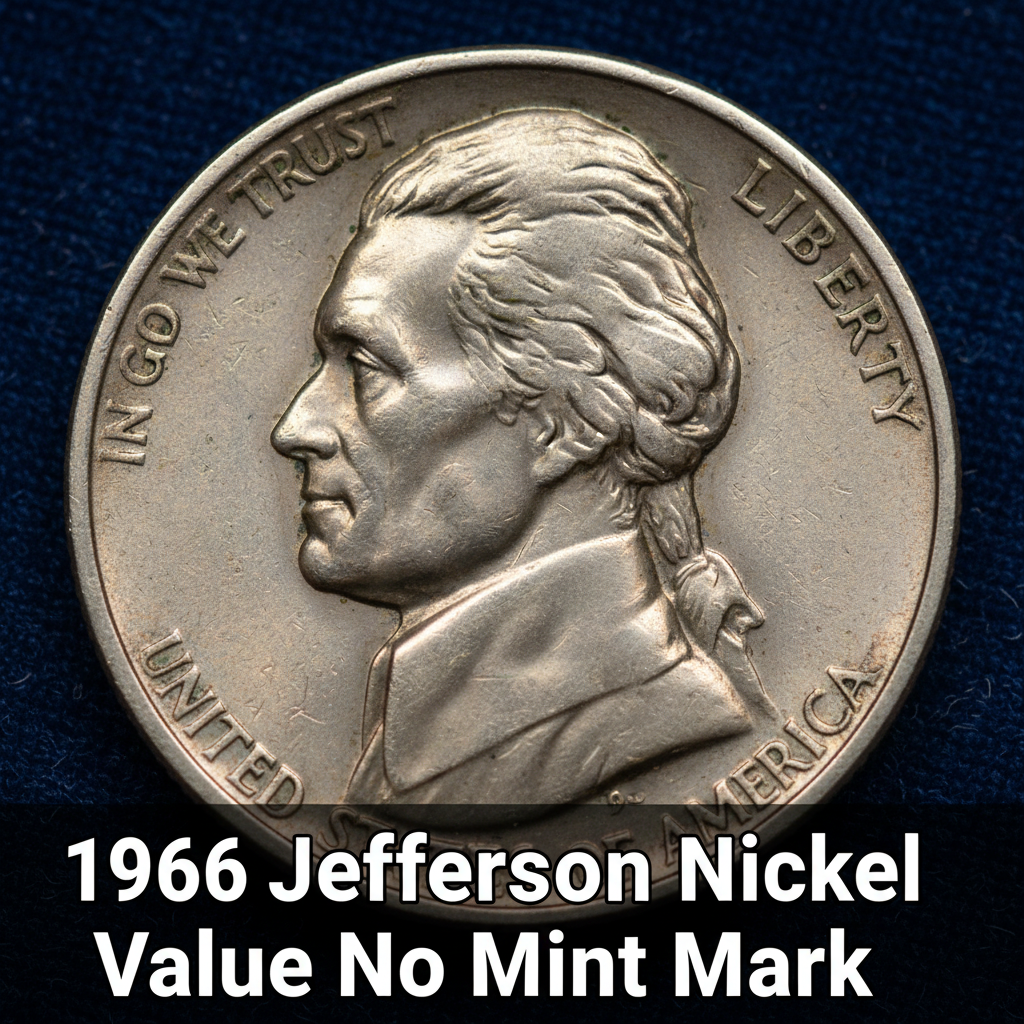
The 1966 Jefferson Nickel with no mint mark is worth anywhere from face value (5 cents) in heavily worn condition to over $100 or more in pristine uncirculated grades. Most examples you’ll find in circulation or old coin jars are worth closer to 10–50 cents, but a few high-grade specimens can genuinely surprise you.
Why There’s No Mint Mark on the 1966 Jefferson Nickel
If you’re holding a 1966 Jefferson Nickel and wondering why there’s no mint mark on it, you’re not alone — it’s one of the most common questions collectors ask. The answer is actually pretty simple: the United States Mint deliberately removed mint marks from all coins between 1965 and 1967. This was a response to a nationwide coin shortage caused by widespread hoarding. The government wanted to discourage collectors from setting coins aside based on which mint produced them, so they stripped the mint marks entirely.
That means every 1966 nickel — whether it was struck in Philadelphia or Denver — looks identical with no mint mark. It’s not a rare error or a special variety. It’s standard for the year. If you’ve been searching online trying to figure out if your no-mint-mark coin is unusual, rest assured: it’s exactly as it should be. A good best coin identifier app can help you confirm this quickly and even give you an instant grade estimate right from your phone. Apps like CoinHix are especially popular for this kind of quick identification — you just snap a photo and get results in seconds.
How Much Is the 1966 Jefferson Nickel Worth by Grade
The value of any coin depends heavily on its condition, and the 1966 Jefferson Nickel is no exception. A worn, heavily circulated coin isn’t going to fetch much — maybe a few cents over face value at best. But as condition improves, so does value. Here’s a quick breakdown of approximate values by grade:
| Grade | Condition Description | Estimated Value |
|---|---|---|
| Good (G-4) | Heavy wear, major details visible | $0.05–$0.10 |
| Fine (F-12) | Moderate wear, clear lettering | $0.10–$0.25 |
| Extremely Fine (EF-40) | Light wear on high points | $0.25–$0.75 |
| MS-63 | Uncirculated, minor bag marks | $2–$8 |
| MS-65 | Gem uncirculated, sharp strike | $15–$40 |
| MS-67 or higher | Superb gem, virtually flawless | $100+ |
You can explore detailed 1966 Jefferson Nickel mint state price data by grade on CoinHix, which tracks real auction results and keeps values updated regularly.
What Makes a 1966 Jefferson Nickel More Valuable
Beyond grade, a few specific factors can push the value of a 1966 Jefferson Nickel higher than average. Strike quality is a big one — coins from this era were sometimes weakly struck because the Mint was under enormous production pressure. A sharply struck example with full steps (FS) visible on Monticello’s staircase on the reverse is considered more desirable and can command a significant premium over a coin with mushy or incomplete steps.
Eye appeal also matters. A coin with original luster, no cleaning, and no significant contact marks will always be worth more than a technically similar coin that looks dull or has been wiped. Cleaning destroys value almost instantly in the collector world, so never clean your old coins.
If your coin is in exceptional condition, consider getting it professionally graded by PCGS or NGC. A certified MS-67 or MS-67 FS example has sold at auction for well over $100, and some top-tier specimens have gone even higher. Before you spend money on grading, use CoinHix to get a ballpark estimate — it’s a fast and free way to decide whether professional grading is worth the cost.
Full 1966 Nickel Value Information for Collectors and Casual Finders
Whether you’re a casual coin finder or a more serious hobbyist just starting out, it helps to get a complete picture of what your coin could be worth. For a thorough breakdown of 1966 nickel value across all grades and varieties, including circulation finds and mint state examples, there are dedicated resources that make it easy to understand the full range.
The 1966 Jefferson Nickel had a massive mintage — over 2.1 billion coins were struck that year — which is exactly why most examples are common and low in value. High numbers mean high survival rates, and collectors don’t pay premiums for coins they can easily find. The real value sits at the top of the grading scale, where coins are rare simply because so few survived in pristine condition despite the enormous total output.
FAQ About the 1966 Jefferson Nickel
Q: Is a 1966 Jefferson Nickel with no mint mark an error coin?
A: No, it is not an error. The U.S. Mint removed mint marks from all coins between 1965 and 1967 as an official policy to combat coin hoarding during a national shortage. Every 1966 nickel is supposed to have no mint mark.
Q: How do I know if my 1966 nickel is worth getting graded?
A: If your coin shows no signs of wear, has bright original luster, and the steps on Monticello look sharp and complete, it may be worth submitting for grading. Use CoinHix to snap a photo and get an initial assessment before investing in professional grading services.
Q: Where is the best place to sell a high-grade 1966 Jefferson Nickel?
A: For top-grade certified examples, major auction houses like Heritage Auctions or Stack’s Bowers tend to get the strongest prices. For average circulated coins, eBay or local coin dealers are practical options. Always compare recent sold listings before you decide on a price.