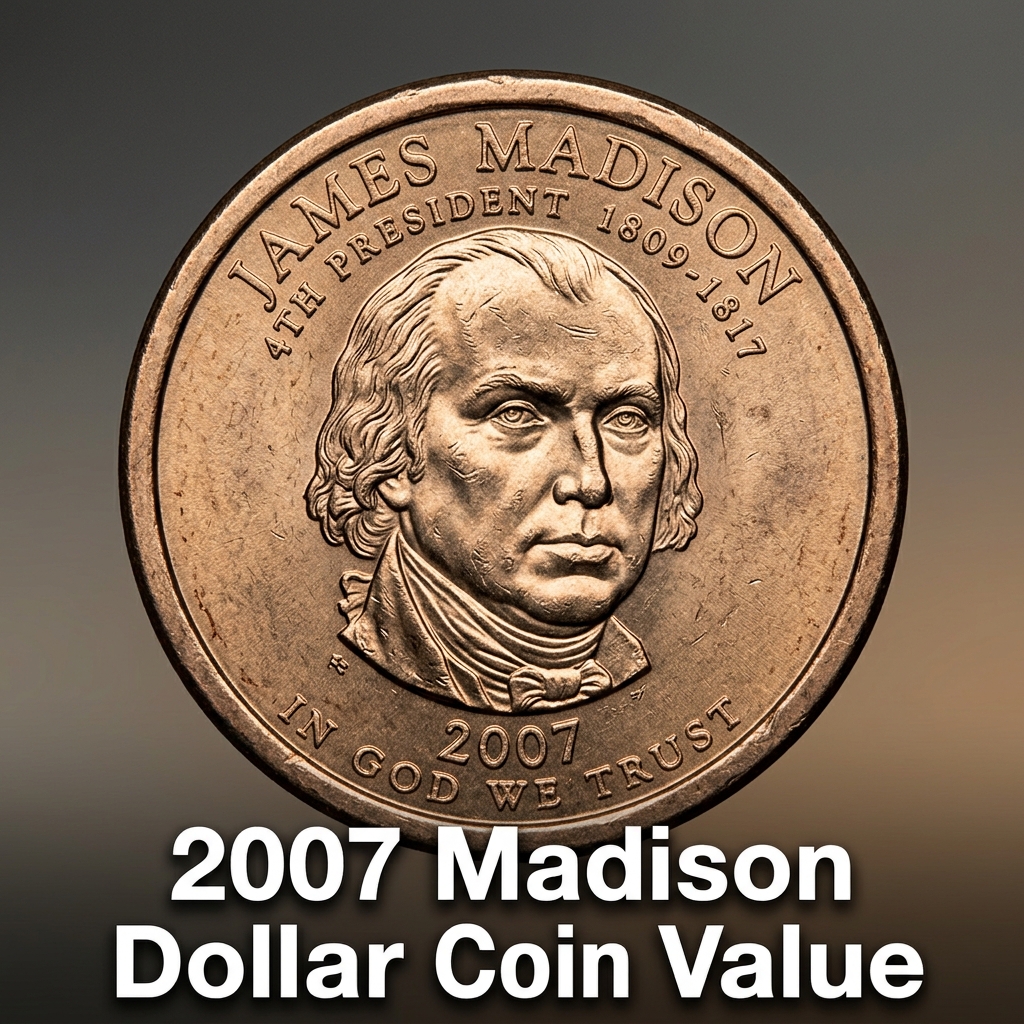
The 2007 James Madison Presidential Dollar is worth anywhere from face value ($1) in circulated condition to $5–$15 or more in uncirculated mint state, with certain error coins selling for hundreds of dollars to collectors.
If you’ve come across a golden dollar coin with James Madison’s portrait on it, you’re holding a piece of American history. These coins were part of the Presidential Dollar series launched in 2007, and while most aren’t worth a fortune, some varieties can surprise you. Whether you found it in a change jar or inherited a small collection, this guide will help you understand exactly what your 2007 Madison dollar is worth.
What Is the 2007 Madison Dollar Coin?
The 2007 James Madison Presidential Dollar was issued by the U.S. Mint as part of the Presidential Dollar Program, which honored former U.S. presidents in the order they served. Madison was the fourth president, so his coin was the fourth released in 2007, following Washington, Adams, and Jefferson. The coin is made of a manganese-brass clad composition and has a golden color that often makes people think it’s made of real gold — it isn’t, but it’s still a fun coin to own.
The obverse features a portrait of Madison along with inscriptions of his name, the years he served (1809–1817), and the motto “IN GOD WE TRUST.” The reverse shows the Statue of Liberty, which is standard across all Presidential Dollars. These coins were minted in Philadelphia (P mint mark) and Denver (D mint mark), and proof versions were struck at San Francisco (S mint mark). If you want to quickly identify which mint yours came from, try using the best coin identifier app to get a fast, reliable answer right from your phone.
2007 Madison Dollar Value by Condition and Mint Mark
The value of your 2007 Madison dollar depends heavily on its condition and where it was minted. Circulated examples — coins that went through everyday commerce — are typically worth face value or just slightly above. Uncirculated coins kept in original Mint sets or never handled are where the value picks up. Proof coins, struck with polished dies and specially made for collectors, carry the highest premiums in the regular series.
Here’s a quick value table to give you a clear picture:
| Coin | Circulated | Uncirculated (MS63) | Uncirculated (MS65+) |
|---|---|---|---|
| 2007-P Madison Dollar | $1.00 | $2–$5 | $8–$15 |
| 2007-D Madison Dollar | $1.00 | $2–$5 | $8–$15 |
| 2007-S Madison Dollar (Proof) | N/A | $8–$12 | $15–$25 |
For the most up-to-date pricing data on related coins from this era, you can check out current 2007 Sacagawea dollar prices and MS grade values — these coins were minted in the same year and give useful context for the dollar coin market.
The Missing Edge Lettering Error — The Coin Worth Real Money
Here’s where things get exciting for everyday finders. In 2007, some Presidential Dollars were accidentally released without the edge lettering — the inscriptions normally stamped onto the coin’s edge, including “E PLURIBUS UNUM,” the year, and the mint mark. These are commonly called “Godless Dollars” because they’re also missing “IN GOD WE TRUST” on the edge.
The 2007 Madison Dollar with missing edge lettering is the most valuable variety in this series. Depending on condition and which mint produced it, these error coins can sell for anywhere from $50 to over $200 at auction. Some especially clean examples have gone even higher. If your coin has a smooth, plain edge instead of lettered text, get it checked by a professional grader right away. CoinHix is a great tool to start researching whether your coin might fall into this category before you take the next step.
How to Check Your 2007 Madison Dollar’s Value
Start by examining the coin’s edge carefully. Use a magnifying glass and slowly roll the coin between your fingers. If you see raised lettering around the edge, you have a standard coin. If the edge is plain and smooth, you might have a valuable error.
Next, check the coin’s overall condition. Look for luster (that original shine on uncirculated coins), contact marks, and whether the high points of Madison’s portrait show any wear. Coins graded MS65 or higher by professional services like PCGS or NGC carry certified premiums.
For a thorough breakdown of values across all 2007 Presidential Dollar coins, this detailed guide to 2007 Presidential Dollar values covers every variety, grade, and price range in one place. And if you want a fast at-home check, CoinHix lets you look up real market prices in seconds using just your smartphone.
Is the 2007 Madison Dollar Worth Keeping?
For most people, a standard circulated 2007 Madison dollar is worth exactly one dollar in spending terms — but that doesn’t mean it’s not worth holding onto. Presidential Dollars were never widely circulated, and collector interest in complete sets continues to grow. If you have a full set in nice condition or a potential error coin, the value increases significantly.
Even if your coin turns out to be common, building a collection around Presidential Dollars is an affordable and genuinely interesting hobby. Many sets can be assembled for under $50, and the historical connection to each president makes them a great conversation piece. Download CoinHix to track your collection’s value over time and stay updated on market trends.
—
Frequently Asked Questions
Q: How much is a 2007 Madison dollar worth if it’s been circulated?
A: A circulated 2007 James Madison Presidential Dollar is generally worth its face value of $1.00. There’s very little premium for worn examples since millions were produced. If the coin is in pristine, uncirculated condition, it may fetch $5–$15 depending on the grade.
Q: What makes the 2007 Madison dollar error coin so valuable?
A: The most sought-after error is the missing edge lettering variety, sometimes called the “Godless Dollar.” These coins were accidentally released without the “IN GOD WE TRUST” and “E PLURIBUS UNUM” inscriptions on the edge. Because they’re genuine U.S. Mint errors, collectors pay $50–$200 or more for them.
Q: Where can I sell my 2007 Madison dollar coin?
A: You can sell through online platforms like eBay or Heritage Auctions, or take it to a local coin dealer for an in-person appraisal. If you suspect you have an error coin, it’s worth getting it certified by PCGS or NGC first, as a graded coin typically sells for more than a raw one.