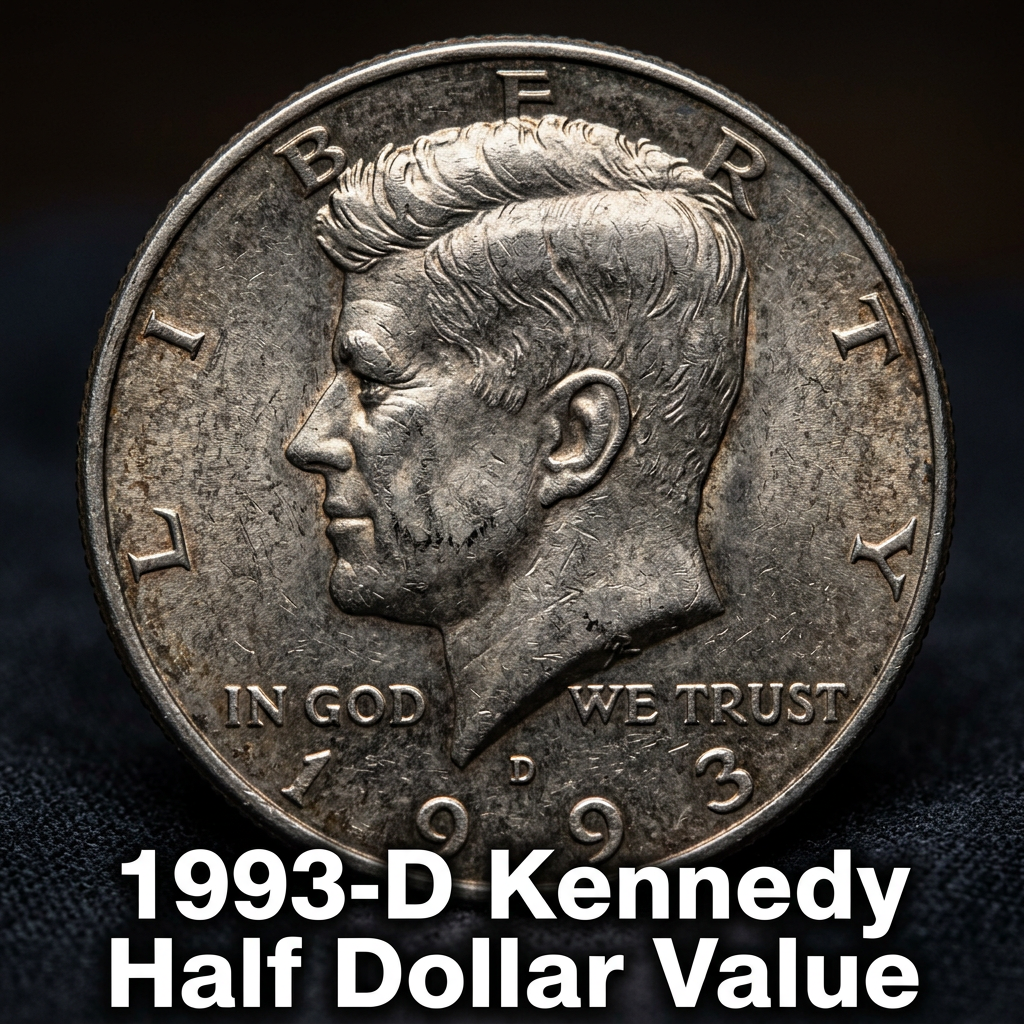
The 1993-D Kennedy Half Dollar is worth between $0.50 and $15 in typical circulated condition, but well-preserved mint state examples can fetch $20 or more depending on grade. If you found one in a drawer or coin jar, you’re in the right place to find out exactly what it’s worth.
What Is the 1993-D Kennedy Half Dollar?
The 1993-D Kennedy Half Dollar was struck at the Denver Mint, indicated by the small “D” mint mark on the reverse side of the coin. It’s part of the long-running Kennedy Half Dollar series that began in 1964 as a tribute to President John F. Kennedy following his assassination. By 1993, these coins were still being produced for circulation, though most Americans rarely encountered them in everyday change.
The coin features a portrait of JFK on the obverse, designed by Gilroy Roberts, while the reverse shows the Presidential Seal, designed by Frank Gasparro. It’s made of a copper-nickel clad composition — no silver content at all, which is an important factor in determining value. If you’re trying to identify the coin, using the best coin identifier app can help you confirm details like mint mark location and condition grade quickly and accurately.
The Denver Mint produced approximately 15,510,000 half dollars in 1993, making this a relatively common coin in the Kennedy series. That said, condition matters enormously when it comes to value.
How Much Is the 1993-D Kennedy Half Dollar Worth?
Here’s a straightforward breakdown of what you can expect based on coin grade and condition:
| Grade / Condition | Estimated Value |
|---|---|
| Circulated (Good to Fine) | $0.50 – $1.50 |
| Extremely Fine (EF-45) | $2 – $4 |
| Mint State 63 (MS-63) | $6 – $10 |
| Mint State 65 (MS-65) | $12 – $20 |
| Mint State 67 (MS-67) or higher | $50 – $150+ |
For the most up-to-date market figures, you can check out recent 1993 Kennedy Half Dollar price data across MS grades to see how auction results have been trending. Prices can shift based on demand, so it pays to stay current.
Does Condition Really Make That Big a Difference?
Absolutely — and this surprises a lot of people. A coin that looks “pretty good” to the naked eye might grade only MS-63 under a professional evaluation, while a truly pristine example with no contact marks and full luster could reach MS-67 or higher. The difference in value between those two grades on a 1993-D Kennedy Half Dollar can be $100 or more.
Coins that spent time in circulation develop what collectors call “wear” — high points like Kennedy’s cheekbones and hair details will appear flat or dull. Coins stored in rolls, mint sets, or never spent show original mint luster with sharp details. If your coin has never been cleaned (please don’t clean old coins — it reduces their value significantly) and was stored carefully, it may be worth getting professionally graded by PCGS or NGC.
CoinHix is a great tool for getting a ballpark estimate before you commit to professional grading. Just snap a photo and let the app analyze your coin’s condition.
The 1993-D vs. the 1993-P: Is There a Difference in Value?
Great question. The 1993-P (Philadelphia Mint) and 1993-D (Denver Mint) Kennedy Half Dollars are very similar in value for most circulated grades. However, in high mint state grades, small differences can emerge based on strike quality and population reports — meaning how many coins have been certified at a given grade by professional grading services.
Generally speaking, the 1993-D tends to have slightly better availability in higher grades, which keeps prices from spiking dramatically. But rare gem specimens (MS-67 and above) of either mint can surprise you. You can explore detailed 1993 half dollar value information for both mint marks to compare them side by side.
If you have both a P and D example, compare them under good lighting. Look at sharpness, luster, and any surface marks to get a sense of which grades higher.
Tips for Selling Your 1993-D Kennedy Half Dollar
If you’ve decided your coin is worth selling, here are some practical tips:
– Don’t clean it. Seriously. A cleaned coin can lose 50–80% of its collector value.
– Get a second opinion. Use CoinHix to scan your coin and get an instant estimate before listing it.
– Know your venue. eBay works well for common coins, while auction houses like Heritage or Stack’s Bowers are better for high-grade certified pieces.
– Consider a coin dealer. Local coin shops can give you a quick cash offer, though expect a small discount from retail price.
– Check recent sales. Knowing what similar coins actually sold for (not just what sellers are asking) gives you real leverage.
—
FAQ
Q: Is the 1993-D Kennedy Half Dollar made of silver?
A: No. The 1993-D Kennedy Half Dollar is made of copper-nickel clad, containing no silver at all. Silver Kennedy Half Dollars were only made from 1964 to 1970. After 1970, all circulation strikes switched to the clad composition.
Q: How can I tell if my 1993-D half dollar is in good condition?
A: Look at the high points of the design under good lighting — Kennedy’s hair, cheek, and the eagle’s feathers on the reverse. If those areas look flat, worn, or dull, the coin has circulated. Bright, shiny luster with sharp details means a higher grade. You can also use CoinHix to get an instant AI-powered grade estimate from your smartphone.
Q: Is a 1993-D Kennedy Half Dollar worth keeping?
A: That depends on the condition. Circulated examples are essentially face value at $0.50, so spending them isn’t a big loss. But if yours shows no wear, has original luster, and grades MS-65 or higher, it’s definitely worth holding onto or getting professionally certified — it could be worth $15 to $150 or more.