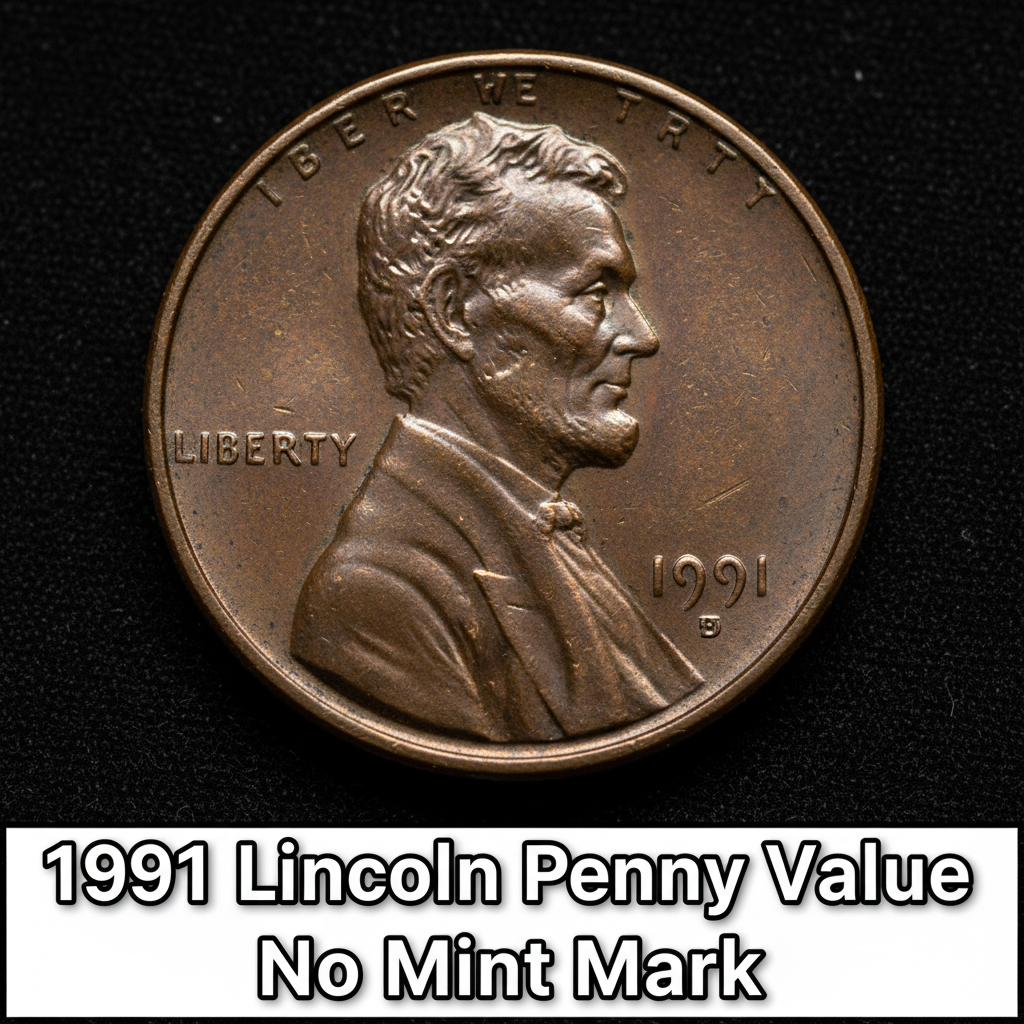
The 1991 Lincoln Penny with no mint mark is worth anywhere from 1 cent in heavily circulated condition to over $10 or more in certified mint state grades — and a few rare examples have fetched even higher at auction. If you found one in your change jar or a grandparent’s collection, keep reading to find out exactly what you’ve got.
—
What the 1991 No Mint Mark Penny Actually Is
Before we talk value, let’s quickly cover the basics. A 1991 Lincoln cent with no mint mark was struck at the Philadelphia Mint. Philadelphia has historically not used a mint mark on cents (this changed in 2017), so the absence of a letter on your coin doesn’t mean it’s rare — it just tells you where it was made. In 1991, the Philadelphia Mint produced over 5.1 billion Lincoln cents, making this one of the most common modern pennies in circulation.
The coin features the classic Lincoln Memorial reverse design, which was used from 1959 to 2008. The obverse shows Abraham Lincoln’s portrait, unchanged since 1909. The composition is 97.5% zinc with a thin copper plating — a recipe that’s been in use since 1982. If you want to quickly identify what you have and check its condition accurately, tools like the best coin identifier app can help you scan and assess your coin in seconds. Using a reliable app takes the guesswork out of the process, especially for beginners.
—
1991 Lincoln Penny No Mint Mark Value by Grade
The value of your 1991 penny depends almost entirely on its grade — the condition it’s in. A coin pulled from pocket change that’s been banged around for decades will always be worth less than one that was set aside immediately after minting.
Here’s a general value table to give you a quick sense of what collectors are paying:
| Grade / Condition | Estimated Value |
|---|---|
| Good to Fine (G–F) | Face value (~$0.01) |
| Extremely Fine (EF–AU) | $0.05 – $0.25 |
| Mint State 63 (MS-63) | $0.50 – $2.00 |
| Mint State 65 (MS-65) | $3.00 – $8.00 |
| Mint State 67 (MS-67) Red | $10.00 – $30.00+ |
For the most up-to-date auction results and certified sale prices, you can browse detailed 1991 Lincoln Penny MS Red price data by grade which tracks real collector transactions across major platforms. CoinHix makes it easy to follow the market without needing a coin dealer on speed dial.
—
What Makes a 1991 Penny More Valuable Than Face Value
Most 1991 Lincoln pennies are worth exactly one cent. But a small percentage are genuinely worth collecting, and here’s why:
Color designation matters a lot. Copper-plated zinc cents are graded not just on surface quality but also on color. A coin that has kept its original brilliant red luster (designated “Red” or RD) is worth significantly more than one that has toned to brown. MS-65 Red examples consistently sell for several dollars, while the same grade in Brown might be worth just a few cents above face.
High-grade examples are surprisingly scarce. Because billions of these coins were made and most were spent, finding a truly uncirculated, well-struck, pristine example is harder than it sounds. Strike quality and surface preservation are key. If your coin has no visible marks, full luster, and sharp details on Lincoln’s cheekbone and the memorial columns, it could grade MS-65 or higher.
Error coins can be worth real money. Some 1991 pennies show doubled die errors, off-center strikes, or die caps. These varieties attract strong collector interest and can sell for anywhere from $10 to several hundred dollars depending on the severity and visibility of the error.
To get a broader look at what the 1991 penny is worth across all grades and mint marks, including the Denver mint version, checking a dedicated value resource will give you the full picture. CoinHix is also a great tool to track prices over time if you’re thinking about buying or selling.
—
Should You Get Your 1991 Penny Graded?
Professionally grading a coin through PCGS or NGC typically costs $20–$40 per coin minimum, plus shipping. For a 1991 Philadelphia cent, that almost never makes financial sense unless you believe it grades MS-67 or higher — which would make it worth $25 or more — or if it has a visible error.
That said, if you’re sitting on a roll of uncirculated 1991 cents or found a gem-quality example in an old collection, it might be worth using CoinHix or a similar price-tracking tool first to see if the potential return justifies the grading cost. Don’t send a common coin off to a grading service on a hunch — do your research first.
—
FAQ
Q: Is a 1991 penny with no mint mark rare?
A: No. The 1991 Philadelphia cent is one of the most common modern coins, with over 5.1 billion minted. The lack of a mint mark is normal for Philadelphia-struck cents of this era and does not indicate rarity.
Q: What is the most valuable 1991 Lincoln penny?
A: The most valuable examples are typically MS-67 Red certified coins or verified error coins. A flawless MS-67 Red 1991-P penny can sell for $30 or more, while dramatic error coins like doubled dies or off-center strikes can bring in significantly higher prices from the right collector.
Q: How can I tell if my 1991 penny is in good condition?
A: Look at the high points of the coin — Lincoln’s cheekbone, his hair above the ear, and the columns of the Lincoln Memorial on the reverse. If those areas show wear or flat spots, the coin is circulated. A truly uncirculated coin will have full original luster and no contact marks visible to the naked eye. Apps like the one at the link above can help you get a quick assessment before you visit a dealer.