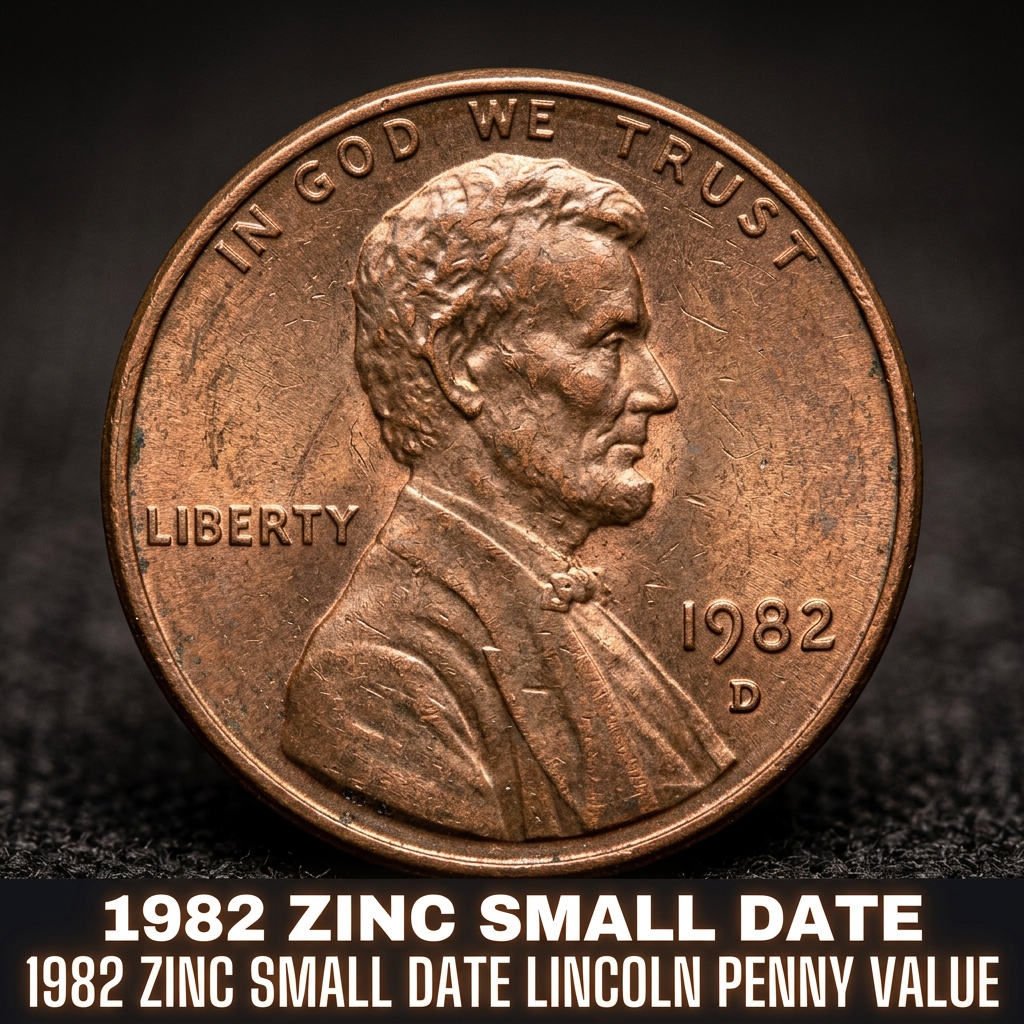
The 1982 Zinc Small Date Lincoln Penny is worth anywhere from a few cents in heavily worn condition to over $100 or more in top certified mint state grades. Most examples you find in pocket change are worth face value, but high-grade uncirculated coins can surprise you with real collector demand.
What Makes the 1982 Small Date Penny Special
The year 1982 is one of the most fascinating in Lincoln cent history. That year, the U.S. Mint made a major change — switching from 95% copper to a zinc core with a thin copper plating. But that’s not all. The Mint also used two different date styles: a “Large Date” and a “Small Date.” On the Small Date version, the numerals in “1982” appear slightly smaller and more compact, particularly noticeable in the “2” at the end.
To identify a Small Date, look closely at the date with a magnifying glass. The top of the “1” is more level and the “2” curves back more tightly compared to the Large Date variety. The 1982 zinc versions were struck at both the Philadelphia Mint (no mint mark) and the Denver Mint (D mint mark), and the Small Date zinc cent is actually one of the more collectible varieties from this transitional year.
If you’re not sure which variety you have, using the best coin identifier app can help you quickly confirm whether your coin is a Small Date or Large Date with just a photo scan. Tools like CoinHix are especially handy for this kind of quick identification at home.
1982 Zinc Small Date Penny Value by Grade
The condition of your coin matters a great deal when determining its value. Circulated coins — ones that have been used in everyday transactions — generally trade at or near face value unless they’re in exceptional shape. The real money is in uncirculated examples, especially those graded MS65 or higher by PCGS or NGC.
Here’s a general value breakdown for the 1982 Zinc Small Date Lincoln Penny (Philadelphia, no mint mark):
| Grade | Estimated Value |
|---|---|
| Good (G-4) | Face value |
| Fine (F-12) | Face value – $0.05 |
| Extremely Fine (EF-40) | $0.10 – $0.25 |
| Mint State 63 (MS-63) | $1 – $5 |
| Mint State 65 (MS-65) | $10 – $30 |
| Mint State 67 (MS-67) Red | $75 – $150+ |
For the most up-to-date auction records and certified sale prices, you can check the 1982 Lincoln Penny MS Red price data on CoinHix, which tracks real-time market values across major grading services.
The Denver Mint Version and How It Compares
The 1982-D Zinc Small Date penny follows similar value patterns to the Philadelphia version. In circulated grades, it’s worth face value. In mint state, values begin to climb noticeably around MS65. However, the Denver Small Date zinc cent has seen some notable auction results at the MS67 Red level, sometimes reaching $100 or more depending on the buyer.
The key to unlocking value in either version is the coin’s color designation. Lincoln cents graded “Red” (RD) — meaning they still show 95% or more of their original copper-toned luster — are always worth more than “Red-Brown” (RB) or “Brown” (BN) examples. If your 1982 zinc Small Date penny still looks bright and shiny, it could be sitting in a much higher value tier than you’d expect.
CoinHix makes it easy to look up both the Philadelphia and Denver versions side by side so you can compare current market prices without spending hours digging through auction archives.
How to Know If Your Coin Is Worth Grading
Most 1982 zinc Small Date pennies from circulation are simply not worth the cost of professional grading. PCGS and NGC typically charge $20–$40 per coin at minimum, so unless you have a coin that looks pristine — bright red luster, no visible marks under a loupe — grading fees will eat up any potential profit.
That said, if you happen to find a roll of original bank-wrapped 1982 cents, it’s absolutely worth checking each one carefully. Some of those coins may have never touched a cash register, and a gem MS67 Red example could be hiding inside.
For a broader look at how much the 1982 penny is worth across all varieties and mint marks, that resource breaks down every variety from that transitional year in one place — very helpful if you’re not sure which type you have.
—
FAQ
Q: How do I tell the difference between the 1982 Small Date and Large Date penny?
A: Look at the “2” in the date under magnification. On the Small Date, the numerals appear more compact and the top of the “1” is flatter. The Large Date has taller, more open-looking numbers. A coin identifier tool or loupe will help you spot the difference.
Q: Is the 1982 zinc Small Date penny rare?
A: In circulated grades, it’s not rare — millions were minted. However, finding one in true gem uncirculated condition with full Red designation (MS67 RD or better) is genuinely difficult, and those examples command strong premiums from collectors.
Q: Should I clean my 1982 penny before selling it?
A: No — never clean a coin you think might have value. Cleaning removes the natural surface and can drop a coin’s grade significantly. Even a lightly cleaned coin will be noted by professional graders and could reduce its value dramatically. Leave it as-is and let a grader assess it in its natural state.