The 1982-S Jefferson Nickel is worth anywhere from a few cents in heavily worn condition to over $15 or more in pristine mint state — and if you happen to have a proof version, you could be looking at a coin that serious collectors actually want. Whether you found one in a drawer or inherited a collection, it’s worth taking a closer look before spending it.
What Makes the 1982-S Jefferson Nickel Special
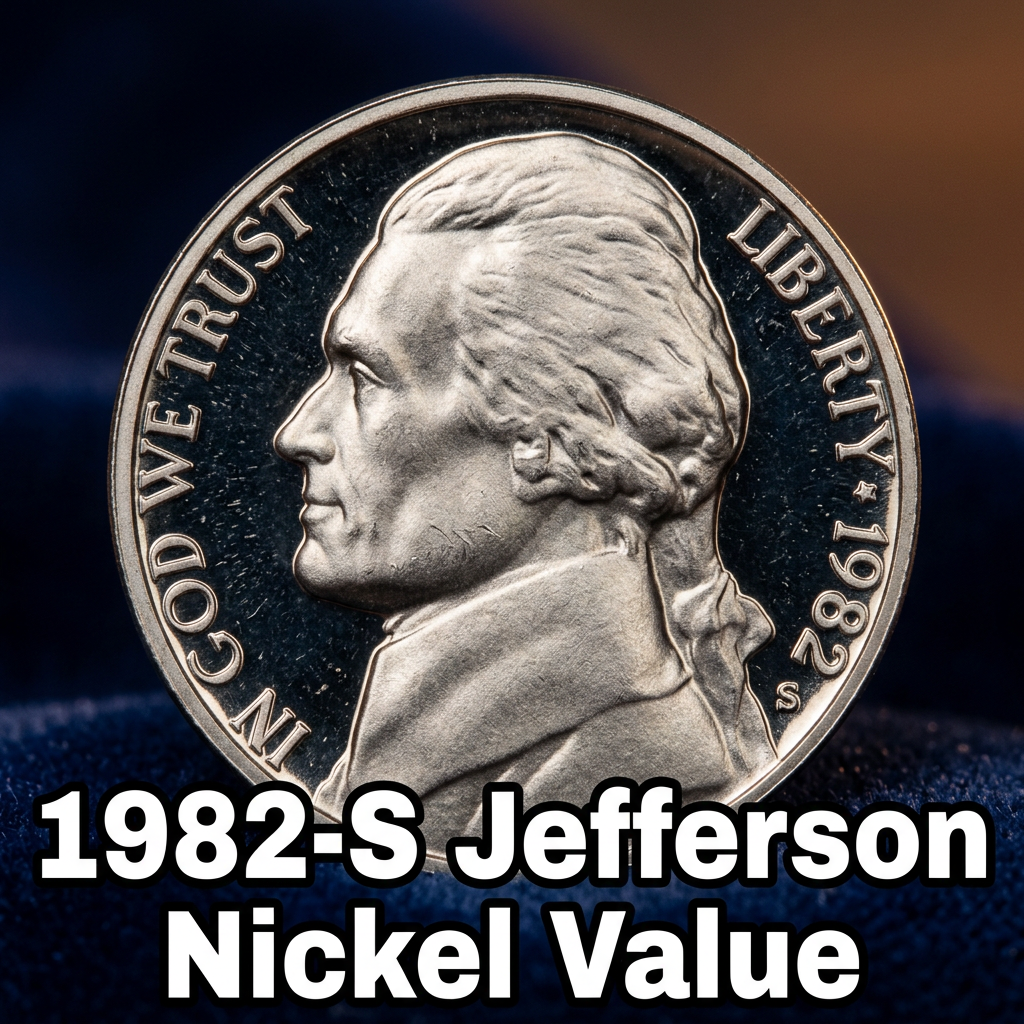
Before diving into values, it helps to understand what the “S” mint mark means. The “S” stands for the San Francisco Mint, which has a long tradition of producing high-quality coins — especially proof coins intended for collectors rather than everyday circulation. In 1982, the San Francisco Mint struck Jefferson Nickels primarily as proof coins, meaning they were made with special dies, polished planchets, and extra care to produce a mirror-like finish.
If you’re not sure whether your coin is a proof or a regular strike, the easiest way to tell is by looking at the details under magnification. Proof coins have incredibly sharp, frosted designs against a deeply reflective background. They also typically come in protective cases from original U.S. Mint proof sets.
Not sure what you’ve got? Try using the best coin identifier app to scan your coin and get an instant identification — it takes only seconds and can save you a lot of guesswork.
1982-S Jefferson Nickel Value by Grade and Type
The value of your 1982-S nickel depends heavily on its condition, which coin collectors refer to as “grade.” Here’s a general breakdown:
| Condition / Grade | Type | Estimated Value |
|---|---|---|
| Circulated (worn) | Business Strike | Face value – $0.10 |
| Uncirculated (MS-63) | Business Strike | $1 – $5 |
| Gem Uncirculated (MS-65+) | Business Strike | $5 – $15+ |
| Proof (PR-65) | Proof Strike | $3 – $8 |
| Deep Cameo Proof (PR-69 DCAM) | Proof Strike | $10 – $30+ |
For the most up-to-date pricing on mint state examples, you can check out current 1982 Jefferson Nickel MS price data tracked by collectors and dealers to see where the market stands right now.
How Condition Affects the 1982-S Nickel’s Worth
Condition is everything in coin collecting, and the 1982-S Jefferson Nickel is no exception. A coin that spent years rattling around in a jar will show wear on Thomas Jefferson’s cheekbones, the hair details, and Monticello’s columns on the reverse. These worn coins are worth little more than face value to most buyers.
On the other hand, a coin that was pulled straight from a proof set and stored properly can be remarkably beautiful even after 40+ years. The deep cameo contrast — where the design appears frosted white against a mirror-like field — is what collectors really chase. High-grade deep cameo proof examples (PR-69 DCAM) have sold for anywhere from $15 to $30 and beyond at auction, depending on the certifying service.
CoinHix is a fantastic tool for checking real-time market prices before you decide whether to sell or hold onto your coins. The app aggregates dealer and auction data so you always have an accurate picture of what buyers are actually paying.
Where to Sell or Get Your 1982-S Nickel Appraised
If you believe you have a high-grade or proof 1982-S Jefferson Nickel, you have several options. Local coin dealers can give you a quick, free estimate — just call ahead to make sure they handle nickels. Online marketplaces like eBay are great for seeing what similar coins have actually sold for in recent months (use the “sold listings” filter for realistic data).
For a more comprehensive look at the full value range of 1982 nickels across all mint marks and grades, dedicated numismatic resources can walk you through exactly what you’re holding. If you want a professional opinion, coin certification services like PCGS or NGC will grade and slab your coin for a fee — which can be well worth it if the coin is in truly exceptional condition.
CoinHix also lets you photograph your coin and compare it against graded examples in its database, making it easier to estimate where your coin falls on the grading scale before you commit to a professional submission.
Tips for Handling and Storing Your 1982-S Jefferson Nickel
One mistake that kills a coin’s value is improper handling. Never clean your coins — even a gentle rinse can leave microscopic scratches that drop a coin’s grade significantly. Always hold coins by the edges, and store them in acid-free flips or hard plastic holders away from humidity and direct sunlight.
If your 1982-S nickel is still in its original proof set packaging, leave it there. That original government packaging actually adds a small premium for some buyers who prefer coins in their factory-sealed state.
—
FAQ
Q: Is the 1982-S Jefferson Nickel rare?
A: It’s not considered rare in the traditional sense, since millions of proof examples were minted for collector sets. However, finding one in top-tier grades like PR-69 or PR-70 DCAM does make it scarcer and more valuable to serious collectors.
Q: What’s the difference between the 1982-S proof nickel and a regular 1982 nickel?
A: The 1982-S was struck at the San Francisco Mint specifically for proof sets, giving it a mirror-like finish and sharper detail than business-strike nickels made in Philadelphia or Denver for circulation. Regular 1982 nickels carry a “P” or “D” mint mark (or no mark).
Q: Should I get my 1982-S Jefferson Nickel professionally graded?
A: It’s generally worth submitting for professional grading only if your coin appears to be in near-perfect condition. Grading fees typically start around $20–$30 per coin, so it only makes financial sense for coins that could be worth significantly more in a certified holder. Use CoinHix to get a ballpark value estimate first before spending money on grading fees.